
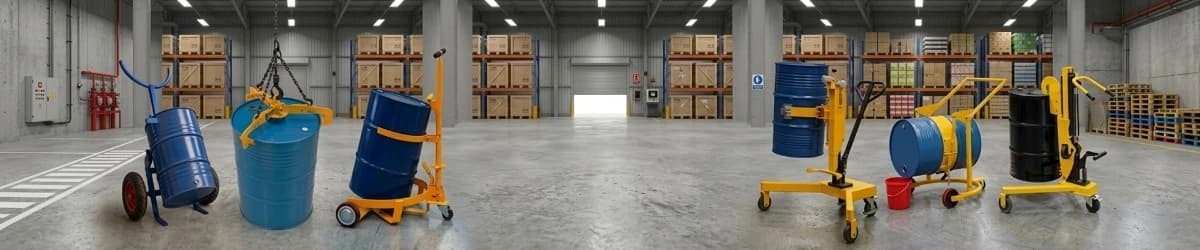
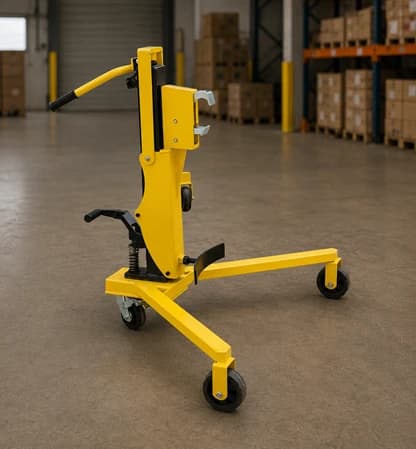
What is a Drum Palletizer?
A Drum Palletizer is a machine or handling system used to place industrial drums onto pallets in a defined arrangement for storage, production, or transportation.
An Industrial Drum Palletizer can help organize multiple drums into consistent pallet patterns, making downstream handling and storage easier. Depending on the design, the system can be integrated with conveyors, loading equipment, or other material handling systems.
An Automatic Drum Palletizer can reduce repetitive manual drum positioning by automating specific palletizing tasks. A Hydraulic Drum Palletizer may use hydraulic movement for lifting, positioning, or handling where the application requires powered mechanical assistance.
The right Drum Palletizing Machine should be selected according to drum dimensions, loaded weight, pallet size, required pallet pattern, production volume, and available floor space.
Applications of Drum Palletizer
A Drum Palletizing System is useful in facilities where drums need to be arranged on pallets consistently and efficiently.
Chemical Industry – Palletizing drums containing compatible chemicals and industrial materials for storage or dispatch.
Oil & Lubricant Industry – Arranging lubricant and oil drums for organized warehouse handling and transportation.
Paint & Coating Industry – Palletizing drums used for paints, coatings, and related products.
Pharmaceutical Industry – Supporting controlled pallet loading of compatible drums and production materials.
Food Processing Industry – Handling suitable drums used for ingredients and processing materials.
Manufacturing Plants – Organizing drums after filling or production before storage or shipment.
Warehousing & Logistics – Improving pallet preparation and organizing drums for transportation and distribution.
Industries Served
Chemical Manufacturing – Supports organized pallet loading of industrial drums.
Oil & Lubricants – Helps arrange drums for storage, transportation, and dispatch.
Paint & Coatings – Supports consistent palletizing of production drums.
Pharmaceutical Industry – Assists with suitable drum palletizing applications.
Food Processing – Supports pallet handling of compatible drum-based materials.
Manufacturing Industry – Helps streamline production-to-storage material flow.
Warehousing & Logistics – Improves drum organization before storage or shipment.
How to Choose the Right Drum Palletizer
Selecting the right Drum Palletizing Machine requires an understanding of the complete production and handling process.
Drum Dimensions – Check drum diameter, height, and overall dimensions.
Load Weight – Consider the maximum weight of each loaded drum.
Pallet Size – Ensure the palletizer is compatible with the pallet dimensions being used.
Pallet Pattern – Determine the required number and arrangement of drums per pallet.
Production Volume – Match the system to the expected palletizing frequency and workflow.
Automation Level – Decide whether manual-assisted, semi-automatic, or automatic operation is appropriate.
Lifting Requirements – Evaluate whether hydraulic or other powered lifting functions are necessary.
Available Space – Consider production-line layout, access areas, and equipment footprint.
Integration Requirements – Check compatibility with conveyors and other Drum Loading Equipment.
Working with an experienced Drum Palletizer Manufacturer can help businesses select a configuration that matches their actual production requirements.
Technical Considerations
The performance of an Industrial Drum Palletizer depends on drum compatibility, pallet dimensions, load capacity, pallet pattern, operating speed, and the chosen handling mechanism.
Before operation, verify that the drum dimensions and loaded weight are within the equipment's specified range. The pallet must also be suitable for the intended load and arrangement.
Check Drum Compatibility – Confirm drum diameter, height, material, and loaded weight.
Verify Pallet Dimensions – Ensure pallet size matches the palletizing configuration.
Check Load Distribution – Arrange drums according to the specified pallet pattern.
Inspect Lifting Components – Check hydraulic, mechanical, or powered handling components regularly.
Verify Conveyor Integration – Ensure connected conveying equipment operates correctly where applicable.
Maintain Clear Access – Keep working and loading areas free from unnecessary obstructions.
Avoid Overloading – Operate within the manufacturer's rated limits.
Follow Operating Procedures – Use the palletizing system according to manufacturer instructions.
Train Operators – Ensure personnel understand loading, positioning, safety, and emergency procedures.
Regular inspection and correct system configuration help support reliable palletizing performance.
Maintenance and Best Practices
Inspect Before Use – Check the frame, drum-handling components, hydraulic system, sensors, and connections.
Check Lifting Mechanism – Inspect cylinders, chains, guides, or other applicable lifting components.
Inspect Drum Positioning Components – Ensure grippers, supports, guides, or handling fixtures operate correctly.
Keep Equipment Clean – Remove dust, product residue, debris, and other accumulated material.
Check Conveyors – Inspect connected conveyor systems and transfer points where applicable.
Monitor Hydraulic Components – Check hoses, cylinders, fittings, and hydraulic connections for leaks or damage.
Avoid Overloading – Ensure drum and pallet loads remain within rated limits.
Inspect Safety Systems – Check emergency stops, guards, sensors, limit switches, and other safety devices.
Train Operators – Ensure operators understand correct palletizing and equipment procedures.
Follow Preventive Maintenance – Schedule servicing according to the manufacturer's recommended maintenance plan.
Why Choose Excelus Machineries?
Selecting a Drum Palletizer Supplier requires more than comparing equipment capacity. Businesses should consider pallet pattern requirements, drum dimensions, production volume, integration requirements, maintenance, and long-term operational support.
Excelus Machineries provides industrial material handling solutions focused on practical application requirements and equipment suitability.
Key considerations include:
Durable industrial construction
Application-focused drum handling solutions
Support for different palletizing requirements
Hydraulic and powered handling options where applicable
Technical guidance during equipment selection
Integration considerations for material handling workflows
Customization support for specific applications
Maintenance and operational guidance
For businesses looking for a Drum Palletizer Manufacturer, evaluating the complete material flow from drum filling to pallet preparation, storage, and dispatch can help identify the most suitable configuration.
Conclusion
A Drum Palletizer is an effective solution for businesses that need to arrange and load industrial drums onto pallets in a consistent and organized manner. It can help reduce repetitive manual handling, improve pallet preparation, and support smoother material flow from production to storage and dispatch.
Whether the application requires an Automatic Drum Palletizer, Hydraulic Drum Palletizer, Drum Stacking Machine, or integrated Drum Palletizing System, the equipment should be selected according to drum size, load weight, pallet dimensions, required pallet pattern, production volume, and automation needs.
As a Drum Palletizer Manufacturer and Drum Palletizer Supplier, Excelus Machineries provides industrial Drum Material Handling Equipment designed around practical operational requirements, helping businesses improve drum palletizing efficiency, workflow consistency, and organized material handling.