
Drum Trolley: Types, Features, Applications & Selection Guide
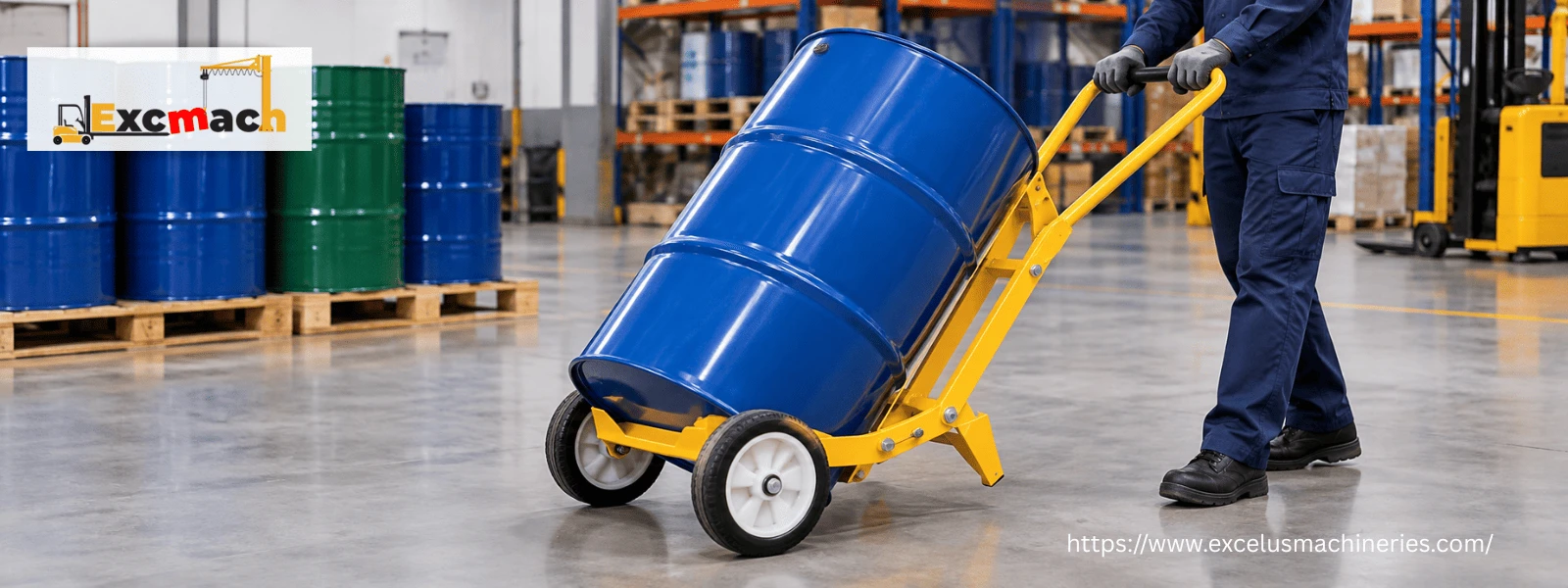
A drum trolley is material handling equipment designed to transport drums safely across industrial floors, warehouses, workshops, and production facilities. It supports the drum on a wheeled frame, helping operators move heavy containers with less manual lifting and better control.
Choosing the right industrial drum trolley depends on several factors, including drum weight, dimensions, wheel material, floor conditions, operating environment, and handling frequency. Different designs, such as nylon wheel drum trolleys, stainless steel drum trolleys, and four-wheel drum trolleys, suit different workplace requirements.
What Is a Drum Trolley?
A drum trolley is a wheeled material handling device used to move drums from one location to another without carrying their full weight manually. Its supporting frame or cradle holds the drum in position while the wheels allow it to travel across a suitable floor surface.
Drum trolleys are commonly used to transport oil drums, chemical containers, lubricants, and other industrial materials. Depending on the design, they may feature two or four wheels, different wheel materials, and frames made from standard industrial steel or stainless steel.
Important: A standard drum trolley is primarily designed for horizontal transportation. Raising drums onto shelves, pallets, or machinery generally requires suitable drum lifting equipment.
For related solutions, explore Excelus Machineries' drum handling equipment guide.
Types of Drum Trolleys
Excelus Machineries' drum equipment range includes several trolley styles, each suited to a different floor, material, or handling pattern.
Nylon wheel drum trolley. The Drum Trolley – Nylon Wheel is a general-purpose option for smooth indoor floors. Nylon wheels roll easily, resist many oils and chemicals, and are gentler on floor surfaces than hard metal wheels, which suits warehouses and production areas where floor condition matters.
Stainless steel drum trolley. The SS Drum Trolley is built from stainless steel, which makes it the natural choice where hygiene or corrosion resistance matters, such as food processing, pharmaceutical, and some chemical environments.
Four wheeler drum trolley. The Four Wheeler Drum Trolley spreads the drum's weight across four wheels instead of two, which generally gives a more stable platform, particularly when a drum is full and the route includes turns.
Drum trolley with scooter wheel. The Drum Trolley with Scooter Wheel is designed around easier steering in tighter spaces, where a fixed-wheel layout would be awkward to maneuver.
Related drum movers. Drum Caddies, the Drum Truck, and Drum Handling Dollies also move drums on wheels, but each is shaped for a slightly different handling style. They're worth comparing against a standard trolley if your drums are moved in a particular way, such as short repositioning versus long runs. A facility that mostly nudges drums a few meters between a storage rack and a dispensing point has different needs from one rolling drums across a whole plant floor, and the equipment that suits one rarely suits the other equally well.
Drum Trolley Type | Main Feature | Suitable Application |
Nylon Wheel Drum Trolley | Nylon wheels for suitable smooth industrial floors | Warehouses and production areas |
Stainless Steel Drum Trolley | Corrosion-resistant stainless steel construction | Hygiene-sensitive or corrosive environments, subject to material compatibility |
Four Wheeler Drum Trolley | Four-wheel support configuration | Applications requiring a stable wheeled platform |
Drum Trolley with Scooter Wheel | Wheel configuration intended for maneuverability | Suitable layouts where steering space is limited |
Drum Caddy or Drum Dolly | Compact wheeled drum support, depending on design | Short-distance drum repositioning |
The best option depends on the drum dimensions, loaded weight, floor condition, turning space, and the manufacturer's specified capacity. Always confirm the features of the individual model before purchasing.
Key Features That Matter
A drum trolley looks simple, but a few design details decide whether it works well in your facility.
Cradle or support design. The part that actually holds the drum. It needs to fit your drum's diameter and keep it from slipping during transport.
Wheel material. Nylon, rubber, and metal wheels behave differently on different floors. Smooth indoor floors, uneven surfaces, and wet areas each favor different choices.
Frame material. Painted mild steel suits general use, while stainless steel suits clean or corrosive environments.
Handle and tilt geometry. This determines how much effort it takes to tip a drum onto the trolley and steer it afterward, which matters when operators do it dozens of times a shift.
Rated capacity. Every trolley is built for a maximum loaded weight, and the figure for a specific model should be checked on its listing rather than assumed.
Applications of Drum Trolleys
Chemical and petrochemical plants: Drum trolleys can transport compatible drums between storage locations and designated processing areas. The selected equipment must suit the drum contents and the facility's safety requirements.
Food and pharmaceutical facilities: Where hygiene and corrosion resistance are important, a suitable stainless steel drum trolley may be preferred. Material compatibility and cleaning requirements should be checked before selection.
Manufacturing plants: Industrial drum trolleys help move drums containing lubricants, coolants, and other production materials between storage and work areas.
Warehouses and logistics operations: Drum trolleys can support short-distance movement between receiving, storage, and dispatch areas, provided the route and load are suitable for the selected model.
Workshops and maintenance facilities: A suitable drum trolley can help transport oil and maintenance-fluid drums between storage points and service areas.
Explore the industries served by Excelus Machineries to understand its broader material handling applications.
Using a Drum Trolley Safely
A trolley takes the lifting out of drum handling, but the tilting and steering still depend on technique. A few habits prevent most incidents:
Check the drum first. Look for a damaged rim, a bulging side, or a loose lid before tilting it onto the trolley.
Seat the drum fully. The drum should sit squarely in the cradle before you start moving, not perched on its edge.
Move slowly on turns and slopes. A full drum has momentum, and fast direction changes are when it shifts or tips.
Keep the route clear. Cables, debris, and floor drains are easy to catch a small wheel on.
Don't exceed the rated load. If a drum is heavier than the trolley's stated capacity, use different equipment instead of pushing the limit.
In facilities moving hazardous liquids, a tipped drum is a spill response as well as an injury, which is why a few minutes of operator guidance is worth the time.
How to Choose the Right Drum Trolley
Work through these factors before comparing models:
Loaded drum weight. Pick based on the heaviest drum you'll move, not an average. For heavier loads, look for a heavy duty drum trolley and confirm its rated capacity on the product listing.
Drum size. Check diameter and height against the trolley's cradle, since a poor fit makes the drum unstable.
Floor surface. Smooth concrete, rough ground, ramps, and wet floors all change which wheel and frame combination makes sense.
Environment. Hygiene-sensitive or corrosive areas point toward stainless steel. General industrial use can often use a standard frame.
Route length and layout. Long runs favor stable, easy-rolling designs. Tight aisles favor easier steering.
How often it's used. Constant daily use justifies a more robust industrial drum trolley, while occasional use may not.
Common Mistakes When Buying a Drum Trolley
Choosing by price without checking rated capacity against the heaviest drum
Assuming one trolley fits every drum size
Using a standard frame in a corrosive or hygiene-critical area
Expecting a trolley to lift drums, when lifting needs different equipment
Skipping basic operator guidance on tilting and moving a full drum, since a tipped drum is both an injury and a spill risk
Drum Trolley Solutions from Excelus Machineries
Excelus Machineries supplies material handling equipment for industrial and warehouse applications. Its drum equipment range includes drum trolley options designed for different handling requirements.
When selecting a drum trolley, buyers should compare the drum's loaded weight and dimensions with the trolley's rated capacity and compatible drum size. Wheel material, frame construction, floor conditions, and available maneuvering space should also be considered.
To identify a suitable model, Contact Excelus Machineries with your drum dimensions, maximum loaded weight, floor type, and intended application. Request the relevant technical specifications before finalizing your purchase.
Final Takeaway
Choosing the right drum trolley starts with understanding the drum's loaded weight, dimensions, floor conditions, operating environment, and handling frequency. Comparing these factors with the trolley's rated capacity, wheel configuration, and construction helps you identify a suitable solution for your workplace.
Get in Touch with Excelus Machineries
Request a Free Quote: Get high-quality material handling equipment tailored to your industrial requirements.
Call Us Directly: +91 9558455226
Email Us: info@excelusmachineries.com
Visit Our Website: https://www.excelusmachineries.com
Expert Consultation: Speak with our specialists to choose the right hand pallet truck, stacker, or material handling equipment for your business.
Our Location: Gala 29, Royal Landmark, Vapi, Gujarat, India
Recent Insights
View AllFrequently Asked Questions
A drum trolley is used to transport compatible drums across a floor in warehouses, workshops, factories, and other industrial facilities. Its wheeled design helps reduce the need to carry the drum manually.