

Drum Stand for 2 & 3 Drums: Features, Uses & Industrial Applications
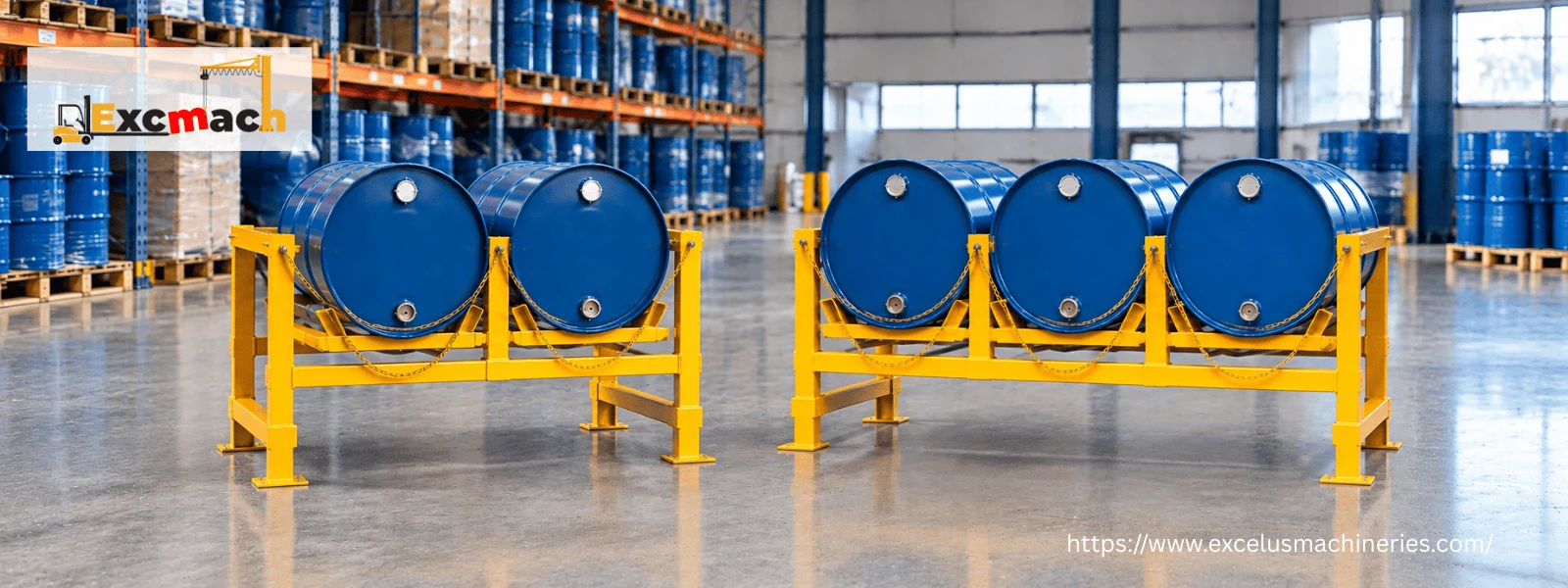
A drum stand for 2 or 3 drums is industrial storage equipment designed to hold two or three compatible drums in an organized, accessible position. A 2-drum stand is suitable for operations requiring two drum positions, while a 3-drum stand provides an additional position. Selection depends on drum dimensions, total loaded weight, available floor space, and the manufacturer's rated capacity.
This guide explains the key features, industrial applications, safety considerations, and selection factors to consider before choosing a drum stand. It is intended for plant managers, warehouse supervisors, maintenance teams, and industrial procurement professionals.
What Is a Drum Stand?
A drum stand is a fixed or semi-fixed frame that holds drums in position and keeps them off the floor. It doesn't lift or transport anything. Its job is storage and controlled access, which is why it sits in a different part of the drum equipment range than trolleys or handlers.
Excelus Machineries offers drum stands designed to hold two or three compatible drums in a designated storage arrangement. These stands help organize industrial drums, maintain clear storage positions, and make drums easier to access when required. Check the individual product specifications to confirm drum orientation, dimensions, load capacity, and suitability for dispensing applications.
What Is a Drum Stand for 2 & 3 Drums?
A drum stand for two or three drums is a storage structure designed to hold multiple compatible industrial drums in an organized arrangement. A 2-drum stand accommodates two drums, while a 3-drum stand accommodates three. The appropriate model depends on drum dimensions, loaded weight, available space, and the manufacturer's rated capacity.
The 2-Drum and 3-Drum Stand
Excelus lists two stand sizes in its drum equipment category, and the difference is simple: how many drums each one holds.
The Drum Stand for 2 Drums is the compact option. It suits smaller workshops, maintenance bays, and production areas where only a couple of drums are in use at once, and where floor space is limited.
The Drum Stand for 3 Drums, which you may also see called a triple drum stand, holds one more drum in a single frame. That makes it a better fit where several different fluids or grades are kept side by side, or where a higher volume of material is used and drums are swapped frequently.
Choosing between them is mostly about how many drums you actually keep in use and how much floor you can spare. A stand that's too small leads to drums stacked on the floor again. One that's too large wastes space.
Product information | What to include |
Drum capacity | 2 or 3 drums |
Compatible drum sizes | Actual supported dimensions |
Load capacity | Manufacturer-confirmed rating |
Frame material | Verified material |
Overall dimensions | Actual measurements |
Intended application | Confirmed use cases |
Why Store Drums on a Stand
Leaving drums on the floor works until it doesn't. A stand solves a handful of practical problems:
Easier access. Drums held in a raised frame are simpler to reach and dispense from than drums sitting at floor level.
A tidier floor. Fixed positions keep walkways clear and make it obvious where each drum belongs.
Less handling. When a drum stays in place on a stand, it isn't being dragged, rolled, or re-lifted every time someone needs it.
Clearer stock. Seeing every drum at a glance makes it easier to spot what's running low.
None of this replaces proper handling equipment. It just means drums are moved less often and sit in a safer, more organized position between uses.
Key Features That Matter
A drum stand looks simple, but a few details decide whether it works well in your facility:
Frame strength. A stand supporting full drums carries a lot of weight, so the frame construction and rated capacity matter.
Drum compatibility. The cradle or supports need to fit your drum diameter and type.
Stability. A wide, level base keeps loaded drums from shifting or tipping.
Surface finish. A durable, visible finish resists wear and makes the stand easy to spot on a busy floor.
Footprint. The stand's size has to fit your available space with room to work around it.
Access for dispensing. The stand should position drums so contents can be reached and dispensed comfortably.
Industrial Applications
Drum stands appear anywhere liquids are stored in drums and used gradually.
Workshops and maintenance areas keep lubricants and oils organized and within reach of the work.
Chemical and petrochemical facilities store drums in a defined, orderly layout instead of scattered across the floor.
Manufacturing plants keep coolants, process fluids, and cleaning liquids close to the production line.
Warehouses and storage areas hold drums in a neat, repeatable arrangement that makes stock easy to see.
Food and pharmaceutical settings use stands where drummed ingredients or materials are held between uses, subject to the material and finish the application requires.
Drum storage is a routine need across many industries, and the stand is often part of a wider setup that includes equipment for moving and lifting drums. Our guide to drum handling equipment covers how the different pieces fit together.
Practical Considerations Before Installing a Drum Stand
Before installing a drum stand, assess the loaded weight of the drums, the dimensions of the containers, the available floor space, and the access required for loading and removal. Confirm the stand's rated capacity and compatibility with the intended drums before use.
For chemical storage, check material compatibility, spill-control requirements, and applicable site procedures. Plan how drums will be loaded onto the stand using suitable handling equipment, and keep access routes clear for operators.
The final selection should be based on the manufacturer's specifications and the operating conditions of the facility, rather than drum capacity alone.
How to Choose the Right Drum Stand
Work through these before comparing models:
How many drums are in use at once? Choose two or three drum capacity based on real daily use.
What do the drums weigh when full? The stand's rated capacity must cover the total loaded weight, with margin.
What drum type and size do you use? Confirm the stand fits your drum's diameter and style.
Where will it sit? Measure floor space and check that the floor is level and strong enough.
What's the environment? Consider moisture, chemicals, and cleaning needs when choosing finish and material.
How will drums get onto it? Plan the loading method, whether by drum trolley or a drum handler from the drum equipment lineup, before the stand arrives.
Using a Drum Stand Safely
Place it on level ground. An uneven floor makes the whole stand unstable.
Load drums fully and evenly. Seat each drum properly in its position before releasing it.
Never exceed the rated capacity. Count the combined weight of all drums on the stand.
Keep the area around it clear. Walkways and access routes shouldn't be blocked by the stand or its drums.
Inspect it regularly. Check for bending, cracks, or damaged welds, and take a damaged stand out of use.
Handle spills promptly. In facilities using chemicals, keep spill response materials close.
Verify the stand's rated capacity against the combined loaded weight of all drums.
Check that the drum supports, frame, and floor are suitable for the intended load and operating conditions.
Questions to Ask a Drum Stand Manufacturer or Supplier
Whether you're talking to a drum stand manufacturer or a drum stand supplier, these questions get you the details that matter:
What is the rated capacity of the stand? Ask for the total, not just per drum.
Which drum types and sizes does it fit?
What is it made from, and how is it finished?
Is it suited to my floor and environment?
Can it be supplied in the quantity or configuration I need? This matters if you're planning several stands.
What happens if something is damaged? Ask about repair and spare-part support.
If you need a particular size or arrangement, a 2 drum stand manufacturer or 3 drum stand supplier can usually tell you quickly whether it fits a standard configuration.
Common Mistakes When Buying a Drum Stand
Choosing on price without checking capacity against full drums
Buying a stand that doesn't match the drum type in use
Ignoring floor condition and levelness
Picking the wrong size for actual daily drum use
Forgetting how drums will be loaded onto the stand
Where Excelus Machineries Fits
Excelus Machineries, based in Vapi, Gujarat, India, offers industrial material handling equipment, including drum handling and storage solutions. Its drum stand product categories include options for two drums and three drums. Buyers can review the relevant product listings and contact the company to confirm drum compatibility, rated capacity, dimensions, and other application-specific requirements before purchasing.
If you know how many drums you keep in use, their weight, and where the stand will sit, get in touch with the team to match the right stand to your setup, or browse the full product range to compare options.
Final Takeaway
A drum stand for 2 & 3 drums keeps drums organized, off the floor, and easy to reach. The right size depends on how many drums you use at once, their loaded weight, and the space you have, so confirm those details with the supplier before buying.
Recent Insights
View AllFrequently Asked Questions
The main difference is capacity. A 2-drum stand holds two drums and suits smaller spaces, while a 3-drum stand holds three and suits setups with more drums in regular use.