
Drum Lifting Clamp: Features, Working, Safety & Industrial Applications
Lifting a drum from above sounds simple until you ask what it will hang from. Slings can slip on a smooth, round surface, and improvised hooks put the drum and the people nearby at risk. A drum lifting clamp is made for this job: it grips the drum securely so a hoist or crane can raise it in a controlled way.
This guide explains what a drum lifting clamp is, how it works, the features worth checking, where it's used, and how to use it safely. It's written for plant managers, maintenance teams, and buyers responsible for lifting drums in industrial settings.
What Is a Drum Lifting Clamp?
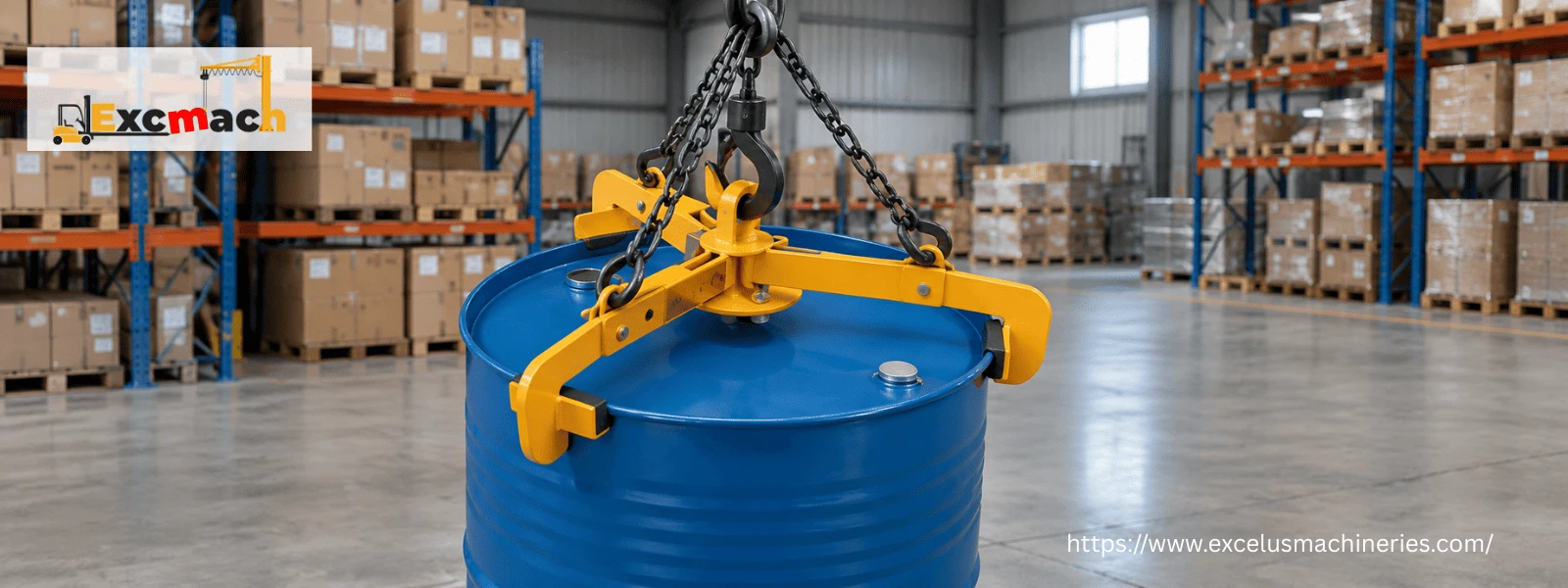
A drum lifting clamp is a below-hook lifting attachment that grips a drum so it can be raised by an overhead hoist, crane, or similar lifting device. In Excelus Machineries' drum equipment range, the Drum Lifting Clamp is shown suspended from a chain, gripping the drum from above.
Within the wider category of drum handling equipment, a clamp is the lifting piece, not the moving piece. It raises and lowers a drum but doesn't carry it across a floor. For that, facilities pair it with a trolley or other transport equipment, which our guide to drum handling equipment explains in more detail.
How a Drum Lifting Clamp Works
The principle is straightforward, though exact details vary by design:
The clamp is attached to the lifting device. It hangs from the hook or chain of a hoist or crane.
It is positioned on the drum. The jaws or gripping arms are placed so they engage the drum securely, typically at the rim.
Lifting tension tightens the grip. Many clamp designs are built so the weight of the load increases the grip rather than loosening it. Whether a specific model works this way should be confirmed in its documentation.
The drum is raised and moved. The hoist lifts the drum to the required height or position.
The drum is set down and released. Once the drum is resting securely, the tension eases and the clamp can be removed.
Because the clamp depends on the drum's own structure to hold, the condition and type of the drum matter as much as the clamp itself.
What Affects a Drum Lifting Clamp's Grip?
The reliability of a drum lifting clamp depends on more than its rated capacity. The drum's rim condition, compatibility with the gripping mechanism, correct attachment, and the condition of the clamp itself all influence safe operation.
Before lifting, check the following:
Drum condition: The rim and surrounding structure must be suitable for the intended lifting method.
Correct engagement: The gripping mechanism must be positioned and engaged according to the manufacturer's instructions.
Load balance: The drum and lifting arrangement must remain stable during the lift.
Equipment compatibility: The clamp, lifting connection, and overhead lifting device must be suitable for the intended load.
Operating conditions: Avoid side loading, shock loading, or other uses prohibited by the manufacturer.
Never assume that a clamp will grip more securely simply because additional lifting force is applied. Its operating mechanism and limitations must be confirmed from the product documentation.
Key Features That Matter
Drum lifting clamps look similar, but a few details decide how well one suits your operation:
Gripping design. How the clamp engages the drum determines how secure the hold is. It needs to match the drum type and rim you use.
Rated capacity. Every clamp is built for a maximum load, and the figure for a specific model should be read from its listing and respected.
Drum compatibility. Confirm the clamp suits your drum's size, material, and style.
Build quality. Strong materials and good finish matter in a part that carries a suspended load.
Ease of use. A clamp that attaches and releases easily saves time when drums are lifted often.
Connection point. The top fitting must suit the hook, shackle, or chain of your lifting device.
An industrial drum lifting clamp that's chosen on these points will do the job reliably. One chosen on price alone often won't.
Drum Lifting Clamp Specifications
Before purchasing a drum lifting clamp, buyers should review the technical specifications to confirm that the attachment suits their lifting requirements.
Specification | What to Check |
Working Load Limit (WLL) | Manufacturer-rated maximum load |
Compatible Drum Type | Approved drum material and design |
Drum Rim Compatibility | Suitable rim or gripping profile |
Lifting Mechanism | Compatible hoist or crane arrangement |
Connection Type | Approved hook, shackle, or lifting connection |
Construction Material | Material specified by the manufacturer |
Inspection Requirements | Manufacturer-recommended inspection procedure |
Note: Confirm all specifications against the actual product datasheet before lifting. Do not assume that every drum lifting clamp has the same capacity or compatibility.
Why Use a Dedicated Clamp
Improvised lifting methods are tempting because they're already on hand, but a purpose-built clamp offers practical advantages:
A more secure hold. A clamp is designed to grip the drum, which a general sling or hook isn't.
Less handling by hand. The drum is lifted and placed without anyone steadying its full weight.
More controlled movement. A drum held firmly is easier to raise, position, and lower without it twisting or swinging.
Repeatable results. The same attachment and routine apply every time, which makes procedures and training simpler.
These benefits depend on using the clamp as intended, within its rated capacity and with drums it's designed for.
Industrial Applications
Drum lifting clamps are used wherever drums need to be raised by an overhead lifting device:
Chemical and petrochemical plants, loading drums onto process platforms or lifting them over containment areas
Manufacturing facilities, moving lubricant, coolant, and bulk liquid drums into position at machines
Warehouses and storage yards, loading and unloading drums where an overhead hoist or crane is available
Maintenance and workshop areas, lifting drums to working height for dispensing or replacement
Loading docks and transport points, lifting drums to or from vehicles using a crane
Lifting drums is a routine task across many industries, and the clamp is usually one part of a handling setup rather than the whole of it. For drums that need to be moved at floor level instead of lifted, a drum trolley is the better tool.
Safety Guidelines for Lifting Drums
Lifting a suspended load carries real risk, so the routine around the clamp matters:
Check the clamp before every use. Look for wear, cracks, bending, or damage to the gripping parts and connection point.
Inspect the drum. Don't lift a drum with a damaged, deformed, or corroded rim, or one that shows signs of leaking.
Stay within rated capacity. Account for the full weight of the drum and its contents.
Make sure the grip is secure. The clamp should be fully and correctly engaged before the drum leaves the ground.
Lift smoothly. Avoid sudden jerks and swinging, which strain the grip and the lifting device.
Keep people clear. Nobody should stand beneath or near a suspended drum.
Train operators. The pre-use checks and safe load handling in our stacker machine safety guidelines carry over to any lifting task.
How to Choose the Right Drum Lifting Clamp
Before comparing models, work through these points:
Loaded drum weight. Choose for the heaviest drum you'll lift, with margin.
Drum type and rim. Confirm the clamp suits the drums you actually use.
Lifting device. Check that the clamp connects properly to your hoist or crane.
Frequency of use. Constant lifting calls for a durable unit that's easy to attach and release.
Environment. Consider moisture, chemicals, and conditions that could wear the clamp.
Questions to Ask a Drum Lifting Clamp Manufacturer or Supplier
Whether you're speaking to a drum lifting clamp manufacturer, a drum lifting clamp supplier, or a general drum clamp supplier, these questions get you the details that count:
What is the rated capacity? Ask for the working load limit, not just a general description.
Which drum types and rims does it fit?
How is it built, and from what materials?
Does it come with usage and inspection guidance?
What spare-part and service support is available?
Common Mistakes When Buying and Using a Drum Lifting Clamp
Choosing on price without checking rated capacity
Using a clamp on drums it wasn't designed for
Lifting damaged or corroded drums
Skipping the pre-use inspection
Expecting a clamp to move drums across a floor, when it only lifts
Where Excelus Machineries Fits
Excelus Machineries is a Vapi-based material handling equipment business offering drum handling solutions for industrial applications. Its drum equipment range includes products for lifting, transporting, and positioning drums, helping buyers explore equipment suited to different handling requirements.
When evaluating a drum lifting clamp, buyers should confirm the working load limit, compatible drum type, gripping mechanism, and lifting connection before making a purchase.
If you are looking for a drum lifting clamp manufacturer or supplier, contact Excelus Machineries to enquire about product specifications and suitability for your application. Share the drum's weight, type, and intended lifting arrangement to help the team identify the relevant equipment.
Confirm the availability and technical details of the specific clamp with the company before ordering.
Final Takeaway
A drum lifting clamp is a focused tool for a specific job: lifting drums securely with an overhead lifting device. The right one depends on your drum weight, drum type, and lifting setup, so confirm those details with the supplier and treat pre-use checks as non-negotiable.
Recent Insights
View AllFrequently Asked Questions
Determine the maximum total load to be lifted and select a clamp with a suitable manufacturer-rated working load limit. Confirm that the clamp is approved for the drum type and lifting arrangement, and follow all applicable load-rating requirements.