
Drum Handler: Features, Applications, Safe Handling & Selection Guide
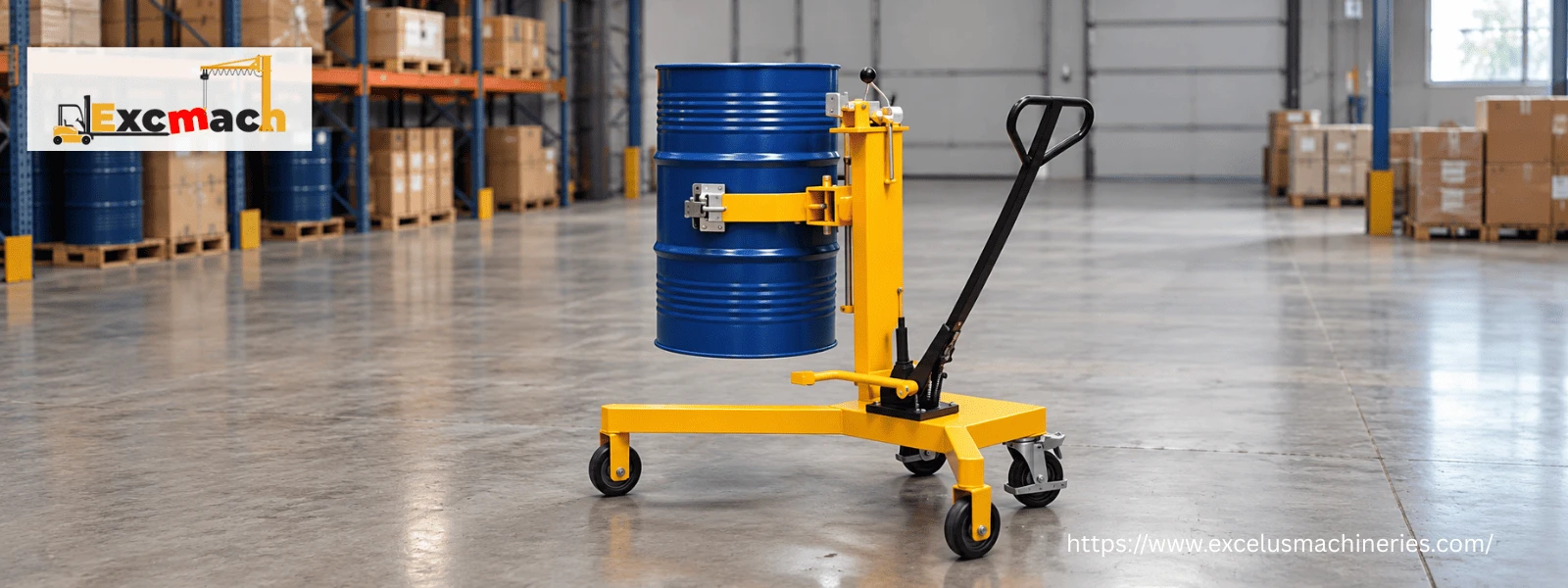
A drum handler is industrial drum handling equipment designed to lift, lower, position, and, depending on the model, tilt heavy drums safely. It helps reduce manual handling risks and allows operators to move drums to dispensing points, machinery, and designated storage areas.
Choosing the right industrial drum handler depends on the loaded drum weight, dimensions, required lifting height, handling method, and working environment. This guide explains drum handler features, industrial applications, safe handling procedures, maintenance requirements, and key selection factors for plant managers, warehouse supervisors, and industrial buyers.
What a Drum Handler Does
A drum handler is a piece of drum lifting equipment that holds a drum securely and lets one operator lift, lower, and position it. Some designs also tilt or rotate the drum for pouring or dispensing, depending on the model.
It covers a different part of the job than a drum trolley, which is built mainly to roll a drum across a floor. Many facilities keep both, using the trolley for routine movement and the handler for the lifting and placing.
How a Drum Handler Is Built
Understanding the main parts makes it easier to judge a listing. Excelus Machineries' drum equipment range includes drum handlers alongside trolleys, clamps, and stands, and the same few design elements apply across them.
The gripping or support system. The gripping mechanism secures the drum during lifting and positioning. Its design must be compatible with the drum's diameter, rim configuration, material, and intended handling method. Before selecting a drum handler, check the manufacturer's specifications to ensure the gripping arrangement is suitable for your drum type and loaded weight.
The lifting mechanism. A hydraulic drum handler raises the drum with a hydraulic pump, which gives controlled, steady movement instead of a sudden drop. The exact lifting method of a particular model should be read from its listing.
The base and wheels. These determine how stable the handler is with a loaded drum on it and how easily it moves across your floor.
The frame material. Standard painted steel suits general industrial use. The SS Drum Handler is made from stainless steel, which suits food, pharmaceutical, and chemical settings where hygiene or corrosion resistance matters.
The rated capacity. Every model is built for a maximum drum weight. That figure belongs on the listing, and it's the first number to check.
Matching a Drum Handler to the Task
The right equipment depends on what you need to do with the drum.
Lifting to a working height. If drums need to reach a dispensing point, a machine, or a platform, you need real lifting capability, and the handler's lift height has to cover that distance with some margin.
Repositioning on the floor. Where drums only need to be shifted a short way and set down, a simpler handler or a trolley may be enough.
Tilting for pouring. Some designs can tilt or rotate a drum so contents can be poured or dispensed in a controlled way. If you need this, confirm it's a feature of the specific model rather than assuming it.
Placing drums for storage. Putting drums into position for storage or loading calls for stable lifting and careful setting down more than speed.
Drum Handler Selection Guide
Requirement | What to Check |
Drum weight | Choose a handler with a rated capacity that safely accommodates the fully loaded drum |
Drum dimensions | Verify drum diameter, height, and rim compatibility |
Lifting height | Check whether the equipment can reach the required working or storage position |
Handling operation | Determine whether you need lifting, floor repositioning, tilting, or dispensing |
Operating environment | Consider stainless steel construction for hygiene-sensitive or corrosive environments where suitable |
Floor conditions | Check wheel suitability, stability, and compatibility with the working surface |
Maintenance support | Confirm inspection requirements, spare-part availability, and after-sales service |
Before purchasing, verify the rated capacity, lifting height, drum compatibility, and permitted operating conditions against the selected model's technical specifications. Do not assume that all drum handlers support the same drum sizes, lifting methods, or tilting functions.
Where Drum Handlers Are Used
Chemical and petrochemical plants, where controlled lifting reduces injury and spill risk when drums are moved to dispensing or mixing points
Food and pharmaceutical facilities, where stainless steel equipment suits hygiene-sensitive areas
Manufacturing plants, which lift lubricant, coolant, and bulk liquid drums into position at machines or filling stations
Warehouses and logistics operations, which reposition drummed goods, often beside a hydraulic stacker handling palletized stock
Workshops and maintenance areas, where drums are brought to a comfortable working height for dispensing
Drum movement is a routine task across many industries, not only the ones above.
Handling a Drum Safely, Step by Step
Safe drum handling is mostly routine. This sequence covers the basics:
Inspect the drum. Look for a damaged rim, bulging, leaks, or a loose lid before touching it.
Check the equipment. Confirm the handler suits the drum's type, size, and loaded weight, and that it's in working order.
Position and grip fully. The drum should be held securely before it leaves the floor, not partly engaged.
Lift only as high as needed. Keep the drum as low as the task allows to keep its center of gravity down.
Move slowly and keep the route clear. Remove debris and cables, avoid slopes unless the handler is designed for them, and keep people out from beneath or beside a raised drum.
Lower and release carefully. Set the drum down fully before disengaging.
Follow the equipment operating instructions. Never exceed the rated capacity, bypass safety mechanisms, or place any part of your body beneath a suspended drum. Use the handler only for its approved purpose and follow the manufacturer's procedures for lifting, transporting, and lowering the load.
The handler should be operated only by trained personnel following the manufacturer's instructions. Never exceed the rated capacity or place any part of the body beneath a suspended drum. If the gripping mechanism, hydraulic system, wheels, or frame appears damaged, remove the equipment from service until it has been assessed and repaired.
Keeping a Drum Handler in Good Condition
Drum lifting equipment that's used daily needs regular attention, because a worn part shows up as a safety problem before it shows up as a performance one. A simple routine covers most of it:
Check the gripping parts for wear, cracks, or bending before each shift.
Look at the wheels and base for damage or debris that could affect stability.
Inspect hydraulic components for leaks or sluggish movement if the model uses a hydraulic pump.
Keep the unit clean, especially after handling chemicals or sticky liquids.
Follow the supplier's maintenance guidance for lubrication and service intervals.
Taking a faulty unit out of use until it's repaired costs far less than an incident with a loaded drum.
Questions to Ask Before You Buy
Whether you're talking to a drum handler manufacturer or a drum handler supplier, these questions get you the details that matter:
What is the rated capacity for a loaded drum? Use your heaviest drum, not an average.
Which drum types and sizes does it support? Confirm diameter, height, and rim style.
What lift height does it reach? Match it to your actual task.
What is it made from? Stainless steel for clean or corrosive areas, standard steel for general use.
Is it suited to my floor? Ask about ramps, uneven surfaces, and wet areas if they apply.
What does service and spare-part support look like? A drum handler used daily needs reliable upkeep.
Which drum handler models are available for my application? Compare the available lifting mechanism, gripping arrangement, capacity, and handling features against your operational requirements.
What warranty and after-sales support are provided? Confirm the applicable warranty terms, maintenance support, and availability of replacement parts before placing an order.
If you're considering powered lifting, such as an electric drum handler, ask whether it's available before planning around it. The current Excelus drum equipment range doesn't list one, so confirm what's offered for your requirements.
Mistakes to Avoid
Choosing on price without checking rated capacity against the heaviest drum
Assuming one handler fits every drum type and size
Using a standard frame in a corrosive or hygiene-critical area
Treating a handler and a trolley as interchangeable, when they do different jobs
Buying an industrial drum handler for a task that only needs a simple trolley, or the reverse
Skipping operator guidance on gripping, lifting, and moving a full drum
Drum Handler Solutions from Excelus Machineries
Excelus Machineries supplies material handling equipment for industrial and warehouse applications, including drum equipment, stackers, and pallet trucks. Selecting suitable drum handling equipment starts with understanding the drum's loaded weight, dimensions, required lifting height, and operating environment.
If you are looking for a drum handler supplier for your facility, Contact Excelus Machineries to discuss your application and check which equipment options are available. You can also explore the drum equipment range to review related handling solutions.
Before making a purchase decision, compare the available model specifications with your operational requirements and confirm any features that are essential to your application.
Final Takeaway
A drum handler takes over the lifting and positioning that are risky to do by hand. The right one depends on your drum weight, drum type, the task, and the environment, so confirm those details with the supplier and train operators on safe use.
Recent Insights
View AllFrequently Asked Questions
A drum handler is used to lift, lower, and position drums safely in warehouses, workshops, and factories, so operators don't have to lift the weight by hand.