
Drum Caddy: Features, Applications, Benefits & Selection Guide
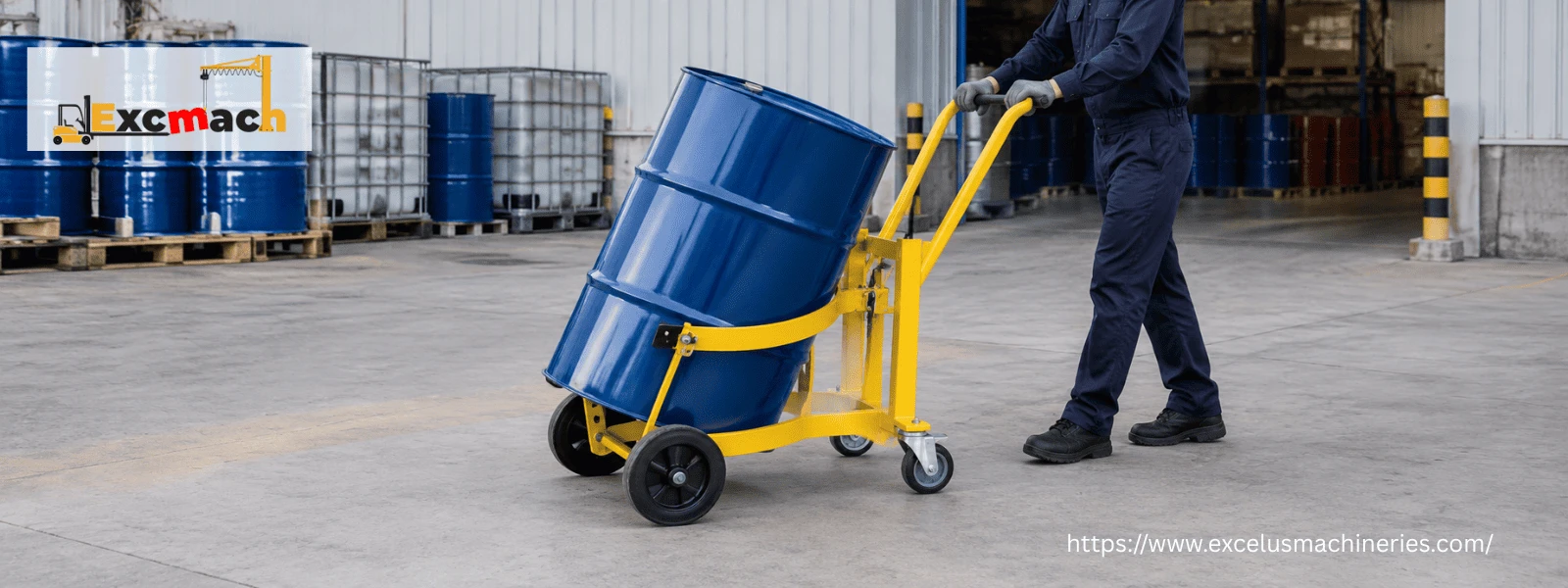
A drum caddy is a wheeled drum handling solution designed to help operators move compatible industrial drums over short distances without dragging or manually carrying them. It is useful in workshops, manufacturing plants, warehouses, and maintenance areas where drums need frequent repositioning.
This guide covers drum caddy features, applications, benefits, safety considerations, and selection factors. It also explains how a drum caddy differs from a drum trolley and what buyers should check before choosing a suitable model from Excelus Machineries.
What Is a Drum Caddy?
A drum caddy is a wheeled base that a drum sits on so it can be pushed across the floor. The drum stays on the caddy, and the wheels carry the weight. In Excelus Machineries' drum equipment range, the Drum Caddies are shown as a low wheeled frame with a handle, with the drum resting in the frame.
Drum caddies are designed primarily for floor-level movement and repositioning rather than lifting drums to a higher level. Their frame, wheel arrangement, drum compatibility, and handling method can vary by model. Before selecting a caddy, check the product specifications to confirm that it suits the drum dimensions, loaded weight, and operating environment.
Drum Caddy at a Glance
A drum caddy is a wheeled base designed to move compatible industrial drums over short distances. It helps operators reposition drums in workshops, warehouses, and production areas without dragging them across the floor.
Main purpose: Short-distance drum movement
Common applications: Manufacturing, maintenance, warehousing, and workshops
Key selection factors: Drum size, loaded weight, rated capacity, wheel type, and floor conditions
Important limitation: A standard drum caddy does not lift drums to a higher level
How a Drum Caddy Is Used
In practice, a caddy is usually part of a simple routine:
Position the caddy. Place it where the drum will be set down or where the drum already stands.
Seat the drum on it. The drum should sit fully and squarely in the caddy's frame.
Push or pull it to the destination. The operator moves it using the handle or by hand, depending on the design.
Leave it in place or move on. Many facilities keep the drum on the caddy while it's in use, so it can be shifted again easily.
Because the drum stays on its base, repositioning is quick, which is the main reason people choose a caddy over a trolley for short, frequent moves.
Key Features That Matter
A drum caddy looks simple, but a few details decide how well it fits your operation:
Frame design. The frame must hold the drum securely and suit your drum's size and type.
Wheel type and quality. Wheels affect how easily the caddy rolls and how it treats your floor.
Rated capacity. Each model has a maximum load, and the figure for a specific caddy should be read from its listing.
Handle or push points. These affect how comfortably and safely an operator can steer a loaded drum.
Build quality. A sturdy frame and good finish matter when the caddy carries a full drum daily.
Low profile. A low base makes it easier to seat a drum and keeps the load stable.
An industrial drum caddy chosen on these details will hold up in daily use. One chosen on price alone often won't.
Benefits of Using a Drum Caddy
Easier repositioning. Drums move with a push instead of a drag or a tilt.
Less manual strain. The wheels carry the weight, so operators aren't lifting or wrestling a heavy drum.
A simple, low-cost solution. A caddy is a straightforward piece of drum handling equipment that doesn't need power or complex setup.
Flexible layouts. Drums can be shifted to suit changing work areas without permanent fixtures.
Keeps drums off the floor surface. The drum rests on a base rather than directly on the floor, which can help keep the floor and the drum bottom cleaner.
Applications of Drum Caddies
Drum caddies suit places where drums are moved often, over short distances:
Workshops and maintenance areas, shifting oil and fluid drums to where the work is happening
Manufacturing plants, repositioning coolant, lubricant, and process drums between stations
Chemical and petrochemical facilities, moving drums short distances within a storage or process area
Warehouses and storage areas, rearranging drums without a full handling setup
Cleaning and maintenance routines, shifting drums out of the way and back again
Short-distance drum movement is a routine task across many industries, and a caddy often works alongside heavier equipment. Our guide to drum handling equipment shows how the different pieces fit together.
When Another Tool Fits Better
A caddy is built for one job, so it's worth knowing where its limits are:
Long hauls across a plant. A trolley designed for longer runs is usually the better choice.
Lifting a drum to height. Raising a drum needs a drum handler or lifting clamp.
Holding drums in place for dispensing. A drum stand keeps drums raised and organized between uses.
All of these sit in the same drum equipment category, alongside drum stands, handlers, and lifting clamps, so it's easy to build a setup that covers each part of the job.
How to Choose the Right Drum Caddy
Before comparing models, work through these points:
Loaded drum weight. Choose for the heaviest drum you'll move.
Drum size and type. Confirm the caddy's frame fits your drums.
Floor surface. Smooth, uneven, or wet floors favor different wheel choices.
Move distance and frequency. Short, frequent moves suit a caddy, while long runs may call for a trolley.
Environment. Consider moisture, chemicals, and cleaning needs when choosing materials and finish.
Space and maneuvering. Check that the caddy fits your aisles and work areas.
Using a Drum Caddy Safely
Check stability before movement. Make sure the drum is seated correctly and remains stable when the caddy starts moving. Do not use a damaged caddy or move a load that exceeds the model's rated capacity. Follow the manufacturer's instructions and workplace procedures, particularly when handling drums containing hazardous liquids.
Check the caddy first. Look for damaged wheels, bent frames, or cracks before loading.
Seat the drum fully. It should sit squarely before you start to move it.
Stay within rated capacity. Account for the full weight of the drum and its contents.
Move slowly. A full drum has momentum, and sudden turns or stops can shift it.
Use on level ground. Avoid ramps and slopes unless the model is designed for them.
Keep the route clear. Cables, debris, and drains can catch a small wheel.
Questions to Ask a Drum Caddy Supplier or Distributor
Whether you're talking to a drum caddy supplier, a drum caddy distributor, or the manufacturer directly, these questions get you the details that matter:
What is the rated capacity? Ask for the maximum loaded weight.
Which drum types and sizes does it fit?
What are the wheels made from, and are they suited to my floor?
How is the frame built and finished?
Can I order in the quantity I need? This matters if you're equipping several work areas.
What spare-part and service support is available?
Common Mistakes When Buying a Drum Caddy
Choosing on price without checking rated capacity
Using a caddy for long hauls, where a drum transport trolley suits better
Ignoring floor condition and wheel type
Assuming one caddy fits every drum
Treating a caddy as lifting equipment, when it only moves drums
Where Excelus Machineries Fits
Excelus Machineries offers drum handling solutions for different industrial movement, lifting, and storage requirements. Buyers evaluating a drum caddy should confirm the compatible drum size, maximum loaded weight, wheel configuration, and intended floor conditions before selecting a model.
Contact Excelus Machineries to discuss your application and confirm which available drum handling solution matches your operational requirements. You can also explore the drum equipment range or contact the team for product information.
Final Takeaway
A drum caddy is a simple tool for a common job: moving drums short distances without dragging or lifting them. The right one depends on your drum weight, drum size, and floor, so confirm those details with the supplier before buying.
Get in Touch with Excelus Machineries
Request a Free Quote: Get high-quality material handling equipment tailored to your industrial requirements.
Call Us Directly: +91 9558455226
Email Us: info@excelusmachineries.com
Visit Our Website: https://www.excelusmachineries.com
Expert Consultation: Speak with our specialists to choose the right hand pallet truck, stacker, or material handling equipment for your business.
Our Location: Gala 29, Royal Landmark, Vapi, Gujarat, India.
Recent Insights
View AllFrequently Asked Questions
A drum caddy is used to move drums over short distances on a wheeled base, so operators can reposition them without dragging or lifting.