
Stacker Machine Safety Guidelines: Operator Training, Compliance & Common Accidents to Avoid
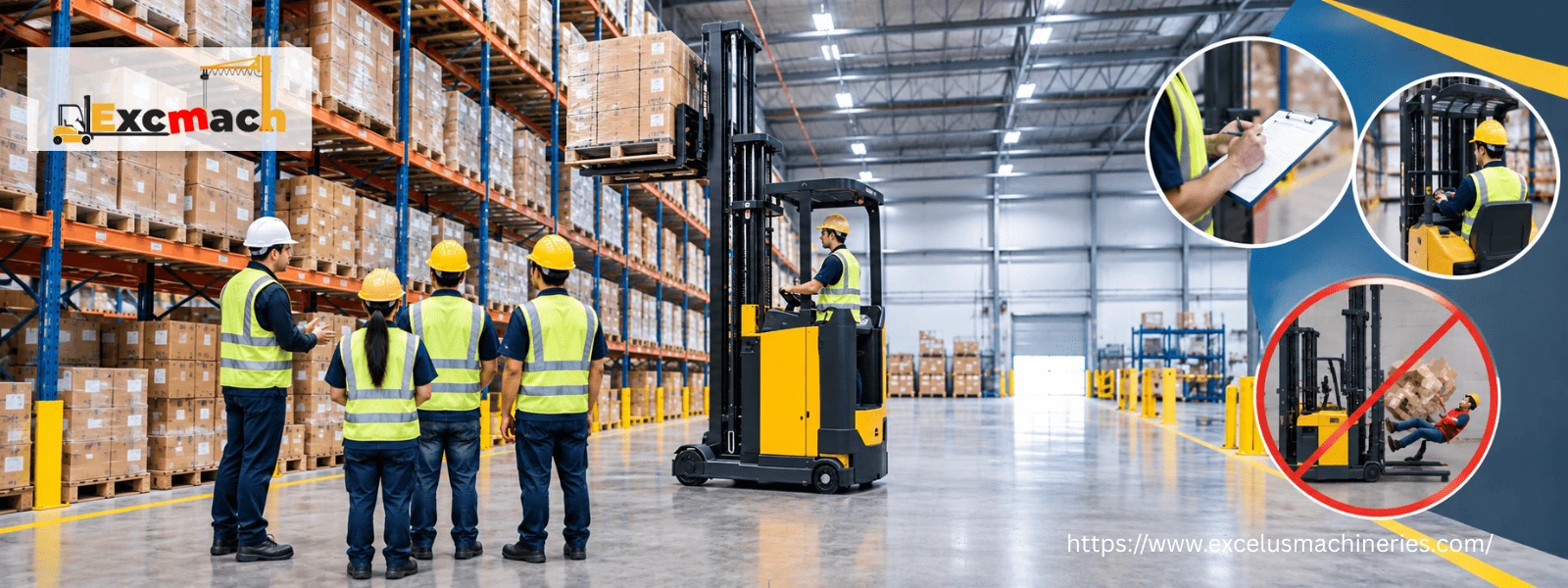
A tipped load, a crushed foot, a stacker rolling backward on a slight incline because the brake wasn't engaged these are the incidents that show up in warehouse accident reports, and most of them trace back to the same root causes: an untrained operator, a rushed process, or equipment that wasn't checked before use. None of this is unique to any one facility. It happens wherever a stacker machine is used without a consistent safety routine around it.
This article covers what actually reduces stacker-related accidents in a warehouse: how operators should be trained, what a basic compliance routine looks like, the accident patterns that repeat across facilities, and where responsibility sits between the business, the supervisor, and the operator. It's written for warehouse managers, safety officers, and business owners who are either setting up a safety process for the first time or reviewing one that already exists. If you're still weighing whether a stacker is the right fit for your operation in the first place, it's worth reading about the operational benefits of stacker machines before getting into safety specifics.
What Stacker Machine Safety Actually Covers
Stacker machine safety refers to the combination of operator training, equipment inspection, and workplace procedures that reduce the risk of injury or damage when using a stacker to lift and move loads. It is not a single checklist item it spans how the operator is trained, how the machine is maintained, and how the physical workspace around the stacker is managed.
Three things typically determine whether a stacker operation is safe on a given day: whether the operator knows what they're doing, whether the machine itself is in working condition, and whether the surrounding environment aisle width, flooring, other staff movement has been accounted for. Removing any one of these doesn't automatically cause an accident, but it removes a layer of protection that was there for a reason.
Why Operator Training Matters More Than the Equipment Itself
A well-built hydraulic stacker with load-control valves, a stable mast, and a reliable brake system still depends on the person operating it. Most stacker accidents are not equipment failures they're the result of a load that was positioned incorrectly, a lift attempted on uneven ground, or an operator who wasn't aware of the machine's rated capacity for the specific load being handled.
Training should cover, at minimum:
How to check the machine before use, including hydraulic fluid levels, wheel condition, fork alignment, and brake function
How to read and apply the stacker's rated load capacity, including how capacity can change at different lift heights
Correct load positioning, including centering the load on the forks and understanding how an off-center load affects stability
Safe travel practices, such as keeping the load low while moving and never traveling with the mast fully raised
What to do if a load feels unstable mid-lift, rather than continuing the lift to finish the task faster
Training is not a one-time event. Operators who use a manual stacker occasionally are more likely to skip steps from memory than someone who uses the same machine daily, simply because the routine isn't as reinforced. Facilities with high staff turnover, or with staff rotating between multiple equipment types, should treat refresher training as a recurring requirement rather than something completed once at onboarding.
Common Stacker Machine Accidents and What Causes Them
Recognizing the patterns behind stacker accidents makes it easier to design a safety process around them, rather than relying on general caution.
Tipping due to overloading or off-center loads: A stacker's stability depends on its rated capacity being respected, and on the load being centered on the forks. A load that exceeds capacity, or one that's loaded unevenly, shifts the center of gravity and increases tipping risk, particularly at higher lift heights.
Crush injuries from foot or hand placement: Operators or nearby staff can be injured when hands or feet are near the mast, forks, or wheels during lifting or lowering. This is more common in tight aisles where multiple people are working close to the equipment.
Rollaway incidents on inclines or uneven flooring: A stacker left without its brake engaged, or used on a surface with more slope than the equipment is rated for, can roll unexpectedly. This is a frequent cause of incidents in loading dock areas where floor gradients aren't always obvious.
Loss of load control during descent: Lowering a load too quickly, or using a stacker with a worn hydraulic system, can result in a sudden drop rather than a controlled lowering. This is one of the reasons hydraulic maintenance is treated as a safety item, not just a performance item.
Collisions in shared aisles: Stackers moving through aisles also used by foot traffic or other equipment create collision risk, especially where visibility is limited by racking or stacked inventory. This is less about the stacker itself and more about how the facility manages shared space.
Most of these causes point back to either a training gap, a maintenance gap, or a workspace design issue which is why addressing all three areas matters more than focusing on any single one.
Building a Basic Compliance Routine
"Compliance" in this context means having a consistent, documented process that a business can point to not a specific certification claim, since requirements vary by region and by the nature of the equipment. A workable routine generally includes:
Pre-use inspection logs, where the operator checks and records basic equipment condition before each shift or use
Documented training records, showing who has been trained, on which equipment, and when
Scheduled maintenance, particularly for hydraulic components, brakes, and wheels, based on the manufacturer's guidance for the specific model
Incident and near-miss reporting, so patterns can be identified before they result in a serious injury
Periodic refresher training, especially after any change in equipment, workspace layout, or after an incident
Businesses operating in regulated industries, such as food processing or pharmaceuticals, may have additional workplace safety obligations layered on top of general equipment safety practices. Those requirements should be confirmed with the relevant regulatory body or a qualified safety consultant, since they vary by location and industry and shouldn't be assumed from general guidance.
Operational Considerations for Safer Stacker Use
Safety isn't only a training issue it's also shaped by how the workspace is set up around the equipment.
Aisle width should be checked against the stacker's actual turning radius, not assumed to be adequate because a similar-looking machine fit before. Floor surfaces should be inspected for cracks, debris, or gradient changes that aren't obvious at a glance but affect stability during a lift. Lighting in stacking areas should be sufficient for the operator to see load position and surrounding foot traffic clearly, particularly in mezzanine or high-rack areas.
For facilities running multiple stacker types manual, semi-electric, and specialized configurations like paper roll stackers or drum stackers it's worth confirming that operators are trained on the specific machine they're using, rather than assuming skills transfer automatically between models with different controls or load-handling mechanisms.
Where Equipment Choice Fits Into Safety
Equipment design plays a role in how much protection is built in before human error even enters the picture. Features such as controlled-descent hydraulic valves, stable mast construction, and clearly marked load capacity ratings reduce the chance that a routine lift turns into an incident. Excelus Machineries supplies a range of hydraulic stackers, including manual and paper roll configurations, built around these kinds of stability and control features. Choosing equipment suited to the actual load type and lift height in use is one part of a safety process it doesn't replace training or maintenance, but it does reduce the number of ways an operator can get into trouble in the first place. Businesses in regulated sectors can also review industry-specific handling considerations or get in touch with the team to match equipment to their exact safety requirements.
Final Takeaway
Reducing stacker machine accidents comes down to consistency: trained operators who understand the specific equipment they're using, a maintenance routine that catches mechanical issues before they become safety issues, and a workspace designed with the equipment's actual dimensions and limitations in mind. No single measure covers all the risk on its own, which is why training, maintenance, and workspace design need to be treated as parts of the same safety process rather than separate checkboxes.
Recent Insights
View AllFrequently Asked Questions
There's no single fixed interval that applies everywhere, but many facilities schedule refreshers annually, after any equipment change, or immediately following an incident or near miss. Higher-turnover environments may benefit from more frequent refreshers than facilities with stable, experienced staff.