
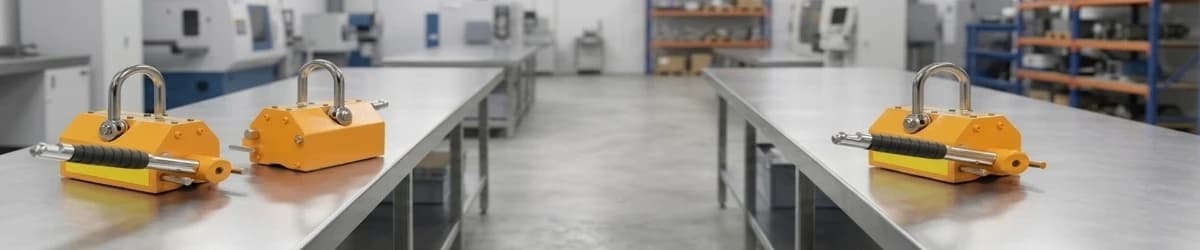
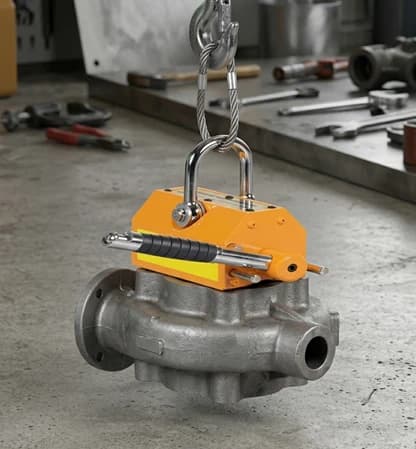
What is a Permanent Magnetic Lifter?
A Permanent Magnetic Lifter is a mechanical lifting device that uses permanent magnets to generate magnetic force and hold compatible ferromagnetic loads during lifting and movement. Unlike electrically powered magnetic systems, a permanent magnetic arrangement does not depend on continuous external electrical power for maintaining magnetic attraction.
A Magnetic Plate Lifter can be particularly useful for handling steel plates and flat ferromagnetic components, while suitable magnetic devices may also be used for round bars, blocks, pipes, and fabricated parts depending on their design. The actual lifting capacity depends on factors such as material type, thickness, surface condition, contact area, air gap, load shape, and the manufacturer's rated specifications.
A permanent magnetic lifter should only be used with compatible ferromagnetic materials and within the manufacturer's specified operating limits.
Applications of Permanent Magnetic Lifter
A Magnetic Lifting Equipment solution can be used in various industries where ferromagnetic loads need to be moved efficiently.
Steel Service Centres – Handles suitable steel plates, sheets, blocks, and sections.
Fabrication Workshops – Supports movement and positioning of steel components during fabrication.
Machine Shops – Helps handle compatible metal parts and workpieces.
Engineering Industries – Supports lifting and positioning of fabricated components and machine parts.
Warehouses – Assists with movement of steel products and compatible metal materials.
Manufacturing Plants – Helps transfer suitable ferromagnetic components during production and assembly.
Metal Processing Facilities – Supports handling of plates, bars, and other compatible materials.
Maintenance Departments – Can be used for suitable equipment and steel component handling.
Industries Served
Steel Industry – Supports handling of compatible steel products.
Metal Fabrication Industry – Helps move plates, sections, and fabricated components.
Engineering Industry – Suitable for handling compatible metal workpieces.
Manufacturing Industry – Assists with internal movement of ferromagnetic materials.
Machine Shops – Supports handling of metal components and workpieces.
Warehousing & Logistics – Facilitates movement of compatible steel materials.
Industrial Maintenance – Provides practical lifting support for suitable metal parts.
Metal Processing Facilities – Supports organized material movement.
Magnetic Lifting Device
A Magnetic Lifting Device uses magnetic force to attach to suitable ferromagnetic materials and support their lifting and movement. It can provide an alternative to conventional load attachment methods for specific applications.
The effectiveness of a magnetic device depends on the properties of the load and the contact between the magnetic surface and the material. Surface rust, paint, scale, curvature, uneven surfaces, insufficient thickness, or an air gap can affect magnetic holding performance.
Before selecting a magnetic lifting device, buyers should verify the material type, load weight, thickness, surface condition, shape, and manufacturer's rated capacity.
Important selection factors include:
Material Type – Confirm that the load is ferromagnetic and compatible with the lifter.
Load Weight – Determine the maximum load to be lifted.
Material Thickness – Check the minimum thickness specified by the manufacturer.
Surface Condition – Consider paint, rust, scale, dirt, coatings, and other surface conditions.
Contact Area – Ensure adequate contact between the magnetic surface and the load.
Load Shape – Flat and curved materials may have different suitability requirements.
Air Gap – Minimize unnecessary gaps between the magnet and load surface.
Rated Capacity – Use the manufacturer's rated capacity for the applicable load condition.
Lifting Orientation – Confirm whether the device is approved for the intended lifting arrangement.
Operating Environment – Consider temperature, moisture, dust, and other site conditions.
How to Choose the Right Permanent Magnetic Lifter
Choosing the right Permanent Magnetic Lifter Manufacturer and equipment requires evaluating the material being lifted and the actual operating conditions.
Identify the Material – Confirm that the load is suitable for magnetic lifting.
Check Maximum Load Weight – Determine the heaviest intended load.
Measure Material Thickness – Verify the thickness against the lifter's rated operating range.
Inspect Surface Condition – Consider rust, paint, scale, contamination, and uneven surfaces.
Evaluate Load Shape – Confirm suitability for flat, cylindrical, or other load forms.
Check Contact Area – Ensure the magnetic base can make appropriate contact with the load.
Review Rated Capacity – Check the manufacturer's rated capacity for the actual lifting condition.
Consider Lifting Orientation – Verify whether vertical, horizontal, or other lifting arrangements are permitted.
Assess Operating Temperature – Confirm that the working environment is within the equipment's specified temperature range.
Review Handling Frequency – Select equipment suitable for the expected frequency of operation.
Follow Manufacturer Specifications – Confirm capacity, operating limits, inspection procedures, and application suitability before use.
Businesses looking to select a Magnetic Lifter Manufacturer should evaluate actual load conditions rather than choosing equipment based only on nominal lifting capacity.
Technical Considerations
The performance of an Industrial Magnetic Lifter depends on load material, thickness, surface condition, magnetic contact area, air gap, load geometry, temperature, and operating practices.
Confirm that the material is compatible with magnetic lifting.
Check the manufacturer's rated capacity for the actual load condition.
Ensure the magnet makes proper contact with the load surface.
Remove excessive dirt, scale, rust, or other material that may increase the air gap where appropriate.
Verify that the load thickness meets the specified minimum requirement.
Inspect the magnetic contact surface for wear or damage.
Check the lifter body, lifting eye, handle, locking mechanism, and other structural components.
Ensure the load is balanced and suitable for the lifting arrangement.
Avoid lifting loads with conditions outside the manufacturer's approved range.
Do not exceed the rated capacity.
Keep personnel clear of suspended loads.
Follow the manufacturer's engagement, lifting, release, inspection, and maintenance procedures.
Correct material identification, proper surface contact, operator training, and regular inspection are important for dependable magnetic lifting.
Maintenance and Best Practices
Inspect Before Use – Check the body, lifting eye, controls, locking mechanism, and magnetic contact surface.
Clean the Contact Surface – Keep the magnetic face free from excessive dirt, chips, scale, and other contaminants.
Check for Damage – Inspect for cracks, deformation, loose parts, or visible wear.
Inspect Lifting Components – Check hooks, lifting eyes, shackles, and other connected accessories where applicable.
Check Locking Mechanism – Ensure the magnetic engagement and release mechanism functions as intended.
Verify Load Compatibility – Confirm the material, thickness, shape, and surface condition remain suitable.
Avoid Overloading – Never exceed the rated capacity under the applicable load condition.
Maintain Full Contact – Position the magnetic surface correctly on the load before lifting.
Avoid Sudden Movement – Use controlled lifting, travel, and lowering movements.
Keep Personnel Clear – Do not allow people beneath or unnecessarily close to suspended loads.
Store Properly – Protect the lifter from damage and contamination when not in use.
Schedule Periodic Inspection – Inspect the equipment according to usage and manufacturer recommendations.
Why Choose Excelus Machineries?
Selecting a Permanent Magnetic Lifter Manufacturer or Permanent Magnetic Lifter Supplier requires consideration of lifting capacity, material compatibility, construction, application suitability, technical guidance, and operating requirements.
Excelus Machineries provides industrial material handling and lifting solutions focused on practical application requirements. Equipment selection can be aligned with load characteristics, workspace conditions, material type, operating frequency, and handling needs.
Key advantages include:
Industrial material handling expertise
Specialized lifting equipment solutions
Application-focused equipment selection
Support for suitable metal handling requirements
Technical guidance during product selection
Solutions for workshops, factories, warehouses, and fabrication facilities
Customization support for suitable applications
Practical operating and maintenance guidance
For businesses looking for a Permanent Magnetic Lifter Supplier, final selection should consider material type, load weight, thickness, surface condition, load shape, contact area, operating temperature, and required lifting arrangement.
Conclusion
A Permanent Magnetic Lifter provides a practical method for lifting, transporting, and positioning compatible ferromagnetic materials such as steel plates, sheets, bars, blocks, and fabricated components. Its permanent magnetic operation can simplify attachment and handling where the load and surface conditions are suitable, making it useful across fabrication workshops, steel service centres, manufacturing plants, warehouses, and engineering facilities.
Whether used as a Magnetic Lifting Clamp, Magnetic Lifting Device, Magnetic Plate Lifter, or Permanent Magnet Lifting Equipment, the lifter should be selected according to material type, load weight, thickness, surface condition, contact area, load geometry, and manufacturer specifications. Excelus Machineries provides material handling solutions designed around practical industrial requirements, helping businesses improve the efficiency and organization of compatible metal handling operations.