
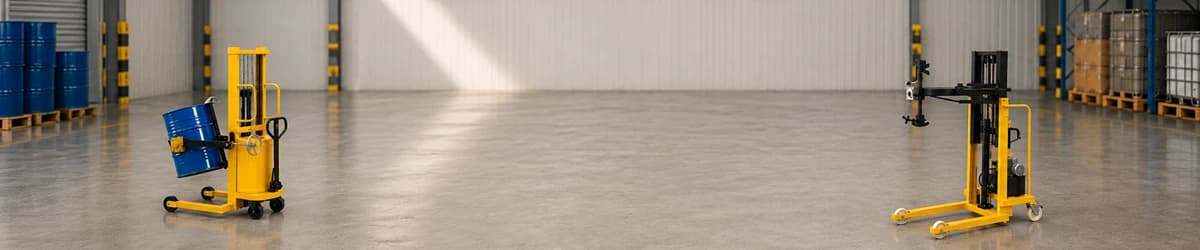
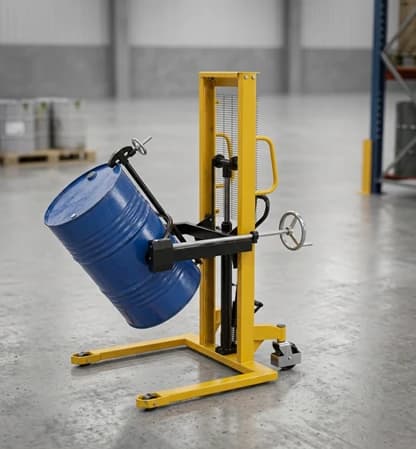
What is a Manual Drum Lifter & Tilter?
A Manual Drum Lifter & Tilter is a manually operated drum handling machine designed to lift, move, and tilt suitable drums. It typically uses a mechanical or hydraulic lifting arrangement together with a dedicated drum gripping mechanism to keep the drum positioned during handling.
A Manual Drum Tilter allows the operator to change the orientation of a compatible drum for applications such as pouring, dispensing, emptying, mixing, or positioning. The exact lifting capacity, drum diameter range, lifting height, tilting angle, gripping mechanism, wheel configuration, and operating method depend on the equipment design.
A Manual Drum Lifting Machine should be selected according to the drum type, maximum drum weight, drum dimensions, handling frequency, floor conditions, and manufacturer's specifications.
Applications of Manual Drum Lifter & Tilter
A Drum Lifting & Tilting Equipment solution can be used wherever compatible drums need to be lifted, moved, and positioned.
Chemical Facilities – Supports handling of suitable chemical drums under appropriate operating procedures.
Oil & Lubricant Storage – Helps move compatible oil, lubricant, and process drums.
Paint & Coating Plants – Assists with positioning drums for suitable dispensing and processing tasks.
Manufacturing Plants – Supports movement of raw materials and process-related drums.
Warehouses – Helps transfer drums between storage, staging, and dispatch areas.
Pharmaceutical Facilities – Can support compatible drum-handling operations where equipment and procedures are suitable.
Food Processing Facilities – Suitable for compatible drum applications where hygiene and equipment requirements are met.
Workshops & Maintenance Areas – Helps move and position drums used during industrial operations.
Industrial Storage Facilities – Supports organized handling and positioning of drums.
Industries Served
Chemical Industry – Supports handling of compatible chemical drums.
Oil & Lubricant Industry – Helps transport and position suitable oil and lubricant drums.
Paint & Coating Industry – Supports drum movement and suitable dispensing applications.
Manufacturing Industry – Assists with process and raw-material drum handling.
Pharmaceutical Industry – Suitable for compatible material handling requirements.
Food Processing Industry – Supports suitable drum handling applications.
Warehousing & Logistics – Facilitates movement of drums between designated areas.
Industrial Workshops – Provides flexible floor-level drum handling capability.
Manual Drum Lifter & Tilter
A Manual Drum Lifter & Tilter is designed for applications where drums need to be lifted from a lower position, transported over a suitable floor surface, and then tilted or repositioned. This combination can be useful when one piece of equipment needs to perform multiple drum handling tasks.
The drum should remain within the equipment's rated capacity and gripping range throughout the lifting and tilting process. Because drum dimensions and centre of gravity can vary, operators should consider the drum's condition, contents, orientation, and stability before movement.
Important selection factors include:
Drum Weight – Determine the maximum loaded and empty drum weight.
Drum Diameter – Check that the gripping mechanism is suitable for the drum dimensions.
Drum Height – Confirm compatibility with the intended drum size.
Lifting Height – Identify the maximum height required for loading, storage, or dispensing.
Tilting Requirement – Determine the required drum orientation and tilting function.
Load Centre – Consider how the drum's position and contents affect stability.
Gripping Mechanism – Verify compatibility with the drum's rim, body, or designated gripping area.
Wheel Configuration – Consider floor conditions and required mobility.
Operating Frequency – Match the equipment to the expected handling cycles.
Workspace – Check aisle width, turning space, and access around storage or processing areas.
How to Choose the Right Manual Drum Lifter & Tilter
Choosing the right Drum Lifter Supplier and equipment requires evaluation of the drum, workplace, and handling process.
Identify Drum Type – Confirm whether the drums are steel, plastic, or another compatible construction.
Check Drum Weight – Determine the maximum filled drum weight.
Measure Drum Dimensions – Verify diameter and height against the equipment's gripping range.
Determine Required Lift Height – Identify where the drum needs to be raised and positioned.
Evaluate Tilting Needs – Consider whether the application requires pouring, dispensing, emptying, or positioning.
Review Load Stability – Consider the centre of gravity and contents of the drum.
Check Floor Conditions – Ensure the trolley can move appropriately on the intended surface.
Assess Workspace – Review turning space, aisle width, and access around machines or racks.
Consider Handling Frequency – Select equipment appropriate for the expected number of drum movements.
Review Drum Gripping Method – Ensure the gripping arrangement is compatible with the drum design.
Follow Manufacturer Specifications – Confirm capacity, dimensions, operating limits, and maintenance requirements before use.
Businesses looking to buy a manual drum handling machine should evaluate the complete application rather than selecting equipment based only on the nominal lifting capacity.
Technical Considerations
The performance of Industrial Drum Handling Equipment depends on drum weight, dimensions, centre of gravity, gripping method, lifting height, tilting arrangement, wheel configuration, floor conditions, and operating practices.
Confirm the equipment's rated lifting capacity before operation.
Check the applicable capacity for the selected lifting and tilting configuration.
Inspect the drum gripping mechanism before use.
Ensure the drum is correctly positioned and engaged.
Consider the drum's centre of gravity, especially when changing its orientation.
Inspect the frame, mast, lifting components, pins, and fasteners for visible damage.
Check hydraulic components on hydraulic-assisted configurations.
Inspect wheels or casters for wear or damage.
Ensure the floor is suitable for moving the loaded equipment.
Avoid sudden movement while the drum is elevated or tilted.
Keep personnel clear of the drum during lifting and tilting.
Do not exceed the rated capacity or operating limits.
Follow the manufacturer's operating and maintenance recommendations.
Correct drum selection, appropriate gripping, operator training, and regular inspection help support reliable handling performance.
Maintenance and Best Practices
Inspect Before Use – Check the frame, drum grip, lifting mechanism, wheels, and visible components.
Check Drum Engagement – Ensure the drum is properly secured before lifting or tilting.
Inspect Lifting Components – Check chains, pins, hooks, cylinders, or other applicable components.
Check Hydraulic Components – Inspect hoses, fittings, and cylinders where applicable.
Inspect Wheels & Casters – Check for excessive wear, damage, or movement issues.
Avoid Overloading – Never exceed the rated capacity of the equipment.
Maintain Load Stability – Keep the drum correctly positioned throughout lifting and tilting.
Control Movement – Avoid sudden starts, stops, or turns with an elevated drum.
Keep the Floor Clear – Remove obstacles from the travel path before moving the trolley.
Use Correct Tilting Procedure – Follow the manufacturer's instructions for drum orientation and release.
Train Operators – Ensure users understand lifting, movement, tilting, and lowering procedures.
Schedule Preventive Maintenance – Inspect and service the equipment based on usage and manufacturer recommendations.
Why Choose Excelus Machineries?
Selecting a Drum Lifter Manufacturer or Manual Drum Tilter Manufacturer requires consideration of equipment construction, drum compatibility, lifting capacity, tilting requirements, operating conditions, and technical support.
Excelus Machineries provides industrial material handling solutions focused on practical application requirements. Equipment selection can be aligned with drum dimensions, load characteristics, workspace conditions, handling frequency, and the required handling process.
Key advantages include:
Industrial material handling expertise
Manual drum handling solutions
Drum lifting and tilting equipment
Application-focused equipment selection
Support for different drum handling requirements
Technical guidance during product selection
Solutions for warehouses, factories, workshops, and industrial facilities
Practical operating and maintenance guidance
For businesses looking for a Manual Drum Tilter Manufacturer or Drum Lifter Supplier, final equipment selection should consider drum weight, drum dimensions, gripping method, lifting height, tilting requirements, floor conditions, and operating frequency.
Conclusion
A Manual Drum Tilter provides a practical solution for lifting, moving, and tilting compatible drums in warehouses, workshops, manufacturing plants, chemical facilities, and other industrial environments. A Manual Drum Lifter & Tilter combines these functions to support more organized drum handling while reducing the need for direct manual movement of heavy drums.
Whether used as a Drum Lifting Trolley, Manual Drum Handling Trolley, Manual Drum Lifting Machine, or Drum Lifting & Tilting Equipment, the equipment should be selected according to drum weight, dimensions, load centre, gripping requirements, lifting height, tilting needs, floor conditions, and operating frequency. Excelus Machineries provides material handling solutions designed around practical industrial requirements, helping businesses improve drum handling efficiency and workflow.