What is a Low Profile Pallet Truck?
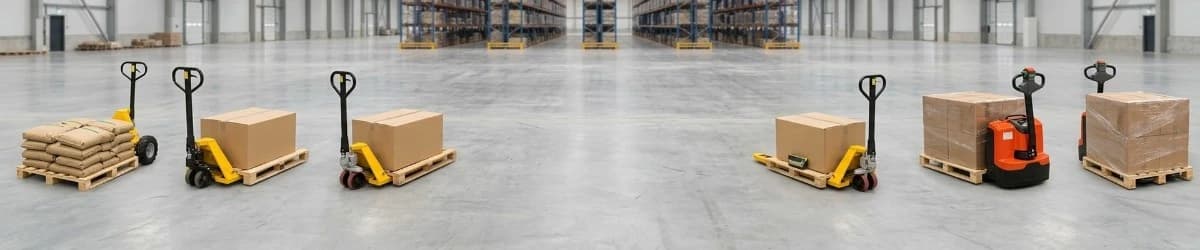
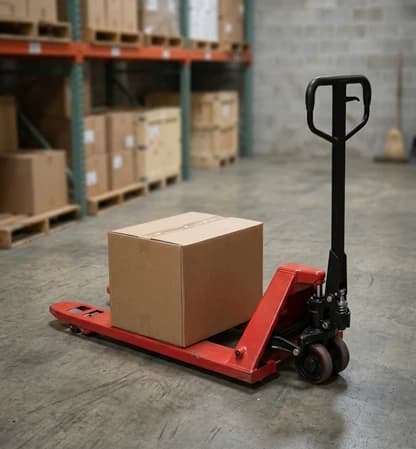
A Low Profile Pallet Truck is a manual pallet handling equipment designed to lift and move compatible pallets where a lower fork entry height is required. It uses a hydraulic lifting mechanism and wheeled construction to allow operators to position the forks beneath suitable pallets and move them across designated work areas.
A Hand Pallet Trolley provides a practical manual solution for transporting palletized goods without requiring powered drive equipment. Depending on the application, it can be used in warehouses, manufacturing facilities, logistics areas, storage locations, and other material handling environments.
The correct model should be selected according to pallet entry clearance, load capacity, fork dimensions, pallet configuration, wheel arrangement, floor condition, and movement frequency. Actual fork dimensions, lifting height, load capacity, and construction vary by model and should be confirmed according to the manufacturer's specifications.
Applications of Low Profile Pallet Truck
A Low Profile Pallet Truck can be used wherever suitable pallets require manual lifting and movement with attention to fork entry clearance.
Warehousing & Distribution – Supports movement of palletized goods between storage, staging, and dispatch areas.
Manufacturing Units – Helps transport raw materials, components, and finished goods across production areas.
Logistics Operations – Useful for internal pallet movement during receiving, storage, sorting, and dispatch.
Storage Facilities – Supports movement of compatible pallets between designated storage locations.
Production Areas – Helps transport materials between workstations and production zones.
Packaging Operations – Can be used for moving palletized packaging materials and finished products.
Workshops & Industrial Facilities – Supports internal transportation of compatible palletized loads.
Retail & Distribution Centres – Useful for stock movement and warehouse handling activities.
Industries Served
Warehousing Industry – Supports internal movement of palletized inventory and stored goods.
Manufacturing Industry – Helps transport production materials, components, and finished products.
Logistics & Supply Chain – Supports pallet movement during receiving, storage, staging, and dispatch.
Automotive Industry – Suitable for handling palletized parts, components, packaging materials, and supplies.
Food & Beverage Industry – Can support movement of compatible palletized products and materials in suitable handling areas.
Packaging Industry – Useful for transporting palletized packaging materials and finished goods.
Engineering & Industrial Facilities – Supports internal pallet movement of equipment, components, and industrial materials.
How to Choose the Right Low Profile Pallet Truck
Selecting the right Low Profile Pallet Truck requires consideration of pallet entry requirements, load characteristics, fork dimensions, floor conditions, and frequency of use.
Fork Entry Clearance – Confirm that the fork height is compatible with the pallets being handled.
Load Capacity Requirement – Choose according to the maximum total weight of the pallets and goods.
Fork Length – Match fork length with pallet dimensions and load support requirements.
Fork Width & Configuration – Ensure the fork arrangement is appropriate for the pallet type.
Pallet Compatibility – Check the trolley against the pallet design and available entry space.
Wheel Configuration – Select suitable steering and load wheel arrangements according to operating requirements.
Wheel Material – Match wheel construction to the warehouse or industrial floor surface.
Floor Condition – Consider smooth floors, joints, ramps, uneven sections, and other travel conditions.
Movement Frequency – Select suitable construction for occasional handling or repeated daily operations.
Operating Environment – Consider dust, moisture, temperature, available space, and cleaning requirements.
Load Distribution – Position the load appropriately across the forks to support controlled handling.
Manufacturer Specifications – Confirm rated capacity, fork dimensions, lifting range, wheel configuration, and operating recommendations before selection.
Businesses comparing a Warehouse Pallet Trolley Supplier should evaluate pallet compatibility, entry clearance, capacity, fork dimensions, wheel configuration, application conditions, and after-sales support rather than selecting equipment solely by price or appearance.
Technical Considerations
The performance of a Low Profile Pallet Truck depends on hydraulic system condition, fork construction, rated capacity, wheel arrangement, load distribution, pallet compatibility, and floor condition.
Confirm the manufacturer's specified rated capacity.
Verify that the fork entry height matches the intended pallet design.
Check fork dimensions against the pallet and load being handled.
Inspect the hydraulic system for proper lifting and lowering operation.
Check forks for bending, cracks, deformation, or other visible damage.
Inspect steering wheels, load wheels, axles, and mounting points.
Ensure the pallet is correctly positioned across the forks.
Avoid uneven or excessive loading beyond the specified capacity.
Consider aisle widths, turning areas, ramps, and floor transitions.
Check for hydraulic leakage or unusual resistance during operation.
Monitor wheels for excessive wear, wobbling, or abnormal noise.
Follow the manufacturer's operating, inspection, and maintenance recommendations.
A Hand Pallet Trolley should be evaluated as a complete assembly, including the frame, forks, hydraulic system, steering handle, wheels, axles, and mounting components.
Maintenance and Best Practices
Inspect Before Use – Check the forks, frame, hydraulic system, wheels, handle, and mounting components.
Check Fork Condition – Look for bending, cracks, wear, deformation, or other structural issues.
Inspect Hydraulic System – Check lifting and lowering operation and look for signs of leakage.
Check Wheels – Inspect for wear, cracks, flat spots, wobbling, or restricted movement.
Inspect Steering Handle – Ensure steering and operating controls function correctly.
Maintain Correct Loading – Position the pallet evenly across the forks and avoid unstable loads.
Avoid Overloading – Never exceed the specified pallet truck capacity.
Keep the Equipment Clean – Remove dust, packaging materials, dirt, and other accumulated debris.
Monitor Movement – Watch for unusual resistance, vibration, noise, or steering difficulty.
Check Fasteners – Ensure accessible bolts, nuts, axles, and mounting components remain secure.
Store Properly – Keep the pallet truck in a suitable designated area when not in use.
Follow Preventive Maintenance – Inspect and maintain the equipment according to operating frequency and manufacturer recommendations.
Regular inspection and correct loading practices help maintain hydraulic performance, controlled movement, equipment condition, and practical service life.
Why Choose Excelus Machineries?
Selecting a Low Profile Pallet Truck Manufacturer requires consideration of pallet compatibility, fork dimensions, load capacity, hydraulic configuration, wheel type, workplace conditions, and technical support.
Excelus Machineries provides industrial material handling solutions focused on practical application requirements. Low-profile pallet truck selection can be considered according to pallet entry clearance, load characteristics, fork dimensions, floor conditions, movement frequency, and workplace environment.
We focus on:
Industrial Experience – More than two decades of experience in material handling solutions.
Application-Focused Selection – Equipment selection is considered according to the actual pallet handling requirement.
Material Handling Expertise – Supports pallet trucks, stackers, lifting equipment, wheels, and other industrial handling solutions.
Technical Guidance – Helps evaluate pallet compatibility, capacity, fork dimensions, wheel type, and operating conditions.
Customized Support – Suitable for application-specific material handling requirements.
Quality-Focused Approach – Solutions are considered for practical industrial and commercial applications.
After-Sales Support – Assistance for product-related and replacement requirements.
Industrial Customer Support – Suitable for procurement teams, engineers, warehouse personnel, maintenance teams, and equipment users.
For businesses evaluating a Hand Pallet Trolley Manufacturer or Warehouse Pallet Trolley Supplier, important factors include fork entry clearance, rated capacity, dimensions, pallet compatibility, wheel configuration, operating environment, and expected usage frequency.
Conclusion
A Low Profile Pallet Truck provides a practical manual solution for lifting and transporting compatible palletized goods where reduced fork entry clearance is important. It can support material movement across warehouses, manufacturing facilities, logistics centres, storage areas, workshops, and other industrial environments.
Whether specified as a Low Profile Pallet Truck, Hand Pallet Trolley, or Heavy Duty Pallet Truck, the equipment should be selected according to pallet compatibility, fork entry clearance, load capacity, fork dimensions, hydraulic configuration, wheel arrangement, floor condition, and operating frequency. Excelus Machineries focuses on application-based pallet handling and material handling solutions for suitable industrial and commercial requirements.