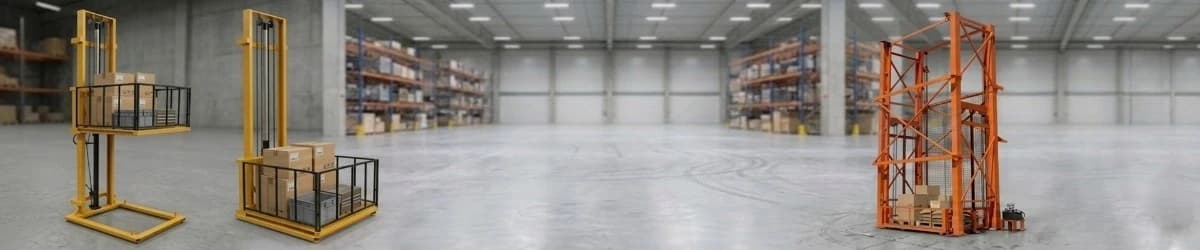
What is a Double Mast Hydraulic Goods Lift?
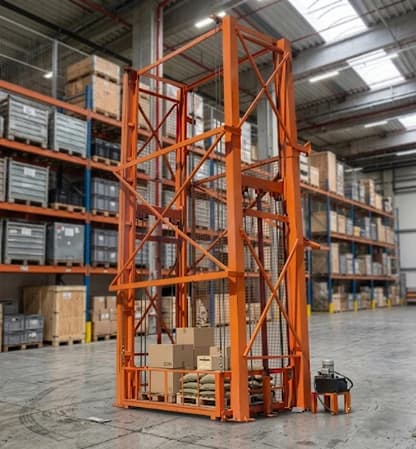
A Double Mast Goods Lift is a vertical material handling system that uses two mast structures to guide and support a platform carrying suitable goods. The hydraulic system provides the lifting force required to move the platform between designated loading and unloading levels.
A Hydraulic Double Mast Goods Lift is designed specifically for goods and material movement rather than passenger transportation. It can help reduce manual movement of heavy materials through stairs or other unsuitable routes and provide a more organized method for vertical goods transfer.
The actual lifting capacity, platform dimensions, travel height, mast arrangement, hydraulic configuration, controls, and installation requirements vary according to the equipment model. These specifications should be selected according to the manufacturer's recommendations and the conditions of the installation site.
Applications of Hydraulic Double Mast Goods Lift
An Industrial Hydraulic Lift can support vertical material movement across different industrial and commercial applications.
Warehouses – Moves pallets, cartons, equipment, and stored materials between floors.
Manufacturing Plants – Transfers raw materials, components, finished goods, and production supplies.
Logistics Facilities – Supports vertical movement of goods between storage and operating levels.
Industrial Storage Areas – Helps transfer stored materials between different floors.
Packaging Facilities – Moves packaging materials, finished products, and production supplies.
Automotive Facilities – Assists with movement of components, parts, and workshop materials.
Engineering Workshops – Supports vertical movement of machinery parts, assemblies, and tools.
Commercial Storage Facilities – Provides a practical solution for goods transfer between levels.
Industries Served
Warehousing & Logistics – Supports organized vertical movement of goods.
Manufacturing Industry – Helps transfer production materials and finished products.
Automotive Industry – Assists with component and equipment handling.
Packaging Industry – Supports movement of packaging materials and products.
Engineering Industry – Helps move industrial components and machinery-related materials.
Industrial Storage – Supports vertical movement between storage levels.
Workshops & Service Facilities – Provides practical goods lifting capability.
Distribution Facilities – Supports movement of suitable goods between operational levels.
Double Mast Hydraulic Goods Lift
A Double Mast Hydraulic Goods Lift is suitable for applications where materials need to be transferred vertically between two or more working levels. The two mast structures provide guided support for the lifting platform, while the hydraulic system provides controlled vertical movement.
This type of Hydraulic Material Handling Lift can be considered for applications involving pallets, machinery, cartons, industrial components, and other suitable loads. The equipment should be specified according to the actual material, building layout, lifting height, platform requirements, and operating frequency.
Important selection factors include:
Rated Load Capacity – Determine the maximum weight the lift must handle.
Platform Dimensions – Ensure the platform can accommodate the intended goods and handling equipment.
Lifting Height – Identify the vertical distance between loading and unloading levels.
Load Distribution – Consider how the goods will be positioned on the platform.
Double Mast Configuration – Verify that the mast arrangement suits the required platform and installation conditions.
Hydraulic System – Review the hydraulic configuration and servicing requirements.
Access Arrangement – Confirm suitable loading and unloading access at each required level.
Installation Conditions – Evaluate floor strength, structural support, anchoring, and available space.
Operating Frequency – Consider the expected number of lifting cycles.
Safety Requirements – Review suitable gates, barriers, controls, guarding, and operating procedures.
How to Choose the Right Double Mast Goods Lift
Choosing the right Double Mast Goods Lift Supplier requires evaluation of the material, building layout, lifting requirements, and operating conditions.
Determine Load Capacity – Identify the maximum operating load, including pallets, trolleys, or handling equipment where applicable.
Check Platform Size – Select dimensions that allow materials to be positioned appropriately.
Evaluate Lifting Height – Determine the required vertical travel between levels.
Review Load Distribution – Ensure the goods can be placed in a stable and suitable arrangement.
Assess Mast Configuration – Confirm that a double mast design is suitable for the intended installation.
Review Hydraulic Requirements – Consider the hydraulic system, power requirements, and maintenance needs.
Check Access Points – Ensure convenient loading and unloading arrangements are available.
Evaluate Installation Area – Consider structural support, floor conditions, clearances, and available space.
Consider Usage Frequency – Match the equipment to the expected daily or periodic lifting cycle.
Review Operating Controls – Select suitable controls for the intended application.
Follow Manufacturer Specifications – Confirm capacity, dimensions, lifting height, installation requirements, and operating limitations before purchase.
Businesses looking for a Double Mast Goods Lift Manufacturer should evaluate the complete application rather than selecting equipment based only on nominal lifting capacity.
Technical Considerations
The performance of an Industrial Goods Lifting Machine depends on rated capacity, platform dimensions, lifting height, load distribution, mast structure, hydraulic components, structural support, installation quality, and operating practices.
Confirm the rated lifting capacity before operation.
Ensure loads are distributed appropriately across the platform.
Inspect both mast structures for visible damage, deformation, or abnormal wear.
Check the platform, frame, and structural components regularly.
Inspect hydraulic cylinders, hoses, fittings, and connections for leakage or damage.
Check mounting and anchoring points according to applicable maintenance procedures.
Inspect gates, barriers, interlocks, and other applicable protective components.
Ensure the loading and unloading areas remain clear.
Avoid placing unstable or poorly distributed loads on the platform.
Do not exceed the specified lifting capacity.
Keep unauthorized personnel away from the operating area.
Use the goods lift only for applications approved by the manufacturer.
Follow applicable workplace procedures and manufacturer recommendations.
Regular inspection, appropriate installation, operator training, and preventive maintenance help support dependable goods lift performance.
Maintenance and Best Practices
Inspect Before Use – Check the platform, mast structures, frame, controls, and visible components.
Check Hydraulic Components – Inspect cylinders, hoses, fittings, and connections for leakage or damage.
Inspect Mast Structures – Check for cracks, deformation, loose components, or abnormal wear.
Check Platform Condition – Ensure the platform remains suitable for the intended loads.
Inspect Gates & Guards – Check applicable gates, barriers, interlocks, and protective components.
Check Structural Connections – Inspect anchors, mounting points, and supporting arrangements.
Avoid Overloading – Never exceed the rated capacity of the lift.
Distribute Loads Correctly – Position materials evenly and securely on the platform.
Keep Access Areas Clear – Maintain clear loading and unloading zones.
Monitor Hydraulic Performance – Watch for unusual noise, leakage, or irregular platform movement.
Train Operators – Ensure personnel understand correct loading, unloading, and operating procedures.
Schedule Preventive Maintenance – Service the goods lift according to usage and manufacturer recommendations.
Why Choose Excelus Machineries?
Selecting a Hydraulic Goods Lift Supplier requires consideration of lifting capacity, hydraulic performance, platform dimensions, mast structure, installation conditions, technical support, and application suitability.
Excelus Machineries provides industrial material handling and lifting solutions focused on practical operational requirements. Equipment selection can be aligned with the type of goods, available installation space, required lifting height, load capacity, and facility workflow.
Key advantages include:
Industrial material handling expertise
Hydraulic goods lifting solutions
Double mast lifting configurations
Application-focused equipment selection
Support for different lifting requirements
Customization support for suitable applications
Technical guidance during product selection
Solutions for warehouses, factories, workshops, and industrial facilities
For businesses looking for a Double Mast Goods Lift Supplier, final equipment selection should consider rated capacity, platform dimensions, lifting height, load distribution, hydraulic requirements, installation conditions, access arrangement, and operating frequency.
Conclusion
A Double Mast Goods Lift Manufacturer provides a practical vertical material handling solution for warehouses, factories, workshops, logistics facilities, storage areas, and other industrial environments. A Double Mast Hydraulic Goods Lift uses two mast structures to support guided platform movement, while the hydraulic system provides controlled lifting and lowering of suitable goods.
Whether used as a Hydraulic Material Handling Lift, Hydraulic Platform Goods Lift, Industrial Hydraulic Lift, or Industrial Goods Lifting Machine, the equipment should be properly specified, installed, operated, and maintained according to manufacturer recommendations. Excelus Machineries provides material handling and lifting solutions designed around practical industrial requirements, helping businesses improve vertical goods movement and organized material flow.