
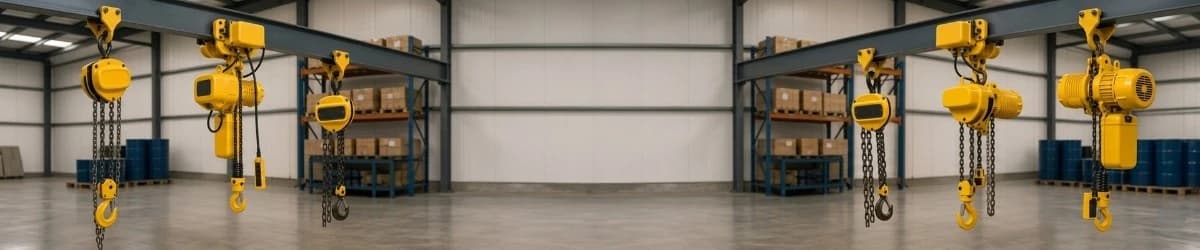
What is a Geared Trolley?
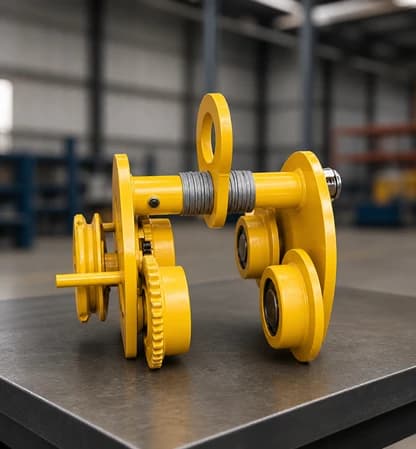
A Geared Trolley is a mechanical trolley designed to carry a suspended lifting device and move the attached load horizontally along a suitable overhead beam. The geared mechanism allows the operator to control trolley travel manually through a hand chain.
A Heavy Duty Gear Trolley is intended for applications where heavier loads and regular industrial use require a robust trolley arrangement. It can be used with suitable lifting equipment such as chain hoists, electric chain hoists, and other compatible load-handling systems.
The trolley must be matched to the beam dimensions, flange configuration, rated load, and lifting arrangement. Correct selection helps maintain controlled travel and supports safe load movement.
Applications of Geared Trolley
A Gear Trolley Heavy Duty is useful in workplaces where suspended loads need to be moved horizontally after lifting.
Manufacturing Industry – Moving machinery, production components, assemblies, and equipment between workstations.
Engineering Workshops – Positioning fabricated parts, machine components, and maintenance equipment.
Fabrication Industry – Transferring steel structures, assemblies, and fabricated components during production.
Automotive Industry – Moving engines, tooling, fixtures, and suitable vehicle components.
Warehousing – Supporting the horizontal movement of equipment and heavy materials in suitable storage areas.
Plant Maintenance – Assisting with machinery installation, repair, replacement, and positioning.
Industrial Installation – Moving suitable equipment and components along beams during installation and assembly.
Industries Served
Manufacturing Plants – Supports machinery handling and production material movement.
Engineering & Fabrication – Helps move fabricated structures and industrial components.
Automotive Industry – Assists with engine, tooling, equipment, and component handling.
Warehousing & Logistics – Supports horizontal movement of suitable suspended loads.
Plant Maintenance – Helps position equipment during repair and installation.
Industrial Workshops – Provides practical manual travel for lifting applications.
Construction & Installation – Useful for suitable beam-mounted load movement during assembly work.
Available Capacity Options
Geared trolley capacity should always be selected according to the actual suspended load, beam arrangement, lifting equipment, and manufacturer's rated specifications.
1 Ton Gear Trolley – Suitable for applications requiring a rated capacity of up to 1 ton.
2 Ton Gear Trolley – Suitable for applications requiring a rated capacity of up to 2 tons.
3 Ton Gear Trolley – Designed for suitable higher-capacity industrial handling.
5 Ton Gear Trolley – Suitable for heavier industrial load movement where specified.
10 Ton Gear Trolley – Intended for substantially higher-capacity applications with a suitable supporting structure.
Exact specifications such as beam width, flange range, dimensions, and capacity should be confirmed for the selected trolley model.
How to Choose the Right Geared Trolley
Selecting the correct Heavy Duty Gear Trolley requires evaluating the load, beam, lifting equipment, and operating environment.
Load Capacity – Determine the maximum suspended load and select an appropriate rated capacity.
Beam Compatibility – Check beam type, flange width, and structural suitability.
Hoist Compatibility – Ensure the trolley is compatible with the selected chain hoist or lifting device.
Travel Requirement – Consider the horizontal distance and frequency of load movement.
Load Characteristics – Evaluate load size, centre of gravity, lifting points, and suspension arrangement.
Operating Frequency – Consider how often the trolley will be used during normal operations.
Operating Environment – Evaluate dust, moisture, temperature, available space, and workplace conditions.
Capacity Margin – Select a suitable rated capacity based on actual operational requirements rather than using a trolley at its limit.
Installation Arrangement – Verify that the trolley can be correctly fitted and adjusted to the supporting beam.
An experienced manufacturer or supplier can help verify beam and load compatibility before equipment selection.
Technical Considerations
The performance of a Geared Trolley depends on rated capacity, beam compatibility, wheel configuration, load distribution, travel mechanism, and operating practices.
Check Rated Capacity – Ensure the suspended load remains within the manufacturer's specified limit.
Inspect Trolley Wheels – Check wheels for wear, cracks, deformation, and smooth rotation.
Verify Beam Compatibility – Ensure the trolley is correctly fitted to the beam and adjusted to suit its dimensions.
Check Gear Mechanism – Inspect gears, shafts, and hand-chain components for abnormal wear or damage.
Inspect Suspension Points – Check hooks, shackles, pins, and connections supporting the lifting equipment.
Maintain Load Balance – Ensure the load is properly attached and stable before travelling.
Avoid Overloading – Never exceed the rated capacity of the selected trolley.
Check Travel Path – Keep the beam and travel route clear of obstructions.
Avoid Improper Side Loading – Use the trolley and suspended lifting equipment according to their intended configuration.
Train Operators – Ensure personnel understand correct lifting, travelling, positioning, and safety procedures.
Regular inspection and proper operation help support reliable trolley performance.
Maintenance and Best Practices
Inspect Before Use – Check the trolley frame, wheels, gear mechanism, hand chain, hooks, and connections.
Check Trolley Wheels – Inspect for wear, cracks, deformation, and abnormal movement.
Inspect Gear Mechanism – Check gears and associated components for unusual noise, wear, or damage.
Maintain Hand Chain – Ensure smooth operation and inspect the chain for damaged links.
Check Beam Engagement – Verify correct trolley alignment and adjustment on the supporting beam.
Inspect Load Connections – Check hooks, pins, shackles, and other attachment components.
Lubricate Applicable Components – Follow the manufacturer's recommended lubrication schedule.
Avoid Overloading – Never exceed the rated capacity of the Gear Trolley Heavy Duty.
Keep Equipment Clean – Remove dust, grease, debris, and other contaminants from accessible components.
Keep Travel Path Clear – Ensure the trolley can move without obstructions along the beam.
Train Operators – Ensure personnel follow correct load movement and operating procedures.
Follow Preventive Maintenance – Schedule regular inspections and servicing according to manufacturer recommendations.
Why Choose Excelus Machineries?
Selecting a Geared Trolley requires more than comparing load capacity. Buyers should evaluate beam dimensions, trolley adjustment range, load characteristics, hoist compatibility, operating frequency, maintenance requirements, and technical support.
Excelus Machineries provides industrial lifting and material handling solutions designed around practical application requirements.
Key advantages include:
Durable industrial construction
Manual geared travel solutions
Support for different lifting-capacity requirements
Application-focused equipment selection
Technical assistance during product selection
Compatibility considerations for lifting equipment
Customization support for specific applications
Maintenance and operational guidance
For businesses requiring a Heavy Duty Gear Trolley, selection should be based on the actual load, beam arrangement, travel requirements, and operating environment.
Conclusion
A Geared Trolley is a practical solution for businesses that need to move suspended loads horizontally along a compatible beam. Its hand-operated geared mechanism provides controlled travel and positioning without requiring a separate powered trolley drive.
Depending on the application, businesses may require a 1 Ton Gear Trolley, 2 Ton Gear Trolley, 3 Ton Gear Trolley, 5 Ton Gear Trolley, or 10 Ton Gear Trolley. The appropriate capacity should always be selected according to the actual suspended load, beam compatibility, lifting equipment, and manufacturer's rated specifications.
Whether specified as a Gear Trolley Heavy Duty or Heavy Duty Gear Trolley, the equipment should be evaluated for load capacity, beam dimensions, wheel configuration, travel requirements, operating frequency, and workplace conditions.
At Excelus Machineries, industrial lifting and material handling solutions are developed around practical operating requirements, helping businesses achieve controlled load movement, efficient positioning, and dependable day-to-day handling.