

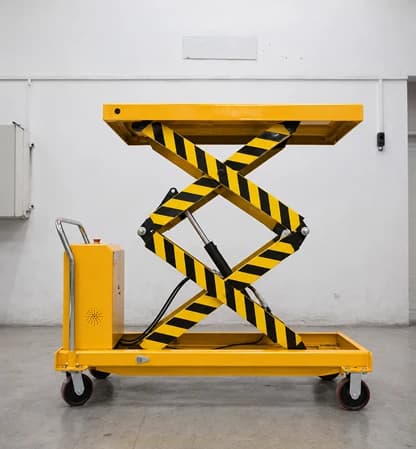
What is a Fully Electric Hydraulic Scissor Table?
A Fully Electric Hydraulic Scissor Table is a lifting platform that uses an electric motor and hydraulic system to raise and lower the platform through a scissor-leg mechanism. The electric power system operates the hydraulic lifting arrangement, providing controlled vertical movement of suitable loads.
A Motorized Hydraulic Scissor Lift can help reduce manual lifting effort in applications where materials need to be repeatedly raised, lowered, or positioned at different working heights. It can support production, assembly, loading, unloading, maintenance, and material handling operations.
An Electric Scissor Lift Platform should be selected according to the rated load, platform size, minimum and maximum height, power requirements, lifting cycle, and working environment. Actual specifications such as motor configuration, lifting speed, capacity, and operating cycle vary by model and should be confirmed from the manufacturer's specifications.
Applications of Fully Electric Hydraulic Scissor Table
An Electric Hydraulic Scissor Lift Table can be used wherever suitable loads need controlled powered vertical movement.
Material Handling – Supports lifting and positioning of compatible industrial materials and components.
Production Areas – Helps bring materials and equipment to required working heights.
Assembly Operations – Supports convenient positioning of components during suitable assembly activities.
Warehouse Handling – Assists with staging, loading, unloading, and material positioning.
Packaging Operations – Helps position products, containers, and packaging materials during handling.
Maintenance Applications – Useful for compatible equipment servicing and component positioning.
Workshop Operations – Supports lifting and positioning of tools, components, and industrial equipment.
Workstation Height Adjustment – Helps position materials at suitable working levels.
Material Transfer – Can support controlled vertical movement between suitable working positions.
The table should be operated within its specified capacity and lifting range, with the load properly positioned and stabilized on the platform.
Industries Served
Manufacturing Industry – Supports production, assembly, material positioning, and internal handling operations.
Warehousing & Logistics – Suitable for staging, loading, unloading, and material handling activities.
Automotive Industry – Used for compatible component handling, production, workshop, and maintenance applications.
Engineering & Fabrication – Supports positioning of fabricated components, tools, and industrial materials.
Packaging Industry – Helps position suitable products and materials during handling and production.
Industrial Maintenance – Useful for equipment positioning, servicing, and repair-related activities.
Workshops – Provides powered lifting assistance for suitable equipment and material handling tasks.
General Industrial Facilities – Supports applications requiring controlled powered vertical movement.
How to Choose the Right Fully Electric Hydraulic Scissor Table
Choosing the right Electric Hydraulic Lift Table Manufacturer is important, but the table should also be matched carefully to the application.
Load Capacity – Select the table according to the maximum total load to be lifted.
Platform Dimensions – Ensure the platform provides sufficient area and stability for the intended load.
Minimum Height – Check the lowest platform position against loading and access requirements.
Maximum Lift Height – Confirm that the platform reaches the required working level.
Power Requirements – Review the electrical supply and motor arrangement required for the selected model.
Load Distribution – Position the load appropriately and avoid unstable or concentrated loading.
Lifting Frequency – Consider the number of lifting cycles expected during regular operation.
Mobility Requirement – Determine whether a stationary or mobile configuration is appropriate.
Floor Condition – Ensure the equipment is used on a suitable, stable, and adequately strong surface.
Working Environment – Consider dust, moisture, temperature, available workspace, and other workplace conditions.
Manufacturer Specifications – Confirm capacity, lifting range, dimensions, power requirements, and operating limitations before selection.
Businesses comparing an Electric Scissor Lift Table Supplier should evaluate the complete application rather than selecting a table based only on capacity or lifting height.
Technical Considerations
The performance of a Powered Hydraulic Lift Table depends on rated capacity, hydraulic condition, electrical system, platform design, load distribution, and operating practices.
Confirm the manufacturer's specified rated capacity.
Calculate the actual working load before operation.
Verify platform dimensions and load placement requirements.
Check minimum and maximum lifting heights.
Confirm the required electrical power supply and motor configuration.
Inspect hydraulic cylinders, hoses, seals, fittings, and related components for visible issues.
Check the scissor arms, frame, platform, and structural components for damage or deformation.
Ensure the table is positioned on a stable and suitable floor.
Avoid side loading, unstable loads, or conditions outside the manufacturer's intended application.
Keep the load within the specified platform and capacity limits.
Keep personnel clear of moving scissor arms and potential pinch points.
Follow the manufacturer's electrical, hydraulic, operating, and maintenance instructions.
An Electric Scissor Table should be evaluated as a complete system, including the platform, scissor mechanism, motor, hydraulic system, controls, electrical components, and supporting structure.
Maintenance and Best Practices
Inspect Before Use – Check the platform, frame, scissor mechanism, hydraulic system, motor, controls, and visible components.
Check Hydraulic Components – Inspect hoses, fittings, seals, and hydraulic connections for leakage or deterioration.
Inspect Scissor Arms – Look for cracks, bending, deformation, or excessive wear.
Check Electrical Components – Inspect controls, cables, switches, and electrical connections according to the manufacturer's procedures.
Monitor Motor Operation – Watch for unusual noise, overheating, vibration, or abnormal operation.
Inspect Platform Condition – Ensure the platform remains stable and free from structural damage.
Maintain Load Stability – Keep the load properly positioned and avoid unstable loading.
Avoid Overloading – Never exceed the specified rated capacity.
Keep Moving Components Clean – Remove dirt and debris that may interfere with scissor movement.
Monitor Lifting Performance – Check for abnormal lifting, lowering, jerking, or hydraulic leakage.
Replace Damaged Components – Do not continue operating equipment with significant mechanical, hydraulic, or electrical damage.
Follow Preventive Maintenance – Schedule inspections according to equipment usage and manufacturer recommendations.
Regular inspection and preventive maintenance help support dependable lifting performance and can identify mechanical, electrical, or hydraulic issues before they affect operation.
Why Choose Excelus Machineries?
Selecting an Electric Hydraulic Scissor Lift Table Manufacturer involves more than comparing lifting capacity. Businesses should consider platform design, lifting range, electrical requirements, hydraulic configuration, application suitability, operating conditions, and technical support.
Excelus Machineries provides industrial material handling and lifting solutions focused on practical application requirements. Scissor table selection can be considered according to load characteristics, working height, platform requirements, operating frequency, and workplace conditions.
Key considerations include:
Industrial Experience – More than two decades of experience in material handling solutions.
Application-Focused Selection – Equipment is considered according to the actual lifting and handling requirement.
Material Handling Expertise – Supports suitable factory, warehouse, workshop, and production applications.
Technical Guidance – Helps customers evaluate capacity, platform dimensions, lifting range, and power requirements.
Customized Support – Suitable for application-specific lifting and material handling requirements.
Quality-Focused Approach – Solutions are considered for practical industrial operating conditions.
After-Sales Support – Assistance for product-related and replacement requirements.
Industrial Customer Support – Suitable for procurement teams, engineers, maintenance personnel, and equipment users.
For businesses evaluating an Electric Scissor Lift Table Supplier or Electric Hydraulic Scissor Lift Table Exporter, important factors include rated capacity, platform size, lifting range, power arrangement, operating cycle, floor condition, and application requirements.
Conclusion
A Fully Electric Hydraulic Scissor Table provides a powered solution for lifting, lowering, and positioning suitable materials and equipment at different working heights. Its combination of an electric motor, hydraulic system, and scissor mechanism can support repeated material handling and height adjustment tasks in suitable industrial environments.
Whether specified as an Electric Hydraulic Scissor Lift Table, Electric Scissor Lift Table, Electric Scissor Lift Platform, Motorized Hydraulic Scissor Lift, or Powered Hydraulic Lift Table, the equipment should be selected according to load capacity, platform dimensions, lifting range, electrical requirements, load distribution, floor condition, and operating frequency. Excelus Machineries focuses on application-based lifting and material handling solutions for suitable industrial requirements.