What is an Engine Floor Crane?
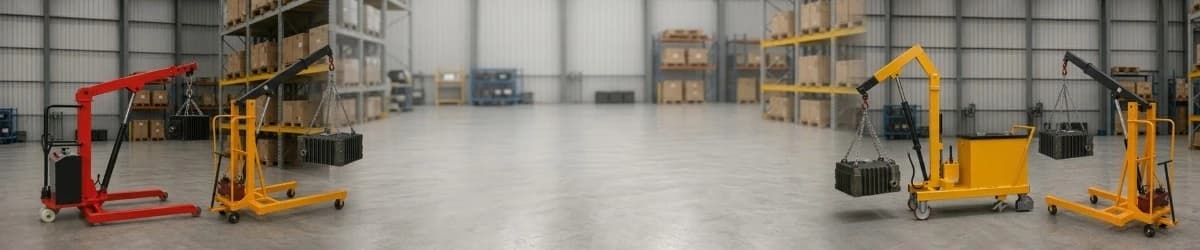
An Engine Floor Crane is a mobile floor-level lifting system designed primarily for handling engines, machinery components, and other suitable loads within its rated capacity. It typically uses a boom, lifting mechanism, hook or compatible lifting accessory, and a wheeled support structure to position loads at the required working location.
An Engine Hoist or Hydraulic Engine Crane can provide controlled lifting and lowering for engine removal, installation, maintenance, and positioning tasks. The crane's actual lifting capacity, boom reach, lifting height, load centre, wheel arrangement, and hydraulic configuration should be selected according to the manufacturer's specifications and the requirements of the intended application.
Applications of Engine Floor Crane
An Engine Floor Crane is commonly used where heavy engines and components require controlled lifting and positioning.
Automotive Workshops – For engine removal, installation, servicing, and positioning.
Vehicle Service Centres – Supports engine and major component handling during repair work.
Garage Workshops – Provides practical lifting assistance for suitable automotive applications.
Manufacturing Plants – Helps handle machinery components and assemblies.
Maintenance Departments – Supports equipment servicing and component replacement.
Machine Shops – Assists with handling tooling, fixtures, and suitable machine components.
Engineering Workshops – Useful for lifting and positioning industrial assemblies.
Industrial Service Facilities – Supports maintenance and repair operations involving heavy components.
Industries Served
Automotive Industry – Supports engine and vehicle component handling.
Automotive Service Centres – Assists with regular repair and maintenance operations.
Engineering Industry – Helps with industrial component and assembly handling.
Manufacturing Industry – Supports selected machinery maintenance and component movement.
Machine Shops – Useful for handling dies, tooling, and machinery parts.
Industrial Maintenance – Provides practical lifting support for servicing applications.
Workshops & Garages – Suitable for engine and component lifting tasks.
Foldable Engine Crane
A Foldable Engine Crane is designed with a folding mechanism that can reduce the crane's storage footprint when it is not in use, depending on the equipment design. This can be particularly useful in workshops where floor space is limited and equipment needs to be stored between jobs.
A Foldable Engine Crane Manufacturer should be selected based on the crane's rated capacity, boom configuration, lifting height, reach, folding arrangement, hydraulic system, and intended application.
Important selection factors include:
Rated Capacity – Confirm the maximum intended load and applicable configuration.
Load Centre – Consider the position of the engine or component relative to the boom.
Boom Reach – Determine how far the crane needs to extend to access the lifting point.
Lifting Height – Identify the height required for engine removal or installation.
Folding Mechanism – Verify that the folded arrangement suits available storage space.
Floor Conditions – Ensure the crane can move and operate on a suitable surface.
Wheel Configuration – Consider movement and maneuverability within the workshop.
Hydraulic System – Review the lifting mechanism and maintenance requirements.
Workspace – Check aisle width, turning space, and access around vehicles or machinery.
Operating Frequency – Match the crane's configuration to expected usage.
How to Choose the Right Engine Floor Crane
Choosing the right Engine Crane Manufacturer and equipment requires evaluating the engine or component, workspace, and lifting requirements.
Determine the Maximum Load – Identify the heaviest engine or component that will be handled.
Check the Load Centre – Consider the load's centre of gravity and its distance from the crane.
Evaluate Boom Reach – Make sure the boom can access the required lifting position.
Confirm Lifting Height – Select a crane that reaches the required installation or removal height.
Consider Workshop Space – Review the available floor area and movement path.
Check Portability – Determine how frequently the crane needs to be moved.
Assess Folding Requirements – For a foldable model, verify the storage space and folding arrangement.
Review Hydraulic Configuration – Consider the required lifting mechanism and operating conditions.
Check Accessories – Ensure hooks, chains, slings, and other lifting accessories are appropriate and properly rated.
Follow Manufacturer Specifications – Confirm operating limits, rated capacity, dimensions, and maintenance requirements before use.
Businesses looking to Buy Engine Floor Crane equipment should compare the complete application requirements rather than selecting a crane based only on its nominal lifting capacity.
Technical Considerations
The performance of a Hydraulic Shop Crane depends on rated capacity, load centre, boom position, lifting height, hydraulic components, wheel arrangement, floor condition, and operating practices.
Check the boom and structural frame for cracks, damage, or deformation before operation.
Confirm the allowable load for the selected boom position.
Consider the load centre when determining the appropriate working load.
Inspect the hydraulic cylinder, hoses, fittings, and connections for applicable models.
Check wheels and casters for excessive wear or damage.
Inspect the lifting hook, chain, and other load-bearing accessories.
Ensure the load is properly secured before lifting.
Keep personnel away from suspended loads.
Avoid side loading or pulling in directions not permitted by the manufacturer.
Operate the crane only on a suitable floor surface.
Do not exceed the manufacturer's rated capacity.
Follow appropriate workshop lifting procedures and maintenance recommendations.
Correct equipment selection, operator training, regular inspection, and proper load handling practices are important for dependable operation.
Maintenance and Best Practices
Inspect Before Use – Check the frame, boom, hook, wheels, and visible components.
Check Hydraulic Components – Inspect cylinders, hoses, fittings, and connections for leakage or damage.
Inspect Lifting Accessories – Check chains, hooks, slings, and other accessories for wear or damage.
Check Wheels & Casters – Ensure wheels move correctly and are free from excessive wear.
Inspect Structural Parts – Look for cracks, deformation, loose fasteners, or unusual wear.
Avoid Overloading – Never exceed the crane's rated capacity.
Secure the Load – Ensure the engine or component is correctly attached before lifting.
Maintain a Clear Work Area – Keep the operating path free from obstacles.
Use Correct Folding Procedure – Follow manufacturer instructions when folding or storing the crane.
Lubricate Applicable Components – Follow the recommended lubrication schedule.
Train Operators – Ensure users understand proper lifting and lowering procedures.
Schedule Preventive Maintenance – Inspect and service the crane according to usage and manufacturer recommendations.
Hydraulic Engine Crane
A Hydraulic Engine Crane is designed to use hydraulic power for controlled lifting and lowering of suitable loads. It can be useful in automotive and industrial workshops where engines or heavy components must be raised and positioned during maintenance.
The appropriate hydraulic configuration should be selected according to required capacity, lifting height, boom reach, load centre, operating frequency, and available workspace. Hydraulic components should also be inspected and maintained according to the manufacturer's recommendations.
Why Choose Excelus Machineries?
Choosing a Hydraulic Engine Crane Supplier requires attention to lifting capacity, construction, hydraulic performance, mobility, workspace requirements, and application suitability.
Excelus Machineries provides industrial lifting and material handling solutions focused on practical application requirements. Equipment selection can be aligned with the load, working environment, operating frequency, and handling process.
Key advantages include:
Industrial material handling expertise
Hydraulic lifting solutions
Practical workshop and maintenance equipment
Application-focused equipment selection
Support for different lifting requirements
Customization support for suitable applications
Technical guidance during product selection
Solutions for workshops, factories, and industrial facilities
For businesses looking for an Engine Crane Manufacturer, the final equipment selection should consider rated capacity, load centre, boom reach, lifting height, floor conditions, mobility, and operating frequency.
Conclusion
An Engine Floor Crane provides a practical solution for lifting, removing, installing, and positioning engines and other suitable industrial components in workshops, garages, service centres, and maintenance facilities. A Hydraulic Engine Crane can provide controlled lifting and lowering, while a Portable Engine Crane offers flexibility for moving the equipment between suitable work areas. A Foldable Engine Crane may also provide a convenient storage option where space is limited.
Whether used as an Engine Hoist, Shop Crane, Workshop Crane, or hydraulic lifting solution, the equipment should be selected according to rated capacity, load centre, boom reach, lifting height, workspace, and operating requirements. Excelus Machineries provides industrial lifting and material handling solutions designed around practical operational needs, helping businesses handle engines and suitable heavy components with greater efficiency and workflow flexibility.