What is an Electric Platform Truck?
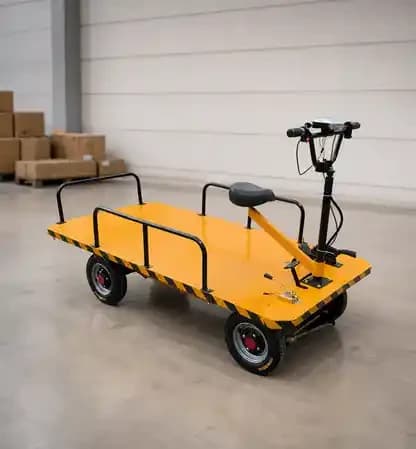
An Electric Platform Truck is a powered mobile material handling vehicle with a flat or application-specific platform used to transport compatible loads within a facility. It generally combines a platform structure with an electric drive system, wheels, operator controls, and a battery-powered power source.
A Motorized Platform Truck can help reduce manual pushing and pulling during routine material movement. Depending on the configuration, it may be used for transporting boxes, components, containers, equipment, production materials, and other compatible loads across designated internal routes.
An Electric Material Handling Truck should be selected according to rated load, platform size, battery configuration, travel distance, floor condition, maneuverability requirements, operating environment, and expected usage. Actual capacity, dimensions, battery specifications, travel performance, and operating features vary by model and should be confirmed according to the manufacturer's specifications.
Applications of Electric Platform Truck
An Electric Platform Truck can be used wherever suitable materials need to be transported efficiently across designated internal routes.
Warehouse Operations – Supports movement of cartons, containers, packages, components, and other compatible materials.
Manufacturing Facilities – Helps transport raw materials, work-in-progress items, components, and production supplies.
Production Areas – Useful for moving materials between workstations, assembly lines, storage areas, and staging points.
Logistics & Distribution – Supports internal transportation of packages, containers, and other suitable goods.
Automotive Facilities – Can be used for movement of parts, components, tools, containers, and workshop materials.
Engineering & Workshops – Helps transport equipment, fabricated components, tools, and other suitable industrial loads.
Packaging Operations – Supports movement of packaging materials, containers, and finished products.
Maintenance Areas – Can assist in transporting tools, spare parts, equipment, and maintenance materials.
Internal Factory Transportation – A Battery Operated Platform Truck can support repeated movement between designated areas where powered travel is appropriate.
Industries Served
Warehousing & Logistics – Supports internal transportation, staging, and material movement operations.
Manufacturing Industry – Helps move components, work-in-progress materials, equipment, and production supplies.
Automotive Industry – Suitable for internal handling of parts, tools, containers, and workshop materials.
Engineering & Fabrication – Supports movement of fabricated parts, tools, components, and industrial materials.
Packaging Industry – Useful for transporting packaging materials, containers, and finished products.
Distribution Facilities – Supports movement between storage, sorting, staging, and dispatch areas.
Industrial Maintenance – Helps transport maintenance equipment, spare parts, tools, and service materials.
General Industrial Facilities – Provides powered internal transportation for suitable materials and workplace requirements.
How to Choose the Right Electric Platform Truck
Selecting the right Electric Platform Truck requires consideration of load, platform size, battery system, travel requirements, floor conditions, maneuverability, and operating environment.
Load Capacity – Select the truck according to the maximum total working load it needs to carry.
Platform Dimensions – Ensure the platform length, width, and available loading area are suitable for the materials being handled.
Battery System – Consider battery type, operating duration, charging requirements, and expected usage according to the manufacturer's specifications.
Travel Distance – Evaluate the approximate distance and frequency of movement required during normal operations.
Drive Configuration – Consider the vehicle's powered drive and control arrangement according to the workplace application.
Wheel Configuration – Select a suitable wheel arrangement for maneuverability, stability, and operating conditions.
Floor Condition – Consider smooth floors, joints, ramps, slopes, surface transitions, and other travel conditions.
Turning Space – Check aisle width, turning radius, doorways, and access routes available at the operating location.
Operating Frequency – Select a configuration suitable for occasional use or repeated daily transportation.
Load Distribution – Ensure materials can be positioned appropriately on the platform without exceeding the specified capacity.
Operating Environment – Consider dust, moisture, temperature, available space, ventilation, and charging arrangements where relevant.
Manufacturer Specifications – Confirm rated capacity, dimensions, battery specifications, operating controls, and recommended conditions before selection.
Businesses comparing an Industrial Electric Truck Supplier should evaluate the complete transportation requirement, including load type, travel distance, battery requirements, platform size, floor conditions, operating frequency, and service support.
Technical Considerations
The performance of an Electric Material Handling Truck depends on rated capacity, platform construction, drive system, battery configuration, wheel arrangement, load distribution, floor condition, and operating practices.
Confirm the manufacturer's specified rated load capacity.
Check platform dimensions against the intended load size.
Verify battery specifications and charging requirements.
Consider operating duration and required duty cycle according to the manufacturer's recommendations.
Inspect wheels, axles, drive components, and mounting points.
Check operator controls and ensure they function as intended.
Consider travel routes, gradients, ramps, turning areas, and floor conditions.
Ensure loads remain stable and properly positioned during movement.
Avoid exceeding the specified load capacity.
Check that the truck can move through intended aisles, doorways, and access points.
Monitor the battery, wheels, controls, and drive system for unusual performance.
Follow the manufacturer's operating, charging, maintenance, and safety recommendations.
An Electric Platform Truck should be evaluated as a complete system, including the platform, frame, battery, electric drive, wheels, controls, brakes where fitted, charging arrangement, and mounting components.
Maintenance and Best Practices
Inspect Before Use – Check the platform, frame, wheels, controls, battery system, and mounting components.
Check Platform Condition – Look for deformation, cracks, loose components, corrosion, or other structural issues.
Inspect Battery System – Follow the manufacturer's instructions for battery condition, charging, connections, and service requirements.
Check Wheels – Inspect for wear, cracks, flat spots, wobbling, or restricted movement.
Inspect Controls – Ensure travel controls, switches, indicators, and other operating components function properly.
Check Drive Components – Monitor for unusual noise, vibration, resistance, or irregular movement.
Maintain Balanced Loading – Position materials appropriately across the platform to support controlled travel.
Avoid Overloading – Never exceed the specified truck capacity.
Keep the Platform Clean – Remove dirt, debris, packaging material, oil, and other accumulated contaminants as appropriate.
Check Electrical Connections – Inspect accessible connections and components according to manufacturer recommendations.
Store Properly – Keep the truck in a suitable designated location and maintain appropriate charging practices when not in use.
Follow Preventive Maintenance – Inspect and maintain the complete truck according to operating frequency and manufacturer recommendations.
Regular inspection and proper charging, loading, and operating practices help maintain mobility, battery performance, handling control, and practical service performance.
Why Choose Excelus Machineries?
Selecting an Electric Platform Truck Manufacturer requires consideration of load capacity, platform design, battery configuration, drive system, wheel arrangement, operating environment, application requirements, and technical support.
Excelus Machineries provides industrial material handling and mobility solutions focused on practical application requirements. Electric platform truck selection can be considered according to load characteristics, platform size, travel distance, operating frequency, floor condition, battery requirements, and workplace environment.
Key considerations include:
Industrial Experience – More than two decades of experience in material handling solutions.
Application-Focused Selection – Truck configuration is considered according to the actual transportation and handling requirement.
Material Handling Expertise – Supports platform trucks, electric handling equipment, wheels, and other industrial transportation solutions.
Technical Guidance – Helps evaluate capacity, platform dimensions, battery requirements, wheel configuration, and operating conditions.
Customized Support – Suitable for application-specific powered material transportation requirements.
Quality-Focused Approach – Solutions are considered for practical industrial and commercial applications.
After-Sales Support – Assistance for product-related and replacement requirements.
Industrial Customer Support – Suitable for procurement teams, engineers, maintenance personnel, operators, and equipment users.
For businesses evaluating an Industrial Electric Platform Truck Supplier or Industrial Platform Truck Supplier, important factors include rated capacity, platform dimensions, battery requirements, travel conditions, wheel configuration, operating frequency, service support, and application suitability.
Conclusion
An Electric Platform Truck provides a practical powered solution for transporting boxes, containers, components, equipment, production materials, and other suitable loads within warehouses, factories, workshops, logistics areas, manufacturing facilities, and industrial environments. Its electric drive system can support controlled internal movement while reducing the physical effort associated with manually pushing suitable loads.
Whether specified as a Battery Operated Platform Truck, Electric Platform Truck, Motorized Platform Truck, Electric Material Handling Truck, Industrial Electric Platform Truck, Powered Platform Truck, or Warehouse Electric Platform Truck, the equipment should be selected according to load capacity, platform dimensions, battery requirements, travel distance, wheel configuration, floor condition, operating frequency, and workplace requirements. Excelus Machineries focuses on application-based material handling and powered transportation solutions for suitable industrial and commercial requirements.