
What is an Electric Forklift?
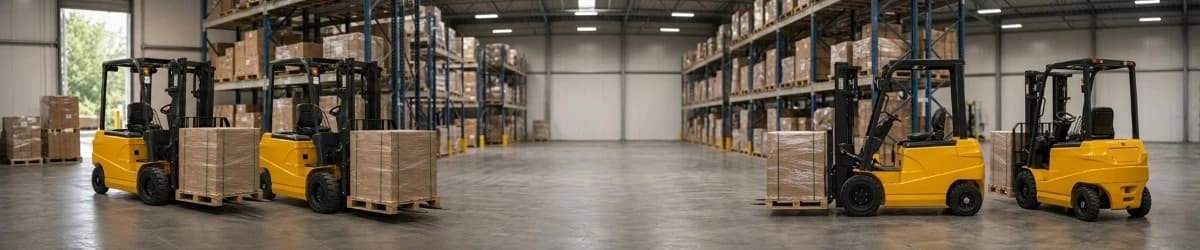
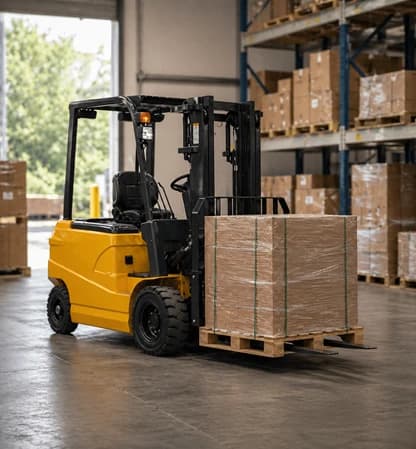
An electric forklift is a powered industrial truck that uses an electric battery system to operate its lifting and travel functions. It is designed to move and lift suitable loads using forks or compatible attachments within its rated capacity and operating limits.
An industrial electric forklift can be used for material movement in warehouses, manufacturing plants, logistics centres, storage facilities, and other industrial environments. Compared with manually operated material handling equipment, an electric forklift can provide powered lifting and movement for repetitive handling applications.
The actual lifting capacity, lift height, mast configuration, battery capacity, fork dimensions, turning radius, travel speed, and operating features vary by model. These specifications should be evaluated according to the manufacturer's specifications and the requirements of the intended application.
Applications of Electric Forklift
An electric forklift for warehouse applications can support a wide range of internal material handling activities.
Warehouses – Handles pallets, cartons, raw materials, and finished goods.
Manufacturing Plants – Moves components, production materials, tooling, and finished products.
Distribution Centres – Supports pallet loading, unloading, storage, and order movement.
Logistics Facilities – Helps transfer goods between receiving, storage, and dispatch areas.
Automotive Industry – Handles components, assemblies, packaging, and production supplies.
FMCG Facilities – Supports frequent movement of packaged products and pallets.
Pharmaceutical Facilities – Suitable for compatible indoor material handling applications.
Packaging Industry – Assists with movement of packaging materials and finished goods.
Industrial Storage Areas – Supports organized movement of materials between storage locations.
Industries Served
Warehousing & Logistics – Supports regular pallet transportation and storage activities.
Manufacturing Industry – Helps move raw materials, components, and finished products.
Automotive Industry – Assists in handling automotive components and assemblies.
FMCG Industry – Supports frequent movement of packaged products.
Pharmaceutical Industry – Suitable for applicable warehouse and internal handling operations.
Packaging Industry – Helps transfer packaging materials and finished products.
Distribution Centres – Supports loading, unloading, staging, and storage operations.
Battery Operated Forklift
A battery operated forklift is designed for applications where electrically powered lifting and travel are preferred. Rechargeable battery operation can provide practical flexibility for indoor material handling and repetitive warehouse operations.
When selecting a battery-operated model, battery capacity and operating duty are important considerations. The required battery should be appropriate for the expected working cycle, charging arrangement, operating environment, and equipment configuration.
Important selection factors include:
Rated Load Capacity – Determine the maximum load the forklift needs to handle.
Load Centre – Consider the load centre specified for the equipment and intended load.
Lift Height – Identify the maximum stacking and lifting height required.
Mast Type – Select a mast configuration appropriate for rack and clearance requirements.
Battery Capacity – Match battery capacity to the expected operating cycle.
Charging Requirements – Evaluate charging time, charging location, and available electrical facilities.
Fork Dimensions – Ensure the forks are suitable for the pallets or loads being handled.
Aisle Width – Check turning and maneuvering requirements within the facility.
Floor Conditions – Ensure the operating surface is suitable for the forklift.
Operating Frequency – Consider the number of working hours and handling cycles.
Attachment Requirements – Confirm compatibility with any required attachment.
How to Choose the Right Electric Forklift
Choosing the right electric forklift requires evaluation of the load, warehouse layout, lifting requirements, battery system, and operating conditions.
Determine the Maximum Load – Identify the heaviest load to be handled during normal operation.
Check Load Centre – Verify the load centre matches the forklift's rated capacity.
Evaluate Lift Height – Select a mast and lift configuration suitable for the required storage height.
Measure Aisle Width – Confirm that the forklift can maneuver effectively within the available space.
Review Battery Requirements – Consider working hours, duty cycle, battery capacity, and charging requirements.
Check Floor Conditions – Ensure the warehouse floor is appropriate for the selected forklift.
Consider Indoor Conditions – Evaluate temperature, ventilation, traffic, and other workplace factors.
Select Suitable Forks – Match fork dimensions to pallet and load requirements.
Review Attachments – Ensure any attachment is compatible and properly rated.
Consider Operating Frequency – Select a configuration suitable for the expected workload.
Follow Manufacturer Specifications – Confirm capacity, dimensions, battery requirements, and operating limits before purchase.
Businesses looking to choose an electric forklift truck should consider the complete application rather than selecting equipment based only on its advertised lifting capacity.
Technical Considerations
The performance of an industrial electric forklift depends on rated capacity, load centre, mast configuration, lift height, battery system, floor conditions, operating environment, and operator practices.
Confirm the rated capacity before handling a load.
Verify the applicable load centre for the intended load.
Inspect the mast, forks, carriage, and structural components before operation.
Check the battery, cables, terminals, connectors, and controls regularly.
Follow the manufacturer's battery charging procedures.
Check hydraulic components, hoses, and fittings where applicable.
Inspect tyres or wheels for wear and damage.
Check forks for bending, cracks, excessive wear, or other damage.
Ensure loads are properly positioned and stable before lifting.
Keep the load within the forklift's rated operating limits.
Maintain suitable visibility while travelling with a load.
Follow workplace traffic, pedestrian, and operating procedures.
Do not exceed the manufacturer's rated capacity or operating restrictions.
Regular inspections, operator training, battery care, and preventive maintenance are important for dependable forklift operation.
Maintenance and Best Practices
Inspect Before Operation – Check forks, mast, carriage, wheels, controls, and visible components.
Check Battery Condition – Inspect the battery, terminals, connectors, and cables as recommended.
Follow Charging Procedures – Use the manufacturer's recommended charging method and schedule.
Inspect Hydraulic Components – Check cylinders, hoses, fittings, and connections where applicable.
Check Forks – Inspect for cracks, bending, wear, or other visible damage.
Inspect Wheels or Tyres – Check for wear, damage, and appropriate condition.
Maintain Load Stability – Position loads correctly before lifting and travelling.
Avoid Overloading – Never exceed the rated capacity for the applicable load centre.
Keep Aisles Clear – Maintain suitable travel paths and clear visibility.
Follow Workplace Procedures – Observe site traffic controls and pedestrian safety practices.
Train Operators – Ensure authorized operators understand correct driving, lifting, and parking procedures.
Schedule Preventive Maintenance – Service the forklift according to usage and manufacturer recommendations.
Electric Forklift Price
The electric forklift price can vary according to factors such as lifting capacity, mast height, battery type and capacity, configuration, fork dimensions, attachments, construction, and application requirements.
Buyers should compare the complete equipment configuration rather than considering only the initial purchase price. Battery requirements, operating hours, charging infrastructure, maintenance needs, and the intended working environment can also influence the overall equipment selection.
For an accurate quotation, buyers should provide information such as expected load, lift height, operating hours, warehouse aisle width, floor conditions, and any required attachments.
Why Choose Excelus Machineries?
Selecting an electric forklift manufacturer or electric forklift supplier requires attention to lifting capacity, battery performance, equipment configuration, application suitability, technical support, and maintenance requirements.
Excelus Machineries provides industrial material handling solutions focused on practical operational requirements. Equipment selection can be aligned with the load, warehouse layout, operating frequency, and intended material handling workflow.
Key advantages include:
Industrial material handling expertise
Battery-powered material handling solutions
Application-focused equipment selection
Support for different load-handling requirements
Solutions for warehouses, factories, and logistics facilities
Customization support for suitable applications
Technical guidance during product selection
Practical maintenance and operational guidance
For businesses looking for an electric forklift manufacturer or electric forklift supplier, the final selection should consider rated capacity, load centre, lifting height, battery requirements, aisle width, floor conditions, operating hours, and application frequency.
Conclusion
An electric forklift provides a practical solution for lifting, transporting, stacking, and positioning suitable loads in warehouses, manufacturing plants, logistics facilities, distribution centres, and other industrial environments. A battery operated forklift can support repetitive material handling while reducing manual effort, with the appropriate battery and configuration selected according to the expected duty cycle.
Whether used as an electric forklift truck, electric forklift for warehouse, industrial electric forklift, or material handling electric forklift, the equipment should be selected according to rated capacity, load centre, lift height, mast configuration, battery requirements, aisle dimensions, floor conditions, and operating frequency. Excelus Machineries provides industrial material handling solutions designed around practical operational requirements, helping businesses improve internal material movement and warehouse workflow.