What is an Electric Chain Hoist?
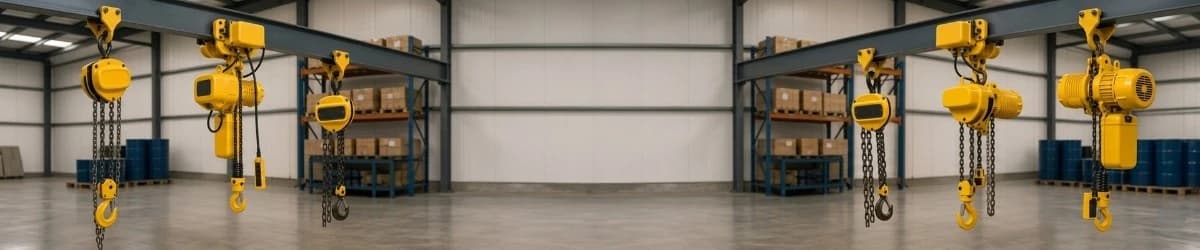
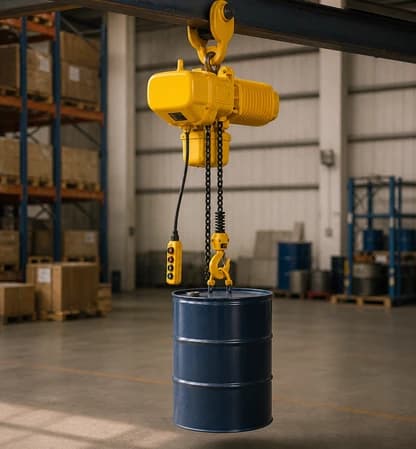
An Electric Chain Hoist is a powered lifting device that uses an electric motor, chain mechanism, gears, hooks, and associated components to lift and lower suspended loads. The operator controls the lifting movement through the hoist's control system.
An Electric Lifting Hoist is suitable where loads need to be raised repeatedly without relying on manual pulling. It can be used for machinery, fabricated components, tools, equipment, and other suitable industrial loads.
An Electric Chain Pulley Block provides powered lifting through a chain-based mechanism, making it useful for applications where controlled vertical load movement is required.
For applications that require both vertical and horizontal movement, an Electric Hoist with Trolley can be mounted on a compatible beam or runway system to move the suspended load along the required path.
Applications of Electric Chain Hoist
An Electric Lifting Equipment solution is useful in industries where heavy components and materials require repeated vertical lifting.
Manufacturing Industry – Lifting machinery, components, assemblies, fixtures, and production equipment.
Engineering Workshops – Handling fabricated components, machine parts, and maintenance equipment.
Automotive Industry – Lifting engines, assemblies, tools, components, and service equipment.
Fabrication Industry – Positioning fabricated structures and components during production.
Warehousing – Handling machinery parts, maintenance equipment, tools, and other suitable loads.
Maintenance Facilities – Supporting equipment servicing, replacement, repair, and installation operations.
Construction & Installation – Assisting with suitable lifting and positioning tasks during assembly and installation.
Industries Served
Manufacturing Plants – Supports machinery handling, maintenance, and production operations.
Engineering & Fabrication – Helps lift and position industrial components and fabricated assemblies.
Automotive Industry – Supports handling of engines, components, fixtures, and maintenance equipment.
Warehousing & Logistics – Assists with lifting suitable equipment and heavy materials.
Plant Maintenance – Supports repair, replacement, installation, and equipment servicing.
Construction & Installation – Useful for suitable lifting applications during assembly work.
Industrial Workshops – Provides powered lifting for repetitive workshop operations.
How to Choose the Right Electric Chain Hoist
Selecting the right Electric Hoist Supplier and hoist configuration requires evaluating the actual lifting application.
Load Capacity – Select a hoist based on the maximum load to be lifted.
Lifting Height – Determine the required vertical lifting distance.
Duty Cycle – Consider how frequently the hoist will operate during each shift.
Load Characteristics – Evaluate the load's size, weight, centre of gravity, and lifting points.
Power Supply – Confirm that the available electrical supply is compatible with the selected hoist.
Trolley Requirement – Consider an Electric Hoist with Trolley if horizontal movement is required.
Operating Environment – Evaluate dust, moisture, temperature, workspace, and other site conditions.
Installation Arrangement – Check compatibility with the beam, structure, trolley, or mounting arrangement.
Control Requirements – Select a control arrangement suitable for the operating area and lifting process.
For heavier applications, buyers may encounter requirements such as a 2 Ton Chain Block, 1 Ton Chain Hoist, or higher-capacity lifting equipment. The correct capacity should always be determined from the actual load and duty requirements rather than selecting based solely on a nominal capacity.
Technical Considerations
The performance of an Electric Chain Hoist depends on rated capacity, lifting height, duty cycle, power supply, chain condition, supporting structure, and correct operating practices.
Check Rated Capacity – Ensure the load remains within the manufacturer's specified capacity.
Inspect Load Chain – Check for wear, corrosion, deformation, or damaged links.
Inspect Hooks and Latches – Verify that hooks, safety latches, and attachment points are in suitable condition.
Check Electrical Components – Inspect cables, controls, connections, and other electrical components regularly.
Verify Power Supply – Ensure the electrical supply matches the hoist's specified requirements.
Inspect Brake System – Check the braking system according to the manufacturer's maintenance recommendations.
Verify Supporting Structure – Ensure the beam, trolley, or mounting structure is suitable for the lifting load.
Check Trolley Operation – Where applicable, inspect trolley wheels, travel components, and alignment.
Avoid Overloading – Never exceed the rated capacity of the hoist.
Train Operators – Ensure operators understand safe lifting, lowering, load attachment, and emergency procedures.
Regular inspection and preventive maintenance help support reliable lifting performance.
Maintenance and Best Practices
Inspect Before Use – Check the hoist body, load chain, hooks, brake system, controls, and attachment points.
Check Load Chain – Inspect the chain for wear, corrosion, deformation, and damaged links.
Inspect Hooks – Check hooks and safety latches for cracks, wear, or deformation.
Monitor Electrical System – Inspect cables, controls, switches, and connections for damage.
Check Brake Performance – Ensure the brake system operates correctly according to maintenance requirements.
Lubricate Applicable Components – Follow the manufacturer's recommended lubrication schedule.
Inspect Trolley System – For trolley-mounted models, check wheels, travel components, and beam engagement.
Avoid Overloading – Never exceed the rated load capacity of the hoist.
Keep Equipment Clean – Remove dust, grease, debris, and other contaminants from accessible components.
Train Operators – Ensure users understand correct operation and load-handling procedures.
Follow Preventive Maintenance – Schedule regular inspection and servicing according to manufacturer recommendations.
Why Choose Excelus Machineries?
Selecting an Electric Chain Hoist Manufacturer or supplier should involve more than comparing lifting capacity and price. Buyers should evaluate equipment suitability, duty cycle, lifting height, power requirements, supporting structure, maintenance needs, and technical support.
Excelus Machineries provides industrial lifting and material handling solutions designed around practical operational requirements.
Key advantages include:
Durable industrial construction
Powered lifting solutions for repetitive applications
Application-focused equipment selection
Support for different lifting requirements
Trolley and installation considerations where required
Technical guidance during product selection
Customization support for specific applications
Maintenance and operational guidance
For businesses looking for an Electric Hoist Supplier, evaluating the complete lifting process helps ensure the selected equipment is suitable for the load, workplace, and expected operating cycle.
Conclusion
An Electric Chain Hoist is a practical solution for businesses that require powered and controlled lifting of suitable industrial loads. Its motorized operation reduces manual effort and makes repetitive vertical lifting more efficient across manufacturing, engineering, fabrication, maintenance, automotive, warehousing, and industrial operations.
Whether specified as an Electric Hoist, Electric Lifting Hoist, Electric Chain Pulley Block, Motorized Chain Hoist, or Electric Hoist with Trolley, the equipment should be selected according to load capacity, lifting height, duty cycle, power supply, support structure, operating environment, and application requirements.
Capacity requirements can range from smaller lifting applications such as a 500 Kg Chain Pulley Block or 500kg Chain Hoist to larger requirements including a 1 Ton Chain Hoist, 2 Ton Chain Block, or higher-capacity configurations. Final selection should always be based on the actual load and manufacturer-rated specifications.
As an Electric Chain Hoist Manufacturer and Electric Hoist Supplier, Excelus Machineries provides industrial lifting solutions designed around practical application requirements, helping businesses achieve controlled load handling, improved lifting efficiency, and dependable day-to-day operations.