
What is a Die Loader (Scissor Trolley)?
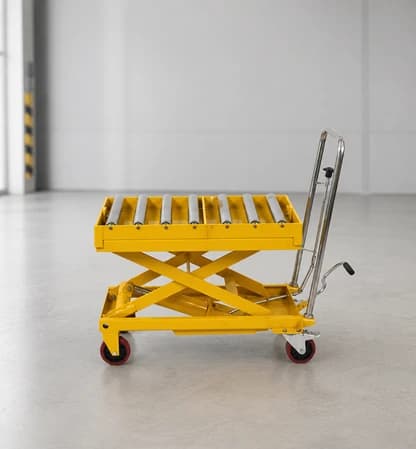
A Die Loader (Scissor Trolley) is a mobile lifting trolley used to transport and position heavy dies, moulds, tooling, and compatible machine components. The scissor mechanism allows the platform to move vertically, helping operators align the load with a suitable machine, workbench, or transfer position.
A Die Lifting Trolley can be useful during die installation, removal, maintenance, and machine setup. Depending on the equipment design, the trolley may combine lifting and movement functions so that a die can be transported within the facility and positioned at a convenient working level.
A Die Transfer Trolley should be selected according to the die weight, platform size, lifting range, travel requirements, machine height, and operating environment. Actual capacity, dimensions, hydraulic arrangement, and lifting performance vary by model and should be confirmed according to the manufacturer's specifications.
Applications of Die Loader (Scissor Trolley)
A Die Loader can be used wherever heavy dies, moulds, and tooling need to be transported and positioned at suitable working heights.
Die Changing Operations – Supports movement and positioning of compatible dies during machine setup.
Die Transfer – Helps transport dies between storage, preparation, and production areas.
Mould Handling – Supports movement and positioning of compatible moulds and tooling.
Machine Loading – Assists with transferring suitable dies toward machine working positions.
Maintenance Operations – Helps raise and position dies during inspection, repair, and servicing.
Tool Room Handling – Supports organized movement of dies, moulds, and heavy tools.
Production Areas – Helps move compatible tooling between workstations.
Workshop Operations – Supports lifting and positioning of heavy components.
Internal Material Movement – Provides controlled transportation of suitable loads within industrial facilities.
A Mould Loading Trolley should be selected according to the mould or die weight, dimensions, machine interface, platform requirements, and intended handling procedure.
Industries Served
Plastic & Injection Moulding Industry – Supports handling and positioning of compatible moulds and tooling.
Metal Stamping Industry – Useful for moving and positioning dies during machine setup and changeover.
Automotive Industry – Supports suitable die, mould, component, and tooling handling applications.
Engineering & Fabrication – Used for transporting and positioning heavy tools and fabricated components.
Manufacturing Industry – Helps with internal movement of dies and production tooling.
Tool Rooms – Supports organized handling and positioning of heavy dies and moulds.
Industrial Maintenance – Useful during equipment servicing, die replacement, and maintenance activities.
Production Facilities – Supports movement of tooling between storage and operating areas.
How to Choose the Right Die Loader (Scissor Trolley)
Choosing the right Die Loader Scissor Trolley requires consideration of the die, machine, floor condition, and complete handling process.
Load Capacity – Select the trolley according to the total weight of the die, mould, or tooling being handled.
Platform Dimensions – Ensure the platform provides sufficient area and support for the load.
Lifting Height – Confirm that the trolley can reach the required machine or working height.
Minimum Height – Consider the lowest platform position required for loading and access.
Load Distribution – Position the die appropriately to maintain stable and balanced loading.
Mobility Requirement – Determine whether the trolley needs to travel between different work areas.
Hydraulic Configuration – Select a suitable hydraulic arrangement based on the required lifting operation.
Machine Compatibility – Check the platform height and dimensions against the machine or die-changing position.
Floor Condition – Ensure the travel surface is suitable for the loaded trolley.
Movement Frequency – Consider whether the equipment will be used occasionally or repeatedly throughout production.
Operating Environment – Review space, dust, moisture, temperature, and other workplace conditions.
Manufacturer Specifications – Confirm rated capacity, platform dimensions, lifting range, and operating limitations before selection.
Businesses comparing a Scissor Trolley Manufacturer should evaluate the complete die handling requirement rather than choosing equipment based only on load capacity.
Technical Considerations
The performance of a Hydraulic Scissor Trolley depends on rated capacity, platform dimensions, hydraulic condition, load distribution, wheel configuration, and operating practices.
Confirm the manufacturer's specified load capacity.
Calculate the actual die or mould weight before operation.
Check platform dimensions against the load footprint.
Verify minimum and maximum lifting heights.
Ensure the die remains stable and properly positioned during lifting and movement.
Check the machine interface and required transfer height.
Inspect hydraulic cylinders, hoses, seals, and fittings for visible leakage or damage.
Check scissor arms, pins, frame, and platform for structural damage or deformation.
Ensure wheels and casters are appropriate for the operating surface and load.
Avoid unstable, off-center, or unsuitable loading conditions.
Keep personnel clear of moving scissor components and pinch points.
Follow the manufacturer's operating and maintenance recommendations.
A Die Lifting Trolley should be treated as a complete material handling system. The platform, lifting mechanism, wheels, frame, load, and operating surface all contribute to safe and controlled movement.
Maintenance and Best Practices
Inspect Before Use – Check the platform, scissor mechanism, hydraulic system, wheels, frame, and visible hardware.
Check Hydraulic Components – Inspect hoses, cylinders, fittings, and seals for leakage or deterioration.
Inspect Scissor Arms – Look for cracks, bending, deformation, excessive wear, or damaged pins.
Check Platform Condition – Ensure the platform remains stable and free from structural damage.
Inspect Wheels & Casters – Check wheel condition, mounting, and smooth movement.
Monitor Load Stability – Ensure the die or mould remains properly positioned during lifting and travel.
Avoid Overloading – Never exceed the specified rated capacity.
Keep Components Clean – Remove dirt, debris, oil, and other materials that may affect operation.
Monitor Hydraulic Movement – Watch for abnormal lifting, lowering, jerking, or unusual noise.
Check Steering & Mobility – Ensure mobile components operate correctly before moving a loaded trolley.
Replace Damaged Components – Do not operate the trolley with significant structural, hydraulic, or wheel damage.
Follow Preventive Maintenance – Schedule inspections according to equipment usage and manufacturer recommendations.
Regular maintenance can help maintain smooth lifting and movement while reducing avoidable equipment issues during die handling operations.
Why Choose Excelus Machineries?
Selecting a Die Loader manufacturer requires consideration of load capacity, lifting height, platform size, machine compatibility, mobility, operating conditions, and technical support.
Excelus Machineries provides industrial material handling and lifting solutions focused on practical application requirements. Die loader selection can be considered according to die dimensions, weight, machine height, movement requirements, and workplace conditions.
Key considerations include:
Industrial Experience – More than two decades of experience in material handling solutions.
Application-Focused Selection – Equipment is considered according to the actual die handling requirement.
Material Handling Expertise – Supports die, mould, tooling, trolley, and lifting applications.
Technical Guidance – Helps customers evaluate capacity, platform dimensions, lift range, and mobility requirements.
Customized Support – Suitable for application-specific die handling requirements.
Quality-Focused Approach – Solutions are considered for practical industrial operating conditions.
After-Sales Support – Assistance for product-related and replacement requirements.
Industrial Customer Support – Suitable for tool rooms, production teams, engineers, maintenance personnel, and procurement teams.
For businesses evaluating a Die Loader Manufacturer or supplier, important factors include rated capacity, platform size, lifting range, machine compatibility, floor condition, mobility, and frequency of use.
Conclusion
A Die Loader (Scissor Trolley) provides a practical solution for lifting, transporting, and positioning heavy dies, moulds, tools, and compatible components within industrial facilities. Its scissor lifting arrangement can help bring loads to suitable working heights for machine setup, die changing, maintenance, and internal material movement.
Whether specified as a Die Handling Trolley, Die Lifting Trolley, Die Transfer Trolley, Hydraulic Die Loader, Hydraulic Scissor Trolley, or Tool Room Die Loader, the equipment should be selected according to load capacity, platform dimensions, lifting range, machine compatibility, floor condition, and operating requirements. Excelus Machineries focuses on application-based lifting and material handling solutions for suitable die and tooling handling needs.