
What is a Bale Clamp?
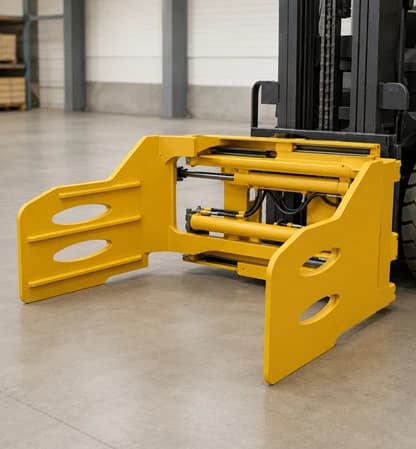
A Bale Clamp is a forklift attachment designed to grip and handle compatible bales using specialized clamp arms or gripping surfaces. It allows the forklift to lift, transport, and position bales while helping reduce dependence on manual handling methods.
A Forklift Bale Handler can be particularly useful where large numbers of bales are moved regularly between storage, production, processing, and loading areas. A properly selected Bale Lifting Attachment can improve handling convenience while keeping the load within the applicable rated capacity of the attachment and forklift.
The actual clamping force, bale dimensions, rated capacity, attachment weight, opening range, and hydraulic configuration depend on the specific model. These specifications should be verified against manufacturer recommendations before use.
Applications of Bale Clamp
A Bale Handling Equipment solution can be used wherever compressed or baled materials need to be lifted and transported efficiently.
Textile Plants – Supports handling of fabric, cotton, fibre, and other compatible textile bales.
Recycling Facilities – Helps move paper, plastic, cardboard, and other compressed recyclable bales.
Paper Mills – Supports suitable paper and material bale handling applications.
Agricultural Facilities – Can assist with handling compatible hay, fibre, and agricultural bales.
Warehouses – Supports movement of baled materials between storage and dispatch areas.
Packaging Facilities – Helps move compressed paper, cardboard, and packaging material bales.
Waste Processing Facilities – Supports movement of compatible compacted material bales.
Manufacturing Plants – Assists with handling raw materials and process-related bales.
Industries Served
Textile Industry – Handles compatible cotton, fibre, and textile bales.
Recycling Industry – Supports movement of compressed recyclable materials.
Paper Industry – Assists with suitable paper and fibre bale handling.
Agricultural Industry – Supports compatible agricultural bale applications.
Packaging Industry – Helps move compressed paperboard and packaging materials.
Warehousing & Logistics – Facilitates organized storage and movement of bales.
Waste Processing – Supports handling of suitable compacted material bales.
Manufacturing Industry – Assists with internal movement of baled materials.
Forklift Bale Clamp
A Forklift Bale Clamp converts a compatible forklift into a more specialized bale handling machine. Instead of depending only on forks beneath the load, the attachment uses gripping surfaces to engage the sides of a suitable bale.
A Forklift Bale Handling Attachment should be selected based on the material, bale construction, dimensions, weight, forklift capacity, load centre, and intended operating conditions. The attachment itself adds weight to the forklift and may change the effective load centre, which can affect the forklift's available rated capacity.
Important selection factors include:
Bale Weight – Determine the maximum weight of the bales being handled.
Bale Dimensions – Confirm the width, height, and length of the bales.
Bale Construction – Consider whether the bale is made from paper, textile, plastic, agricultural material, or another compatible material.
Clamp Opening – Verify that the attachment can accommodate the intended bale dimensions.
Gripping Surface – Consider the type of contact surface required for secure handling without unnecessary material damage.
Forklift Capacity – Check the forklift rating with the attachment installed.
Attachment Weight – Include attachment weight in capacity calculations.
Load Centre – Consider the effect of the attachment and bale position on forklift capacity.
Hydraulic Requirements – Confirm hydraulic flow, connections, and operating requirements where applicable.
Operating Environment – Consider dust, moisture, temperature, floor conditions, and other site factors.
How to Choose the Right Bale Clamp
Choosing the right Bale Clamp Manufacturer and attachment requires evaluating both the forklift and the bales being handled.
Identify Bale Type – Confirm the material and construction of the bales.
Check Bale Dimensions – Measure the minimum and maximum bale dimensions to be handled.
Determine Load Weight – Identify the maximum operating weight of a bale.
Check Forklift Capacity – Confirm the forklift can handle the combined attachment and bale weight at the applicable load centre.
Evaluate Load Centre – Consider how the attachment changes the position of the load.
Review Clamp Range – Ensure the clamp opening is suitable for the intended bale sizes.
Consider Material Contact – Select suitable gripping surfaces based on the bale material.
Assess Hydraulic Requirements – Confirm compatibility with the forklift hydraulic system where applicable.
Check Lifting Height – Determine the height needed for storage, stacking, or loading.
Evaluate Workspace – Consider aisle width, turning space, and access requirements.
Review Handling Frequency – Match attachment construction to the expected number of handling cycles.
Follow Manufacturer Specifications – Verify capacity, compatibility, mounting, and operating requirements before use.
Businesses looking to select a Bale Clamp Supplier should evaluate the complete handling application rather than choosing equipment based only on rated capacity.
Technical Considerations
The performance of an Industrial Bale Clamp depends on bale dimensions, bale weight, clamp opening, gripping mechanism, attachment weight, forklift capacity, load centre, hydraulic configuration, and operating practices.
Confirm the attachment's rated capacity before operation.
Verify the forklift's rated capacity with the attachment installed.
Include attachment weight when calculating the available lifting capacity.
Consider the effective load centre created by the attachment and bale.
Inspect clamp arms, gripping surfaces, pins, pivots, and frame components for damage.
Check hydraulic hoses, cylinders, fittings, and connections on hydraulic models.
Ensure the bale is properly centred before lifting.
Confirm that the bale is suitable for clamp handling.
Avoid gripping damaged or unstable bales unless the equipment is specifically designed for that condition.
Avoid sudden acceleration, braking, or sharp turns while transporting bales.
Keep personnel away from elevated or suspended loads.
Do not exceed the rated capacity of the attachment or forklift.
Follow forklift and attachment manufacturer recommendations.
Correct equipment specification, operator training, regular inspection, and controlled load handling are important for dependable bale handling.
Maintenance and Best Practices
Inspect Before Use – Check the frame, clamp arms, gripping surfaces, mounting points, and visible components.
Check Hydraulic Components – Inspect cylinders, hoses, fittings, and connections for leakage or damage.
Inspect Gripping Surfaces – Check for excessive wear, deformation, cracks, or contamination.
Check Attachment Mounting – Ensure the clamp is properly secured to the forklift.
Inspect Moving Parts – Check pins, pivots, joints, and other applicable components.
Check the Forklift – Confirm forks, hydraulics, tyres, brakes, and controls are in suitable operating condition.
Avoid Overloading – Never exceed the rated capacity of the attachment or forklift.
Maintain Load Stability – Ensure the bale is properly positioned and securely gripped before movement.
Use Controlled Travel – Avoid abrupt starts, stops, and turns with a raised bale.
Keep the Path Clear – Remove unnecessary obstacles from the travel and storage area.
Train Operators – Ensure operators understand both forklift and clamp operating procedures.
Schedule Preventive Maintenance – Inspect and service the attachment according to usage and manufacturer recommendations.
Why Choose Excelus Machineries?
Selecting a Bale Clamp Manufacturer or Bale Clamp Supplier requires consideration of attachment construction, gripping mechanism, forklift compatibility, bale specifications, capacity, operating environment, and technical guidance.
Excelus Machineries provides industrial material handling solutions focused on practical application requirements. Equipment selection can be aligned with forklift specifications, bale dimensions, load characteristics, workspace conditions, and handling frequency.
Key advantages include:
Industrial material handling expertise
Forklift-based bale handling solutions
Application-focused attachment selection
Support for suitable bale handling requirements
Technical guidance during product selection
Solutions for warehouses and industrial facilities
Customization support for suitable applications
Practical operating and maintenance guidance
For businesses looking for a Bale Clamp Supplier, final equipment selection should consider forklift capacity, attachment weight, bale dimensions, bale weight, load centre, gripping range, hydraulic requirements, and operating environment.
Conclusion
A Bale Clamp provides a practical solution for gripping, lifting, transporting, and positioning compatible bales using a suitable forklift. A Forklift Bale Clamp can help reduce manual handling and support more organized material movement across textile plants, recycling facilities, paper mills, agricultural operations, warehouses, and other industrial environments.
Whether used as a Bale Lifting Attachment, Forklift Bale Handler, Forklift Bale Handling Attachment, Hydraulic Bale Clamp, or Industrial Bale Clamp, the equipment should be selected according to bale dimensions, load weight, forklift capacity, load centre, gripping requirements, and operating conditions. Excelus Machineries provides material handling solutions designed around practical industrial requirements, helping businesses improve bale handling efficiency and workflow.