
Semi Electric Stacker: How It Works, Benefits & Application
There's a specific kind of complaint that shows up in warehouses using manual stackers for anything beyond light, occasional lifting: the pumping arm gets harder to push as the day goes on, and heavier loads take noticeably longer to raise than lighter ones. Nobody's doing anything wrong. That's just what hand-pumped hydraulics feel like once usage climbs. A semi electric stacker exists specifically to take that part of the job off the operator's hands, without going all the way to a fully powered machine.
This article covers how a semi electric stacker actually works, the benefits it brings to day-to-day handling, where it fits across different industrial applications, and what's worth checking before choosing one. It's written for warehouse managers, plant supervisors, and procurement teams trying to figure out whether this is the right equipment for their operation.
What a Semi Electric Stacker Is Best For
A semi electric stacker powers the lift but leaves travel to the operator, which makes it a good fit for moderate, regular lifting where heavier loads are common but the stacker doesn't need to cover long distances on its own. If lifting is occasional and light, a manual stacker is usually cheaper and simpler. If the operation needs both lifting and driving powered, a full electric stacker makes more sense. This one sits in between, and for a lot of mid-volume operations, that middle ground is exactly right.
How a Semi Electric Stacker Works
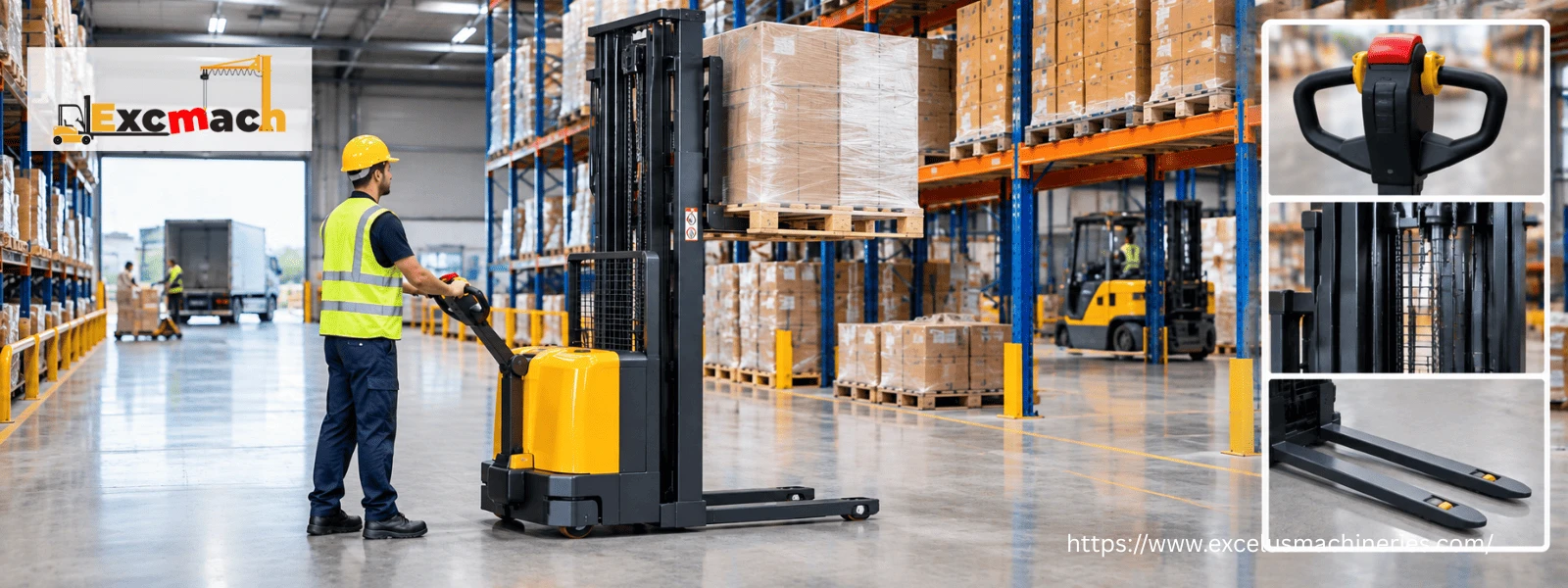
A semi electric stacker, sometimes called a battery operated stacker or grouped loosely under the broader term electric pallet stacker, uses an onboard battery to power the lifting mechanism, while the operator still walks or steers the unit into position by hand. That's the core distinction from a manual stacker, where the operator hand-pumps a hydraulic lever to raise the forks. It's also the core distinction from a full electric stacker, which powers travel as well as lift.
Lifting mechanism. The lifting side typically runs on a rechargeable battery connected to an electric hydraulic pump, which replaces the hand-pump lever found on manual units. A control button or lever on the handle raises and lowers the forks.
Travel and control. The operator positions the forks under the load, presses a control to raise or lower it electrically, and then manually pushes or steers the unit to where it needs to go. The battery handles the part of the job that causes the most physical strain repeated lifting, especially with heavier loads while travel stays under direct human control, which some operators actually prefer in tighter spaces where fine steering matters more than raw power.
Battery and monitoring. Most units include a battery charge indicator so the operator knows when a recharge is coming up, and charge cycles vary by model, so it's worth checking the specific unit rather than assuming a standard figure.
Chassis and build. The chassis and fork design stay largely similar to a manual stacker's, since the mast, forks, and wheelbase don't need to change just because the lift mechanism does. The main structural difference sits inside the housing near the mast, where the battery and pump unit live. Because travel is still manual, weight distribution matters more here than on a fully powered unit a heavier battery pack can shift how the machine handles when it's being pushed, which is worth factoring in when comparing models rather than assuming all semi electric stackers steer the same way.
Benefits of Using a Semi Electric Stacker
Lifting effort disappears almost entirely. This matters most with heavier loads or repeated cycles through a shift. Instead of pumping a lever dozens of times, the operator presses a control and the battery does the work.
Load handling gets more consistent. A powered lift raises at roughly the same speed regardless of who's operating it, which removes some of the variability that comes with manual pumping one operator's pace can differ a fair bit from another's, and that inconsistency tends to disappear once the lift is electric.
Maneuverability stays tighter than a full electric unit. Because travel stays manual, the unit keeps a more direct feel than a full electric stacker, which some operations actually prefer in narrow aisles or tight loading areas where fine control matters more than speed.
Cost sits below a full electric stacker. There's less to maintain no drive motor, no travel controls and battery demands are generally lower since the battery only handles lifting rather than lifting and driving both.
Fatigue drops meaningfully, even without powered travel. Removing the physical strain of the lift is where most of the fatigue reduction actually comes from in day-to-day use, more so than the walking itself.
Industrial Applications for Semi Electric Stackers
Warehousing with moderate pallet volumes benefits from the reduced lifting effort without needing the higher cost of a fully electric unit, especially where stacking happens regularly but aisle distances are short enough that manual travel doesn't slow things down.
Manufacturing environments moving materials between nearby stations often find a semi electric stacker sufficient, since the distances involved are usually short and the main physical demand is lifting rather than long-distance travel.
Retail backrooms and smaller distribution points, where stacking happens throughout the day but total volume doesn't justify a full electric fleet, are a common fit as well.
Facilities working with heavier unit loads larger cartons, bulkier packaging, denser materials tend to feel the benefit of a semi electric stacker more than lighter-load operations, simply because hand-pumping heavier weights is where manual fatigue shows up fastest.
Some of these same considerations apply across the broader set of industries that rely on material handling equipment, since the balance between lifting effort and travel distance is rarely unique to one sector.
Selection Factors Before Choosing a Semi Electric Stacker
Typical load weight. If most loads are light, the benefit of powered lifting shrinks and a manual stacker may cover the job just as well for less money.
Travel distance. If aisle runs are long and the equipment moves constantly, the manual travel component of a semi electric stacker becomes the bottleneck, and a full electric stacker might be worth the extra cost instead.
Battery life and charging routine. Confirm how many lift cycles the battery handles per charge and whether the facility has a workable charging routine that doesn't interrupt operations.
Aisle width and maneuverability. These still need checking against the specific model's dimensions, the same as with any stacker a semi electric unit isn't automatically narrower just because it's not fully electric.
Operator training. This shouldn't be skipped just because lifting is powered. Load positioning, safe travel speed while manually steering, and pre-use checks are still the operator's responsibility, and the fundamentals covered in general stacker machine safety guidelines apply here as much as they do to any other stacker type.
Whether a stacker is even the right category. If the task turns out to be mostly horizontal movement rather than genuine lifting, it's worth checking whether a pallet truck would actually serve the operation better than any stacker at all.
Common Mistakes When Choosing a Semi Electric Stacker
Choosing based on price alone without checking whether load weight and lift height actually call for powered lifting
Assuming manual travel means no training is needed, when steering a loaded unit safely still takes practice
Underestimating how battery charging will fit into a multi-shift schedule
Picking a semi electric stacker for a job that's really high-frequency and long-distance, where a full electric stacker would perform better over time
Overlooking maintenance needs for the battery and lift motor, on top of the usual hydraulic upkeep
Where This Fits with Excelus Machineries
Excelus Machineries is a Vapi-based material handling equipment supplier working across stacker, pallet truck, and lifting equipment for operations of different sizes. For businesses weighing a semi electric stacker against a manual or full electric option, the honest starting point is being clear on actual load weights, lift frequency, and travel distance before comparing specific models.
The hydraulic stacker range is worth reviewing directly if manual lifting is proving to be the bottleneck, since a specific configuration may already fit the load types involved including a paper roll stacker for reel-based handling, where a standard fork stacker isn't the right shape for the job.
When comparing a semi electric stacker manufacturer or a semi electric stacker supplier, it's worth asking directly about battery specifications, lift cycle counts per charge, and maintenance requirements, since these details vary meaningfully between brands and aren't always obvious from a spec sheet alone. You can browse the full product range or get in touch with the team to talk through what fits your load and frequency requirements.
If you're also considering the fully powered option, the companion piece on full electric stackers covers where that category earns its extra cost.
Final Takeaway
A semi electric stacker earns its place where lifting effort, not travel distance, is the main source of strain in day-to-day handling. It costs less than a full electric stacker while still solving the part of manual stacker use that wears people down fastest. Getting the choice right comes down to being honest about load weights, lift frequency, and how far the unit actually needs to travel, rather than assuming more power is always the better answer.
Recent Insights
View AllFrequently Asked Questions
Electric pallet stacker is often used as a general term that can refer to either a semi electric or a full electric stacker, so it's worth clarifying which type is meant. A semi electric stacker specifically powers the lift only, while travel stays manual.