
Low Profile Pallet Truck vs Standard Pallet Truck: Which One Should You Choose?
Selecting the right pallet truck is essential for improving material handling efficiency, workplace safety, and overall operational productivity. Whether you operate a warehouse, manufacturing facility, logistics center, retail distribution hub, or packaging plant, choosing equipment that matches your pallet type and workflow can significantly reduce downtime and manual effort.
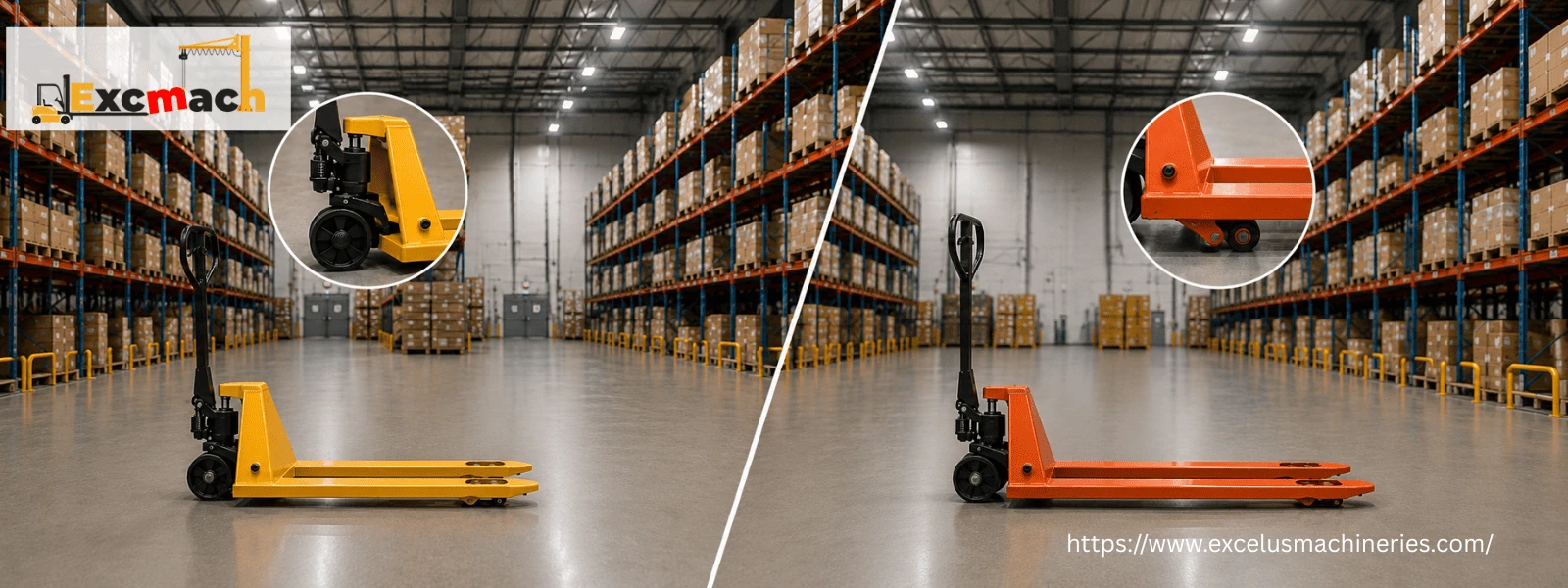
One of the most common questions industrial buyers ask is Low Profile Pallet Truck vs Standard Pallet Truck: Which one is the better choice? Although both are designed to lift and transport palletized loads, they serve different applications. A Standard Hand Pallet Truck is designed for conventional wooden and plastic pallets with normal ground clearance, while a Low Profile Pallet Truck features ultra-low forks that can easily access pallets with minimal clearance.
Making the wrong choice can lead to handling difficulties, increased labor, equipment damage, and reduced productivity. Understanding the differences between these two pallet truck types helps procurement managers, plant managers, engineers, and warehouse supervisors invest in equipment that delivers long-term operational value.
What Is Low Profile Pallet Truck vs Standard Pallet Truck?
The comparison between a Low Profile Pallet Truck vs Standard Pallet Truck focuses on the design, fork height, pallet compatibility, and intended industrial applications of each model.
A Low Profile Pallet Truck is specially designed with ultra-low forks that fit beneath pallets and skids with very limited ground clearance. It is widely used for export pallets, display pallets, plastic pallets, and customized industrial skids.
A Standard Hand Pallet Truck, in contrast, is built for routine material handling using standard pallets commonly found in warehouses, manufacturing facilities, and logistics centers.
The primary difference between a Low Profile Pallet Truck and a Standard Hand Pallet Truck is fork height. Low Profile Pallet Trucks are designed for pallets with minimal ground clearance, whereas Standard Hand Pallet Trucks are suitable for conventional pallets with regular entry heights.
How Do Both Pallet Trucks Work?
Both pallet trucks use a manual hydraulic lifting system to raise and transport palletized goods, but their fork designs determine the types of pallets they can handle.
Standard Hand Pallet Truck
A Standard Hand Pallet Truck operates by inserting the forks beneath a pallet, pumping the hydraulic handle to raise the load slightly, transporting it to the desired location, and lowering it using the release lever.
This design is ideal for daily warehouse operations involving standard pallets.
Low Profile Pallet Truck
A Low Profile Pallet Truck follows the same operating principle but is equipped with ultra-low forks that can easily slide beneath low-clearance pallets.
This specialized design eliminates the need for manual pallet lifting and allows operators to handle difficult pallet types more efficiently.
Low Profile Pallet Truck vs Standard Pallet Truck: Key Differences
Feature | Low Profile Pallet Truck | Standard Hand Pallet Truck |
Fork Height | Ultra-low fork height | Standard fork height |
Suitable Pallets | Low-clearance, export, display, and custom pallets | Standard wooden and plastic pallets |
Primary Use | Specialized pallet handling | General material handling |
Ground Clearance Required | Very low | Standard |
Hydraulic Operation | Manual hydraulic lifting | Manual hydraulic lifting |
Load Capacity | Typically 1,500–2,500 kg (model dependent) | Typically 2,000–3,000 kg (model dependent) |
Industries | Packaging, export, retail, specialized manufacturing | Warehousing, logistics, manufacturing, distribution |
Ease of Access | Excellent for low-profile pallets | Best for conventional pallets |
Maintenance | Low with regular servicing | Low with regular servicing |
Best Choice For | Specialized pallet applications | Everyday warehouse operations |
Key Features and Benefits
Benefits of a Low Profile Pallet Truck
A Low Profile Pallet Truck offers several advantages for industries using specialized pallets.
Ultra-Low Fork Design
The most important feature is the reduced fork entry height, allowing operators to lift:
Export pallets
Low-clearance pallets
Plastic pallets
Display pallets
Industrial skids
Customized packaging pallets
without additional lifting equipment.
Improved Material Handling Efficiency
Since operators can directly access low-profile pallets, loading and unloading operations become faster while reducing manual intervention.
Better Workplace Safety
Reducing manual lifting lowers the risk of operator injuries and improves workplace ergonomics.
Versatile Industrial Applications
A Low Clearance Pallet Truck is suitable for manufacturing plants, logistics companies, retail warehouses, export facilities, and packaging industries.
Benefits of a Standard Hand Pallet Truck
A Standard Hand Pallet Truck continues to be the preferred choice for everyday industrial operations.
Compatible with Most Standard Pallets
It works efficiently with conventional wooden and plastic pallets commonly used across industries.
Cost-Effective Solution
For businesses that only handle standard pallets, this option provides reliable performance at a practical investment.
Easy Operation
The hydraulic lifting mechanism is simple to operate, allowing workers to move palletized loads with minimal training.
Durable Construction
Heavy-duty steel construction ensures long service life, making it suitable for demanding warehouse environments.
How They Improve Industrial Performance
Choosing the correct pallet truck directly influences operational efficiency and productivity.
Faster Material Movement
Using equipment that matches pallet design reduces unnecessary handling steps and improves warehouse workflow.
Reduced Manual Handling
A Low Profile Pallet Truck eliminates the need to manually raise low-clearance pallets before transport, saving time and reducing operator fatigue.
Enhanced Workplace Safety
Both pallet truck types improve safety by allowing operators to transport heavy loads efficiently while minimizing physical strain.
Reliable Daily Performance
Whether using a Standard Hand Pallet Truck for routine operations or a Low Profile Pallet Truck for specialized applications, businesses benefit from dependable hydraulic performance and smooth material handling.
Applications Across Industries
Manufacturing
Manufacturing facilities often use both pallet truck types depending on pallet design. Standard pallet trucks handle routine material movement, while low-profile models support specialized production pallets.
Warehousing and Logistics
Warehouses primarily use Standard Hand Pallet Trucks for everyday inventory movement, while Low Profile Pallet Trucks are ideal for imported or export pallets with limited ground clearance.
Retail and Distribution
Retail distribution centers frequently receive goods on display pallets and low-clearance shipping platforms. A Low Profile Pallet Truck simplifies unloading and stock movement without damaging pallets.
Packaging Industry
Packaging facilities often use custom pallet sizes for finished goods. A Low Clearance Pallet Truck enables efficient movement of these pallets while reducing manual handling.
Export and Shipping
Export businesses commonly rely on low-profile pallets to maximize shipping efficiency. A Low Profile Pallet Truck provides the accessibility required to move these specialized pallets safely and efficiently.
Factors to Consider Before Choosing
Before selecting between a Low Profile Pallet Truck vs Standard Pallet Truck, evaluate these key factors:
Type of Pallets Used
Choose a Standard Hand Pallet Truck for conventional pallets and a Low Profile Pallet Truck for low-clearance pallets.
Load Capacity
Ensure the pallet truck can safely handle your maximum pallet weight with an adequate safety margin.
Fork Dimensions
Verify that fork length and width match the pallet dimensions used in your facility.
Operating Environment
Consider floor conditions, warehouse layout, pallet design, and frequency of equipment use before making your decision.
Future Business Requirements
If your operations involve both standard and specialized pallets, investing in both types of pallet trucks can provide greater flexibility and improve overall material handling efficiency.
Common Mistakes to Avoid When Choosing Between Low Profile and Standard Pallet Trucks
Selecting the right pallet truck requires more than comparing specifications or prices. Avoiding these common mistakes can help improve efficiency, reduce maintenance costs, and ensure long-term performance.
Choosing Based Only on Purchase Price
The lowest-priced pallet truck may not provide the durability or functionality your operations require. Consider build quality, hydraulic performance, service life, and maintenance costs rather than focusing only on the initial investment.
Ignoring Pallet Specifications
One of the biggest mistakes is purchasing a pallet truck without checking pallet dimensions and ground clearance. If your facility uses low-clearance pallets, a Standard Hand Pallet Truck may not fit beneath them, leading to handling delays and increased manual effort.
Selecting the Wrong Load Capacity
Overloading any pallet truck can damage the hydraulic system, reduce equipment lifespan, and create workplace safety risks. Always choose a model with a rated capacity that exceeds your maximum pallet weight.
Overlooking Wheel Material
Wheel selection affects maneuverability and floor protection. Nylon wheels perform well on hard industrial floors, while polyurethane wheels offer quieter operation and better protection for finished surfaces.
Assuming One Model Fits Every Application
No single pallet truck is ideal for every operation. Businesses handling both standard and specialized pallets often achieve greater efficiency by using both a Low Profile Pallet Truck and a Standard Hand Pallet Truck.
Why Industries Prefer Each Type
The decision between a Low Profile Pallet Truck vs Standard Pallet Truck depends on operational requirements, pallet design, and handling frequency.
Why Industries Choose a Low Profile Pallet Truck
Industries handling specialized pallets prefer a Low Profile Pallet Truck because it offers:
Easy access to low-clearance pallets and skids
Reduced manual lifting and operator fatigue
Faster loading and unloading operations
Improved workplace safety
Reliable hydraulic lifting performance
Better compatibility with export and display pallets
Increased efficiency in specialized material handling
It is commonly used in packaging, export, retail distribution, and specialized manufacturing facilities.
Why Industries Choose a Standard Hand Pallet Truck
A Standard Hand Pallet Truck remains the preferred option for general warehouse operations because it provides:
Excellent compatibility with standard pallets
Smooth and reliable daily performance
Easy operation with minimal training
Low maintenance requirements
Cost-effective material handling
Long service life in demanding environments
It is widely used across manufacturing plants, warehouses, logistics centers, and distribution facilities.
Which One Should You Choose?
Choosing between a Low Profile Pallet Truck vs Standard Pallet Truck depends entirely on your operational needs.
Choose a Low Profile Pallet Truck if you:
Handle export pallets or display pallets
Use custom plastic pallets with low clearance
Need equipment for specialized skids
Want to reduce manual pallet lifting
Frequently move low-clearance loads
Choose a Standard Hand Pallet Truck if you:
Use conventional wooden or plastic pallets
Require a versatile solution for daily warehouse operations
Need dependable equipment for routine material handling
Want a cost-effective option for standard pallet movement
If your facility manages both pallet types, maintaining both models provides greater flexibility and improves overall warehouse efficiency. A detailed Hydraulic Pallet Truck Comparison based on pallet design, load capacity, and workflow requirements can help determine the best solution for your operations.
Still unsure which pallet truck is right for your application? Contact Excelus Machineries today for expert advice and personalized material handling solutions that match your operational needs.
Why Choose Excelus Machineries?
Selecting a trusted supplier is just as important as choosing the right equipment. Excelus Machineries offers dependable material handling solutions designed to improve productivity, safety, and operational efficiency.
Why businesses choose Excelus Machineries:
Extensive experience in industrial material handling equipment
High-quality products engineered for demanding applications
Durable construction for long-term reliability
Reliable hydraulic systems for smooth lifting performance
Technical guidance to help customers choose the right equipment
Consistent product availability and dependable after-sales support
Customer-focused approach with practical material handling solutions
Excelus Machineries is committed to providing reliable pallet truck solutions that support efficient warehouse and industrial operations without compromising quality or performance.
Final Thoughts
Understanding the differences between a Low Profile Pallet Truck vs Standard Pallet Truck is essential for selecting the right material handling equipment. While both pallet trucks use a hydraulic lifting mechanism to transport palletized goods, they are designed for different pallet configurations and operational requirements.
A Low Profile Pallet Truck is the ideal solution for low-clearance pallets, export pallets, display pallets, and specialized skids, whereas a Standard Hand Pallet Truck is best suited for conventional wooden and plastic pallets used in everyday warehouse operations.
Before making a purchase, evaluate pallet type, load capacity, fork dimensions, operating environment, and future business needs. Choosing the right pallet truck improves productivity, reduces manual handling, enhances workplace safety, and lowers long-term operating costs.
For businesses seeking dependable material handling equipment, Excelus Machineries provides reliable pallet truck solutions backed by industry expertise, quality manufacturing, and dedicated customer support.
Recent Insights
View AllFrequently Asked Questions
The primary difference is fork height. A Low Profile Pallet Truck has ultra-low forks designed for pallets with minimal ground clearance, while a Standard Hand Pallet Truck is intended for conventional pallets with standard entry heights.