Description
What is a Vertical Plate Lifting Clamp?
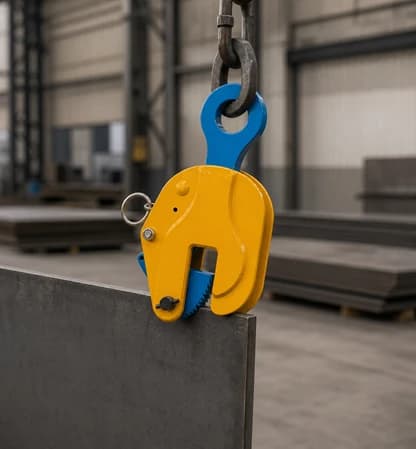
A Vertical Plate Lifting Clamp is a mechanical clamping device used to grip a suitable steel or metal plate and lift it in a vertical direction. The clamp is generally connected to an appropriate lifting system such as a crane, hoist, or other compatible lifting equipment.
A Vertical Lifting Clamp uses its gripping mechanism to engage the plate during lifting. Depending on the design, the clamp may be selected for lifting, positioning, turning, or transferring plate materials within the manufacturer's specified operating conditions.
A Vertical Steel Plate Clamp should be selected according to the plate thickness, rated working load, material condition, lifting direction, gripping range, and surface characteristics. The clamp and lifting equipment should always be compatible with one another and operated according to the manufacturer's specifications.
Key Features & Benefits of Vertical Plate Lifting Clamp
Mechanical Plate Gripping – Provides a practical method for securing suitable plates during lifting operations.
Vertical Lifting Capability – Designed for applications where plates need to be lifted from a horizontal or suitable starting position into vertical handling.
Controlled Material Handling – Supports easier movement and positioning of plates during fabrication and industrial operations.
Steel Plate Compatibility – Suitable models can be used for compatible steel and metal plate handling applications.
Compact Design – A practical clamp arrangement can simplify connection to compatible lifting equipment.
Reliable Gripping Action – Supports secure engagement when the clamp is correctly selected, installed, and loaded.
Industrial Application Suitability – Useful for manufacturing plants, fabrication shops, workshops, and material handling areas.
Easy Lifting Integration – Can be connected to suitable cranes, hoists, and lifting systems according to application requirements.
Different Capacity Options – Clamps can be selected according to the specified working load and plate requirements.
Application-Based Selection – Gripping range, load rating, plate thickness, and lifting conditions should be matched to the intended use.
Applications of Vertical Plate Lifting Clamp
A Vertical Plate Lifting Clamp can be used wherever suitable steel or metal plates require controlled lifting and positioning.
Steel Plate Handling – Supports lifting and positioning of compatible steel plates.
Fabrication Workshops – Helps move plates during cutting, welding, fabrication, and assembly operations.
Manufacturing Facilities – Supports internal movement of suitable plate materials between work areas.
Metalworking Applications – Used for handling compatible sheets and plates during processing.
Machine Building – Assists in positioning plate components during equipment fabrication.
Maintenance Operations – Can support suitable lifting tasks during repair and maintenance work.
Structural Fabrication – Helps handle compatible structural steel plates during fabrication.
Material Handling Areas – Supports movement of plates within suitable industrial environments.
Warehouse Operations – Can be used for handling compatible plate materials where appropriate lifting systems are available.
Industries Served
Steel Fabrication Industry – Supports movement and positioning of steel plates during fabrication operations.
Engineering Industry – Suitable for handling plate components used in machinery and industrial structures.
Manufacturing Industry – Assists with internal movement of compatible metal plates.
Automotive Industry – Can be used for suitable fabrication and component handling operations.
Shipbuilding & Heavy Fabrication – Supports plate handling where the clamp and lifting arrangement meet application requirements.
Industrial Maintenance – Useful for compatible maintenance and replacement activities.
Construction & Structural Fabrication – Supports handling of suitable structural plates and fabricated components.
Workshops – Provides a practical lifting solution for compatible plate handling tasks.
How to Choose the Right Vertical Plate Lifting Clamp
Choosing the correct Vertical Lifting Clamp requires consideration of the plate, lifting equipment, and working environment.
Working Load – Select a clamp according to the actual load to be lifted and the manufacturer's rated capacity.
Plate Thickness – Verify that the plate thickness falls within the clamp's specified gripping range.
Plate Material – Confirm compatibility with the steel or metal material being handled.
Gripping Range – Ensure the clamp is suitable for the required plate dimensions.
Lifting Direction – Confirm that the clamp is designed for the intended vertical lifting application.
Plate Surface Condition – Check that the plate surface is suitable for secure gripping and free from conditions that may affect engagement.
Lifting Equipment Compatibility – Verify compatibility with the crane, hoist, sling, hook, or other lifting equipment.
Jaw and Contact Condition – Consider the gripping mechanism and contact surface according to the application.
Lifting Frequency – Select equipment appropriate for occasional or repetitive industrial lifting requirements.
Operating Environment – Consider dust, moisture, temperature, corrosion, and other workplace conditions.
Manufacturer Specifications – Confirm load rating, gripping range, usage limitations, and inspection requirements before operation.
Businesses comparing a Vertical Plate Lifting Clamp Supplier should evaluate the clamp based on actual plate-handling requirements rather than selecting only by rated capacity.
Technical Considerations
The performance of a Vertical Steel Plate Clamp depends on correct selection, proper gripping, rated capacity, plate condition, and lifting practices.
Confirm the rated working load before use.
Verify the plate thickness and gripping range.
Check the plate for excessive corrosion, deformation, contamination, or surface damage that could affect gripping.
Inspect the gripping jaws and contact surfaces.
Ensure the lifting point and connecting components are compatible.
Confirm that the clamp is properly positioned on the plate before lifting.
Avoid side loading or lifting conditions outside the manufacturer's intended application.
Do not exceed the specified working load or gripping range.
Inspect the clamp before each lifting operation where required by the manufacturer's recommendations.
Follow applicable lifting procedures and equipment-specific instructions.
Ensure operators are trained in the correct use of the lifting clamp.
Do not modify the clamp or its components without manufacturer approval.
Proper engagement between the clamp and plate is essential. The clamp should be used only within its specified operating range and under suitable lifting conditions.
Maintenance and Best Practices
Inspect Before Use – Check the clamp body, gripping mechanism, suspension point, and visible components before operation.
Check Jaw Condition – Inspect gripping jaws or contact surfaces for wear, damage, contamination, or deformation.
Verify Moving Components – Ensure mechanical parts operate correctly without excessive stiffness or abnormal movement.
Check Connection Points – Inspect hooks, shackles, pins, or other connecting components where applicable.
Keep Contact Surfaces Clean – Remove oil, debris, scale, or other contamination that may affect gripping.
Avoid Overloading – Never exceed the manufacturer's specified working load limit.
Check Plate Compatibility – Do not use the clamp outside its specified plate thickness or application range.
Monitor Wear – Look for excessive wear, cracks, deformation, or other signs of deterioration.
Store Properly – Keep the clamp in a suitable storage area protected from unnecessary damage and contamination.
Follow Inspection Procedures – Carry out periodic inspections according to the manufacturer's recommendations and applicable workplace procedures.
Remove Damaged Equipment – Do not continue using a clamp that shows damage or questionable gripping performance.
Use Correct Lifting Practices – Ensure the lifting operation remains within the intended application and equipment limitations.
Regular inspection and correct handling are important for maintaining dependable performance throughout the working life of the lifting accessory.
Why Choose Excelus Machineries?
Selecting an Industrial Vertical Lifting Clamp Manufacturer requires consideration of product suitability, working load, gripping range, lifting application, equipment compatibility, and technical support.
Excelus Machineries provides industrial material handling and lifting solutions designed around practical operational requirements. Vertical plate lifting solutions can be considered according to the plate characteristics, lifting arrangement, working conditions, and intended application.
Key advantages include:
Industrial material handling experience
Application-focused lifting equipment selection
Solutions for suitable plate and material handling requirements
Technical guidance during product selection
Support for fabrication, manufacturing, and industrial applications
Application-specific equipment recommendations
Practical inspection and maintenance guidance
Focus on safe and controlled material handling practices
For businesses evaluating a Vertical Plate Lifting Clamp Supplier, important selection factors include working load, plate thickness, gripping range, lifting direction, plate condition, lifting equipment compatibility, and operating environment.
Conclusion
A Vertical Plate Lifting Clamp provides a practical solution for lifting and positioning suitable steel plates, metal sheets, and fabricated plate components in industrial environments. It can support applications across fabrication workshops, manufacturing facilities, engineering operations, warehouses, maintenance areas, and other suitable material handling environments.
Whether specified as a Vertical Lifting Clamp, Vertical Steel Plate Clamp, or industrial plate-handling accessory, the equipment should be selected according to working load, plate thickness, gripping range, lifting arrangement, surface condition, and manufacturer's specifications. As a Vertical Lifting Clamp Manufacturer and Vertical Lifting Clamp Exporter, Excelus Machineries provides application-focused lifting and material handling solutions for industrial requirements.