Description
What is a Master Link Assembly?
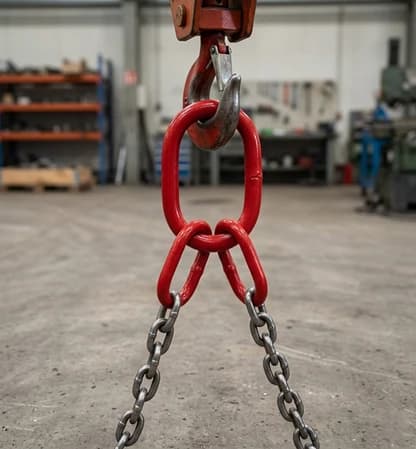
A Master Link Assembly is a load-bearing ring or assembly used as the top connection in suitable lifting and rigging systems. It can connect one or more sling legs to a crane hook or another compatible lifting component.
A Crane Master Link is used in compatible crane lifting arrangements to create a connection between the lifting machine and the sling assembly. Depending on the design, the assembly may consist of a master link together with suitable connecting components for multi-leg sling configurations.
A Master Link for Lifting should always be selected according to the required working load limit, dimensions, sling type, connection arrangement, and lifting configuration. The actual capacity and permissible application vary by product and must be confirmed from the manufacturer's specifications.
Key Features & Benefits of Master Link Assembly
Strong Load Connection – Provides a practical top connection for compatible lifting and rigging arrangements.
Sling Compatibility – Can be incorporated into suitable chain, wire rope, and other approved sling configurations.
Centralized Load Connection – Helps bring multiple sling legs together at a common lifting point.
Heavy-Duty Options – A Heavy Duty Master Link can be selected for applications requiring higher rated working loads.
Crane Compatibility – Suitable configurations can be connected to compatible crane hooks and lifting equipment.
Multi-Leg Sling Support – Can be used in appropriate multi-leg lifting assemblies according to the specified configuration.
Industrial Application Suitability – Useful for manufacturing, fabrication, construction, maintenance, and material handling operations.
Rigging Flexibility – Supports different lifting arrangements when correctly matched with compatible components.
Application-Based Selection – Size, material, dimensions, and working load should be selected according to the intended lifting operation.
System Integration – Works as part of a complete lifting arrangement rather than as an isolated component.
Applications of Master Link Assembly
A Master Link Assembly can be used wherever suitable lifting and rigging systems require a secure top connection.
Chain Sling Applications – Connects suitable sling legs in compatible chain sling arrangements.
Crane Lifting Systems – Provides a connection point between the crane hook and lifting accessories.
Wire Rope Sling Systems – Can be used in suitable configurations where the master link is compatible with the sling assembly.
Material Handling – Supports lifting of machinery, fabricated components, structural materials, and other suitable loads.
Steel Fabrication – Useful for moving compatible steel structures and fabricated components.
Engineering Workshops – Supports lifting and positioning tasks involving machinery and industrial equipment.
Maintenance Operations – Can be incorporated into suitable lifting systems for equipment installation or removal.
Customized Rigging Systems – May be used in application-specific lifting arrangements when designed and rated appropriately.
A Chain Sling Master Link should be considered as part of the complete sling system, including the chain legs, hooks, connecting components, and lifting machine.
Industries Served
Manufacturing Industry – Supports lifting and positioning of machinery, components, and production materials.
Steel & Metal Fabrication – Used for suitable handling of fabricated steel structures and heavy components.
Engineering Industry – Supports workshop lifting and machinery handling applications.
Construction Industry – Can be used in compatible lifting and structural material handling operations.
Automotive Industry – Suitable for machinery, tooling, components, and maintenance lifting applications.
Warehousing & Material Handling – Supports compatible crane and overhead lifting operations.
Industrial Maintenance – Useful for equipment installation, removal, and positioning activities.
Heavy Engineering – Suitable for demanding lifting applications when correctly selected and rated.
How to Choose the Right Master Link Assembly
Choosing the correct Master Link Assembly Manufacturer is important, but the actual master link must also match the lifting application and complete rigging arrangement.
Working Load Limit – Select the assembly according to the maximum intended load and manufacturer's rated capacity.
Number of Sling Legs – Confirm whether the application requires a single-leg, two-leg, three-leg, or other suitable sling configuration.
Link Dimensions – Check the inside length, width, cross-section, and opening dimensions for compatibility with connected components.
Hook Compatibility – Ensure the master link fits correctly with the crane or lifting hook.
Sling Compatibility – Verify compatibility with chain, wire rope, or other approved sling types.
Load Configuration – Consider how the load will be distributed through the sling assembly.
Lifting Angle – Ensure the sling arrangement and working load are appropriate for the intended lifting geometry.
Operating Environment – Consider moisture, dust, temperature, corrosion, and other workplace conditions.
Lifting Frequency – Choose a suitable configuration for occasional, regular, or demanding lifting operations.
Manufacturer Specifications – Confirm capacity, dimensions, permitted configurations, inspection requirements, and limitations before use.
Businesses comparing a Master Link Supplier should evaluate the complete lifting system rather than choosing a master link only by physical size.
Technical Considerations
The performance of an Industrial Master Link Assembly depends on correct selection, load distribution, component compatibility, and proper lifting practices.
Confirm the rated working load limit before use.
Check the master link dimensions against the crane hook and sling components.
Verify that the connected sling legs are suitable for the intended configuration.
Consider the effect of sling angles on the load carried by individual components.
Inspect the master link for cracks, deformation, excessive wear, or corrosion.
Check connection points and associated components for signs of damage.
Ensure the load is properly aligned with the lifting system.
Avoid side loading or loading conditions outside the manufacturer's intended application.
Do not exceed the specified working load limit.
Inspect the complete rigging assembly before lifting.
Follow manufacturer recommendations for inspection, maintenance, and application.
Ensure operators and rigging personnel are trained in suitable lifting practices.
A Lifting Master Link should always be treated as one part of a complete lifting system. The capacity and suitability of the complete arrangement depend on all connected components and the actual lifting configuration.
Maintenance and Best Practices
Inspect Before Use – Check the master link and connected rigging components before lifting.
Check for Damage – Look for cracks, bends, deformation, excessive wear, or corrosion.
Inspect Contact Areas – Check areas where the link connects with hooks, chains, or sling components.
Monitor Link Shape – Remove any link showing abnormal deformation or permanent distortion.
Check Sling Components – Inspect chains, hooks, shackles, wire ropes, and other connected parts.
Keep Components Clean – Remove dirt, scale, oil, and debris that may interfere with inspection.
Avoid Overloading – Never exceed the specified working load limit.
Maintain Proper Load Alignment – Avoid unsuitable loading directions and side loading.
Store Correctly – Protect the assembly from unnecessary impact, contamination, and environmental damage.
Follow Inspection Procedures – Perform periodic inspections according to manufacturer recommendations and workplace procedures.
Replace Damaged Components – Do not reuse components that show unacceptable damage or wear.
Maintain the Complete Assembly – Inspect the master link together with every connected lifting component.
Regular inspection, correct rigging practices, and proper load distribution help support dependable lifting performance.
Why Choose Excelus Machineries?
Selecting a Master Link Assembly Manufacturer requires consideration of working load, sling configuration, connection compatibility, application requirements, and technical support.
Excelus Machineries provides industrial material handling and lifting solutions focused on practical operational requirements. Master link selection can be considered according to the lifting equipment, sling arrangement, load characteristics, and intended working environment.
Key considerations include:
Industrial material handling experience
Application-focused lifting equipment selection
Support for crane, hoist, and sling applications
Suitable configurations for different lifting requirements
Technical guidance during product selection
Support for fabrication, manufacturing, maintenance, and industrial facilities
Application-specific lifting recommendations
Practical inspection and maintenance guidance
For businesses evaluating a Master Link Assembly Supplier, important selection factors include working load limit, link dimensions, sling compatibility, crane hook compatibility, sling-leg configuration, lifting angles, and operating conditions.
Conclusion
A Master Link Assembly provides an essential connection point in suitable lifting and rigging systems, particularly where multiple sling legs need to connect to a crane hook or compatible lifting equipment. It can support applications involving chain slings, wire rope slings, machinery handling, steel fabrication, maintenance, and industrial material movement.
Whether specified as a Lifting Master Link, Chain Sling Master Link, Crane Master Link, Heavy Duty Master Link, or Industrial Master Link Assembly, the component should be selected according to working load, dimensions, sling configuration, hook compatibility, loading arrangement, and manufacturer specifications. As a Master Link Assembly Manufacturer and Master Link Supplier, Excelus Machineries focuses on application-based lifting and material handling solutions for industrial requirements.